LONDON, Jan 16, 2026, 10:16 GMT
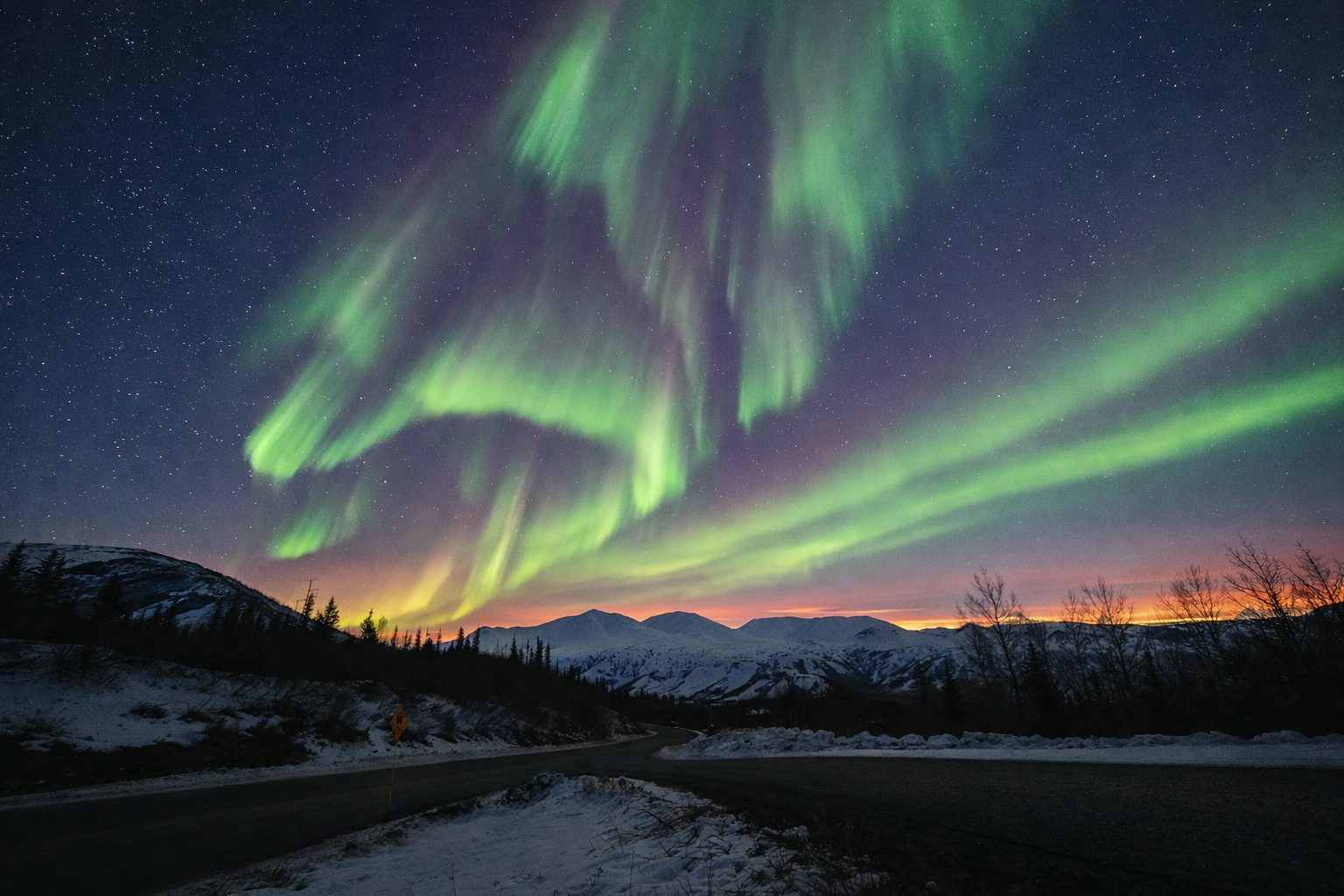
- Forecasters see a chance of minor geomagnetic storming (G1) late Jan. 16 into Jan. 18, lifting aurora odds at high latitudes.
- UK Met Office said aurora could reach northern Scotland; far southern New Zealand may also get a shot at the southern lights.
- A Jan. 18 new moon darkens skies, while Jupiter stays up most of the night and Saturn holds the early evening.
Space weather forecasters are calling for a rise in geomagnetic activity late Friday and through the weekend, raising the odds of auroras in high-latitude skies in both hemispheres.
The timing matters for skywatchers because the moon is thinning toward a Jan. 18 new moon, cutting glare and making faint light easier to pick out. In northern latitudes, long winter nights give wider viewing windows, while far-southern observers have shorter darkness in midsummer.
NOAA tracks geomagnetic disturbance with the planetary Kp index, a 0–9 measure of how much Earth’s magnetic field is being shaken; a Kp of 5 marks the start of a minor G1 storm on the agency’s scale. The same geomagnetic jolts can ripple into satellite operations, radio signals and power grids, NOAA notes. 1
In a three-day outlook issued at 0034 UTC on Friday, NOAA’s Space Weather Prediction Center put the highest expected three-hour Kp at 5.33 for Jan. 16–18 and said G1 conditions were possible on Jan. 17 and 18 as a coronal hole high-speed stream — fast solar wind — and a “CIR,” a compressed front in the solar wind, arrive. 2
A separate NOAA forecast discussion said quiet-to-active conditions were expected on Jan. 16 due to residual effects from earlier solar wind disturbances, before the coronal-hole stream becomes “geoeffective” — able to couple efficiently with Earth’s magnetic field — early on Jan. 17. It forecast unsettled conditions up to G1 with a chance of G2, a moderate storm level, and said minor storming could persist into Jan. 18. 3
NOAA’s probabilistic geomagnetic forecast, issued late Thursday, pegged the odds of minor storm conditions at 15% on Jan. 16, rising to 35% on Jan. 17 and 40% on Jan. 18, with a 25% chance of a moderate storm on Jan. 17. 4
Britain’s Met Office, which runs its own space weather service, also highlighted a weekend bump as coronal hole fast winds arrive on Jan. 17 UTC, with aurora sightings mainly at high latitudes but a chance of reaching northern Scotland if skies are clear. For the Southern Hemisphere, it said the best odds would stay near high latitudes, with a possible shot from the far south of New Zealand, though the short hours of darkness can limit viewing. 5
The moon’s phase is lining up for low light. The U.S. Naval Observatory puts the January new moon at 19:52 UTC on Jan. 18, leaving little natural illumination on the nights either side — a plus for faint aurora, but only if clouds and city glare cooperate. 6
Away from auroras, January’s night sky still belongs to the bright planets. Jupiter is visible all night and Saturn sits in the western evening sky, while Venus, Mercury and Mars are too close to the sun to see, EarthSky said. 7
Still, aurora forecasts turn on small shifts in the solar wind — especially the direction of its embedded magnetic field when it reaches Earth — and that can change quickly. A predicted Kp near 5 can translate into anything from a pale horizon glow to a broader display, depending on real-time conditions and local cloud cover.
NOAA’s aurora “viewline” maps, which update continuously using the OVATION model and forecast Kp, show how far south the lights may be visible on the northern horizon across North America and are among the quick checks used by skywatchers ahead of darkness. 8