
PIKETON, Ohio, August 18, 2026, 01:44 EDT — Nvidia (NASDAQ:NVDA) agreed to provide up to $105 billion in guarantees supporting OpenAI’s 20-year lease at an Ohio AI campus, Reuters reported. OpenAI separately confirmed Nvidia credit support for the project’s initial 4.25 IT-gigawatts.
The structure turns a chip supplier into a financing backstop. It helps secure a huge future buyer while shifting part of the site’s residual-value risk onto Nvidia.
The guarantee is not a $105 billion cash payment today. Nvidia said it covers part of the lease and power payments, plus a minimum property value. OpenAI remains responsible for rent.
| Deal term | Disclosed amount or scale | Status |
|---|---|---|
| Nvidia guarantee | Up to $105 billion | Reported by Reuters |
| Nvidia investment in SB Energy | $1.5 billion | Company-confirmed |
| OpenAI lease | 20 years | Company-confirmed |
| OpenAI contracted capacity | Approximately 8 IT-GW | Company-confirmed |
| Nvidia credit-support phase | Initial 4.25 IT-GW | Company-confirmed |
| First capacity expected | 800 MW in 2028 | Company estimate |
SB Energy will build, own and operate the campus. The company is controlled by SoftBank Group (TYO:9984). OpenAI will start paying only when completed capacity becomes available.
| Participant | Commercial role | Primary obligation |
|---|---|---|
| OpenAI | Long-term tenant and compute customer | Lease payments as capacity enters service |
| SB Energy | Developer, owner and operator | Construction, operations and project-specific infrastructure |
| Nvidia | Exclusive AI-compute provider | Hardware, $1.5 billion equity and defined credit support |
| AEP Ohio | Transmission partner | Grid upgrades funded by the project |
| U.S. Energy Department | Federal land partner | Lease and site redevelopment oversight |
“We are securing long-lived infrastructure for Nvidia compute,” Chief Executive Jensen Huang said. He rejected the description of the deal as circular financing. Nvidia expects each hardware generation to improve the site’s economics. Reuters
Huang said the initial 4.25-GW site could generate up to $200 billion for Nvidia. He estimated 16 GW of total OpenAI deployments could produce $600 billion by 2030. Those are preliminary company estimates, not booked orders.
| Nvidia exposure or opportunity | Amount | Evidence limit |
|---|---|---|
| Maximum Ohio guarantee | $105 billion | Contingent support; final structure remains unfinished |
| SB Energy equity investment | $1.5 billion | Direct investment |
| Potential revenue from initial 4.25 IT-GW | Up to $200 billion | Management estimate |
| Potential OpenAI revenue through 2030 | Up to $600 billion | Management estimate across 16 GW |
Power is the binding constraint. The Energy Department’s broader March plan covered 10 GW of generation and a 10-GW data-center development. At least 9.2 GW would come from new natural-gas plants.
| Project layer | March site plan | August OpenAI agreement |
|---|---|---|
| Data-center scale | 10 GW development | Approximately 8 IT-GW contracted |
| Power generation | 10 GW planned | Further phases require new plants |
| Natural-gas generation | At least 9.2 GW | No revised figure disclosed |
| Transmission investment | $4.2 billion | SB Energy remains responsible |
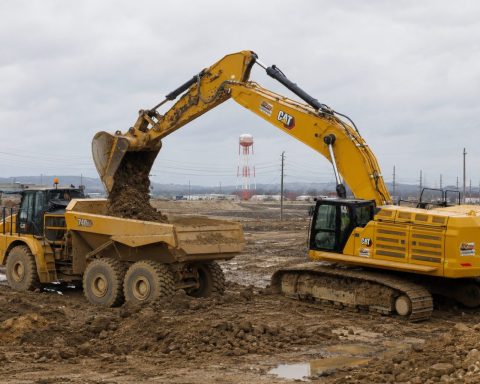
| First operating phase | Construction expected in 2026 | 800 MW expected in 2028 |
OpenAI said the campus should create 35,000 construction jobs through 2032 and 2,500 operating jobs. It also pledged $40 million for community grants and $84 million in Codex credits for eligible Ohio students.
The project will use closed-loop, air-cooled systems. OpenAI said ongoing water demand should resemble an office building after filling. A specific usage forecast will follow the final design.
Risks: Financing, permits, environmental reviews and new power infrastructure are unfinished. OpenAI’s demand forecast may change. A default could expose Nvidia to lease, power or minimum-value obligations.
The deal’s test is simple. Nvidia must convert balance-sheet support into durable chip sales without assuming disproportionate property risk. That answer will emerge only as each phase is financed and occupied.