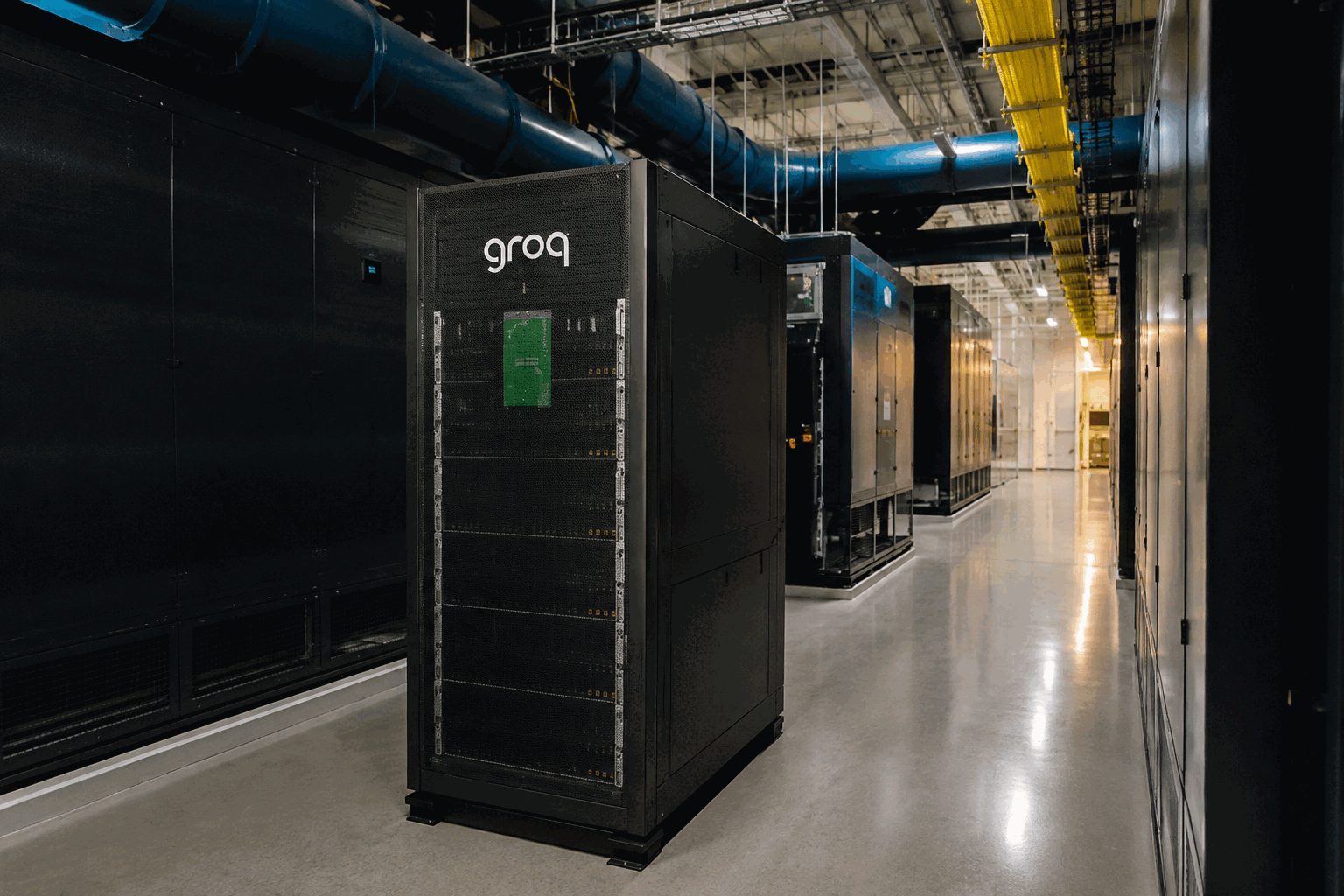

SAN FRANCISCO, August 17, 2026, 11:18 PDT — Groq said it raised $350 million at a $3.5 billion valuation to boost its AI inference cloud.
- The valuation comes in roughly 49% under Groq’s $6.9 billion figure from September 2025.
- Groq is looking to boost power capacity from 54 MW to over 200 MW by 2027.
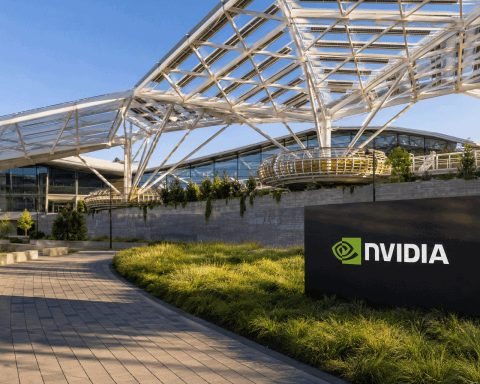
- NVIDIA said it will take part, and Groq is now an NVIDIA Cloud Partner.
Groq’s new financing shifts it from an upstart chipmaker to a cloud operator with large capital needs. The company now has to go beyond showing LPU speed and start putting dependable compute into data centers.
The shift is key for AI customers. Groq now offers medium and large NVIDIA (NASDAQ:NVDA) accelerated clusters for both training and inference, alongside its own LPU tech. NVIDIA licensed that technology and picked up Groq founder Jonathan Ross along with other senior leaders back in December.
| Measure | Before the NVIDIA agreement | Current Groq model |
|---|---|---|
| Strategic role | Ran LPU chip and offered an alternative to cloud providers | Acts as NVIDIA Cloud Partner and manages inference cloud |
| Compute offered | Provided Groq LPU cloud plus local cluster setups | Runs Groq gear plus NVIDIA-powered cluster options |
| Primary workloads | Focused on fast-response inference | Handles inference, now includes larger clusters for training |
| LPU ownership path | Built tech internally at Groq | Holds non-exclusive rights for NVIDIA, Groq stays independent |
| Commercial test | Relied on chip price/performance to sign up users | Now aims to keep data center use high worldwide |
Disruptive is leading the new Series A. NVIDIA’s planned involvement is still pending standard closing checks. Groq said this raise and its $650 million round in June together bring in $1 billion in new capital.
| Date | Capital raised | Disclosed valuation | Company position |
|---|---|---|---|
| August 2024 | $640 million | $2.8 billion | Boosting Groq LPU output |
| September 2025 | $750 million | $6.9 billion | Pushing as a standalone inference-chip rival |
| June 2026 | $650 million | Not disclosed | Shifting focus to inference neocloud |
| August 17, 2026 | $350 million | $3.5 billion | NVIDIA partner rolling out bigger worldwide clusters |
The $3.5 billion figure is 49.3% lower than the September 2025 valuation. Groq told TechCrunch it considers this number a valuation for the post-licensing business, not a standard down round. The company called the distinction important since it handed core tech access over and lost its founder to NVIDIA.
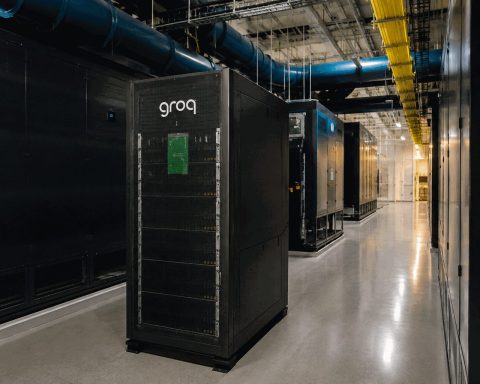
Groq says it has 13 data centers in operation and over six million developers now. That’s up from the June update, when the company said more than five million developers were using trillions of tokens every week.
| Operating metric | Earlier disclosed level | Latest disclosed level | Change |
|---|---|---|---|
| Developer reach | Over 2 million, September 2025 | Over 6 million, August 2026 | At least tripled |
| Data-center footprint | 13 sites, June 2026 | 13 sites, August 2026 | No change |
| Power capacity | 54 MW, August 2026 | More than 200 MW planned in 2027 | More than 3.7x |
| Recent funding | $650 million, June 2026 | $1 billion total in June and August | Up by $350 million |
The target is high. Going from 54 MW up to over 200 MW means adding at least 146 MW. That works out to about a 270% jump, not considering any old equipment getting replaced or retired.
Groq Executive Chairman Alex Davis said the company is building “the world’s leading AI inference cloud,” calling inference the biggest and most important AI infrastructure layer. Davis made the comments in Groq’s financing release. Source
CoreWeave (NASDAQ:CRWV) posted 2025 revenue of $5.13 billion, but losses keep piling up. Net loss came in at $1.17 billion and net interest expense reached $1.23 billion. The numbers point to how much neoclouds can scale—and the heavy debt they take on.
| Company | Ownership | Latest disclosed scale | Financial visibility | Key exposure |
|---|---|---|---|---|
| Groq | Private | Runs 13 data centers, 54 MW capacity, and says it has over 6 million developers | No numbers out for revenue or losses | Pace of trying to hit 200 MW-plus expansion |
| CoreWeave | Public, NASDAQ:CRWV | Projects $5.13 billion in revenue for 2025 | Public numbers; targeted 2025 loss is $1.17 billion | Rising debt and GPU value dropping |
Risks: Groq hasn’t shared revenue, utilization, debt figures or key customer data. The 200 MW goal is still just a plan, not actual capacity. NVIDIA is investor, supplier, and tech licensee. That might help drive demand, but it also means Groq is heavily reliant on NVIDIA.
The new financing gives customers more potential capacity and a bigger range of hardware. The real test for Groq is keeping prices in line as it tries to fund a four-times jump in power. Whether the valuation reset sticks or turns into a red flag depends on that.