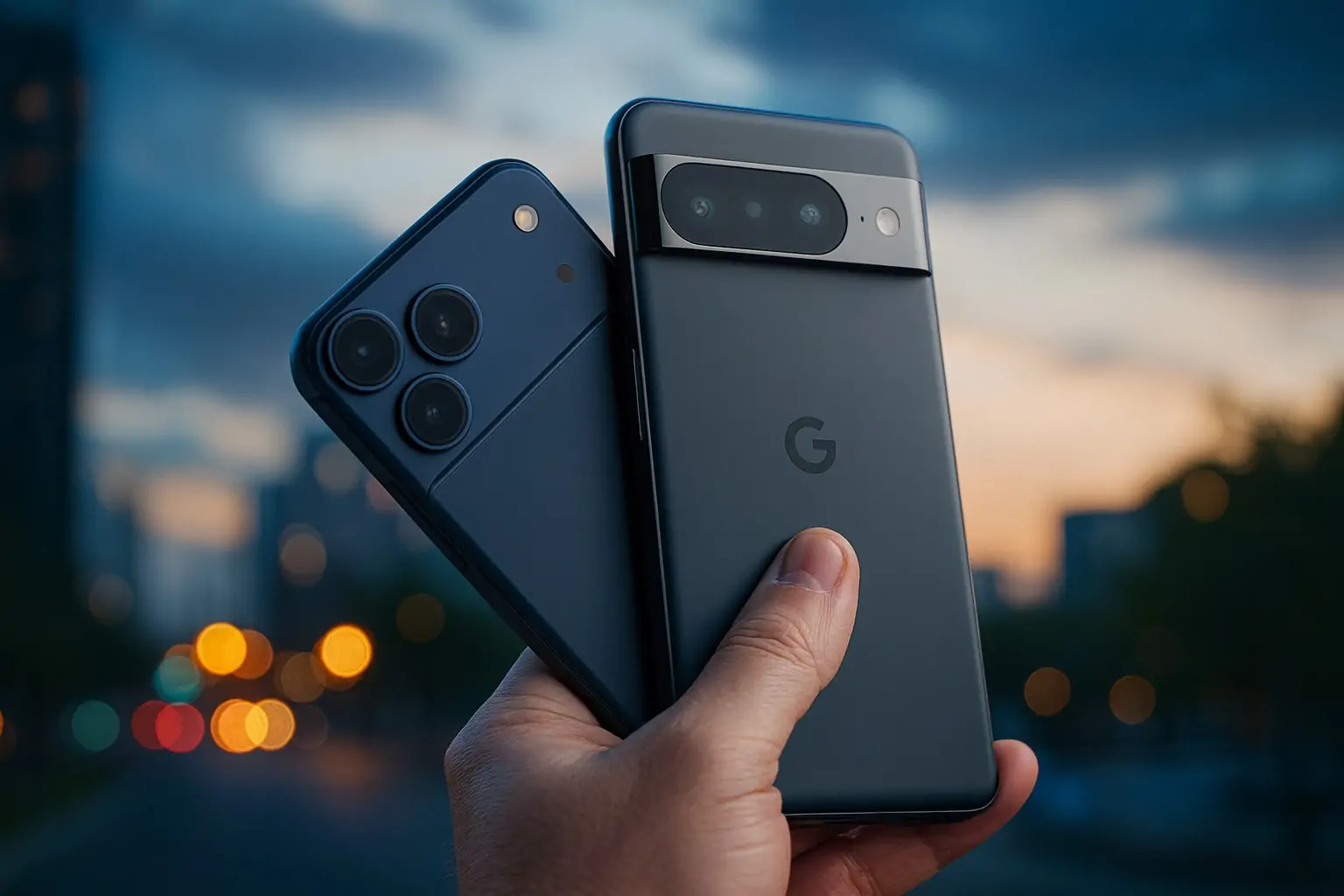
- Pixel 10 Pro cameras: Google’s new Pixel 10 Pro packs a triple rear camera (50MP wide, 48MP ultrawide with macro, 48MP 5× telephoto) T Mobile. It offers up to 100× “Pro Res” AI zoom by fusing optical and software zoom T Mobile.
- iPhone 17 Pro cameras: Apple’s iPhone 17 Pro similarly has three 48MP back cameras (main, ultrawide, and a new 48MP 4× telephoto) Theguardian. The 4× telephoto can be extended to 8× “lossless” digital zoom in good light Theguardian. A new 18MP front‑facing sensor (with Center Stage) also debuts Theguardian.
- Standard models: The regular iPhone 17 now uses a 48MP main + 48MP ultra‑wide camera (versus last year’s 12MP wide) Moneycontrol, matching Pixel’s upgraded sensors. The new iPhone Air (6.5″ display, 5.6 mm thin) runs an A19 Pro chip but has only a single 48MP rear camera (no wide/tele) Macrumors. Google’s Pixel 10 (non‑Pro) starts at $799 with a 48MP wide, 13MP ultrawide and 10.8MP 5× telephoto (20× super-res zoom) T Mobile. All iPhone 17 models adopt USB‑C, Action Buttons and the new “Clean Up” photo editor; Pixel 10 phones ship with Android 16 and AI features like Magic Editor.
- Zoom & image quality: In side-by-side camera tests, experts found Apple’s approach more practical. Android Authority notes that “Google’s AI processing is impressive, but Apple’s optical range is more practical in my day-to-day life” Androidauthority. Reviewers observe that at mid-range zooms (up to ~10×) the iPhone 17 Pro’s images often look warmer and punchier, while the Pixel excels only at extreme distances. As one critic puts it, “the iPhone 17 Pro is as good a camera for stills as any Android phone” Androidauthority. Hindustan Times similarly reports the iPhone 17’s new camera produces “livelier and crisper photos” than the Pixel 10 in side-by-side shots Hindustantimes. However, Google’s Pixel still holds an edge when zooming above 30× – something most users rarely need.
- Build and durability: The iPhone 17 Pro sports a bold new aluminum unibody design (ditching last year’s glass/titanium) with a giant camera plateau Theguardian. In contrast, the Pixel 10 Pro series looks almost identical to the Pixel 9 Pro, with a familiar glass back and horizontal camera island Androidauthority. Pixel reviewers praise the 10 Pro XL as “the best-made phone” they’ve used Androidauthority. Notably, Google’s new Pixel 10 Pro Fold is the first foldable with IP68 water/dust resistance Androidauthority – yet it failed spectacularly in bend tests, snapping at a weak hinge and even igniting the battery Tomsguide. In short, Apple’s new under-hood design will attract attention, but Google’s build quality and durability claims face scrutiny.
Camera & Zoom Showdown
Apple and Google have taken different paths. Apple boosted every camera on the iPhone 17 lineup: the base model finally gets a 48MP main shooter (up from 12MP) with a new Ultra Wide also at 48MP, plus an 18MP selfie Moneycontrol. The iPhone 17 Pro adds a 48MP telephoto (4×) that yields 8× “lossless” zoom Theguardian, along with improved image processing (“Fusion” cameras) that makes low-light shots brighter and more detailed. By contrast, the Pixel 10 Pro retains Google’s previous camera hardware (50MP main, 48MP ultra, 48MP 5× tele T Mobile) but leans on its new Tensor G5 AI chip for big zooms. Using “Pro Res Zoom,” it can reach 100× digital zoom T Mobile.
In real-world tests, reviewers note the trade-off. At everyday distances (1–10× zoom), the iPhone 17 Pro often produces more pleasing shots. Ryan Haines of Android Authority admits “I’m more comfortable with the iPhone for my everyday zoom needs”, praising Apple’s color science and consistent optics Androidauthority. Similarly, a Hindustan Times review found that in most side-by-side comparisons “the iPhone 17 returns livelier and crisper photos” than the Pixel 10 Hindustantimes. The iPhone’s new ultrawide also closes the gap with the Pros, yielding wide shots almost as sharp as on iPhone 17 Pro Max.
By contrast, the Pixel 10 Pro can capture distant details the iPhone can’t. If you push past 20–30× zoom, Google’s AI-enhanced images (fused from multiple frames) will show more distant text or signage. But as Haines notes, “I don’t come anywhere close to 30× zoom in my day-to-day life. I’ll usually top out at 10× or maybe 15×… and that’s only when I’m at a concert.” Androidauthority. In other words, most users will see better results with the iPhone’s 4×–8× optical range. After those points, Apple’s photos degrade steadily, while Pixel can still pull out distant details—albeit with grain and softness.
In short, Apple’s new cameras win for most shooting scenarios, but Google still wins the zoom battle. As Android Authority puts it, “for the first time… I think I’ll be keeping an iPhone in my pocket” because it handles the daily camera chores so well Androidauthority Androidauthority. Google’s Pixel 10 Pro remains an excellent camera overall – TheVerge calls the 10 Pro’s camera system “great” with improved portrait and video modes Theverge – but its headlining 100× zoom mostly appeals to enthusiasts.
Design, Display and Features
The iPhone 17 Pro marks Apple’s boldest redesign in years. It drops the glass back for a new aluminum unibody and huge horizontal camera “plateau” Theguardian. This not only looks different, it’s meant to cut weight and improve durability (aluminum won’t shatter like glass). The iPhone 17 Pro’s screen also gets higher peak brightness (over 3000 nits) and an anti-reflective coating for better outdoor visibility Theguardian. All iPhone 17 models move to USB‑C and the Action Button from the Apple Watch.
Google’s Pixel 10 series sticks close to the old template. The Pixel 10 Pro and Pro XL inherit the same glossy glass back and wide camera island from last year Androidauthority. One positive: the 10 Pro XL is even more refined – AndroidAuthority calls it “Google’s best flagship to date” Androidauthority, thanks to brighter displays and a larger battery. Google also finally added Qi2 magnetic wireless charging and Pixel Snap magnetic accessories across the line Theverge.
Under the hood, Apple’s iPhone 17 base uses a new A19 chip (the same generation as the Air’s A19 Pro), making it the fastest standard iPhone ever Hindustantimes. The Pros use an A19 Pro. In practice, reviewers say all iPhone 17 phones run cool and snappy – even the base model handles games and multi-tasking easily. Android 16 runs on Pixel 10 with Google’s Tensor G5 chip. Tensor G5 is TSMC‑built, and reviewers note it unlocks many on-device AI tricks (Magic Cue, Call Translator, Camera Coach) while running cooler than prior Pixels Theverge Androidauthority. In fact, Haines concludes “Google didn’t change its camera hardware, but the Tensor G5 adds some brand-new photography magic.” Androidauthority.
Battery life is about even: the Pixel 10 Pro XL has a 5200mAh cell versus ~5000mAh on the iPhone 17 Pro Max, and both last a full day with typical use. The iPhone 17 line now supports 6–45W charging (USB‑C), while Pixel 10 Pro hits 30W and 10 Pro XL up to 45W wired, plus 15–25W wireless via Qi2 .
Durability and Other News
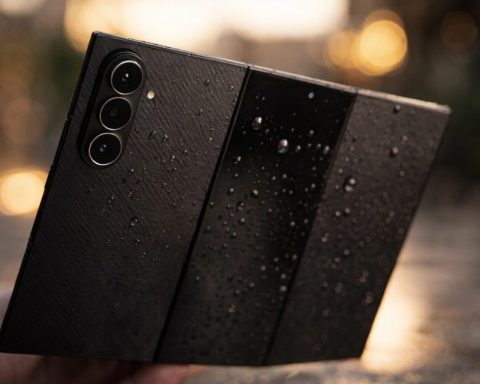
One current talking point: the Pixel 10 Pro Fold. Google’s new foldable got an IP68 rating (unheard-of in a folding phone) and a redesigned hinge . But in durability tests it failed where Samsung’s survived – reviewers at JerryRigEverything bent it until the glass screen cracked, and worse: the Pixel Fold’s weak hinge caused a break that punctured the battery and literally set the phone on fire . In short, it’s better sealed against water, but still vulnerable at the bend. Samsung’s Galaxy Z Fold 7 remains the safer folding choice, at least from a durability standpoint.
Meanwhile, Apple’s midrange iPhone Air (a new thin & light model) arrived in late 2025. It has a single 48MP rear lens (the same Fusion main sensor), an A19 Pro chip and a 6.5″ screen, all in a 5.6 mm titanium body . The Air’s trade-off is camera flexibility: without an ultrawide or telephoto, you only get 1–2× zoom, though you can shoot dual-camera video (front+back) simultaneously .
Verdict
The camera war between Apple and Google has tightened this year. For everyday photography and user-friendliness, the iPhone 17 (even the non‑Pro) takes a big leap forward, now offering pro-level features at $799 Hindustantimes Moneycontrol. Its colors, night shots and 1–8× zoom all impress reviewers. The Pixel 10 Pro (from $999) answers with industry-leading AI and durability advances, plus an unmatched 100× zoom. But as Android Authority concludes, the iPhone’s balance of optics, software and color tuning means “for the first time… I’ll be keeping an iPhone in my pocket” Androidauthority. In short: if you crave maximum zoom, Google wins – but for most users the new iPhone 17 cameras are now the practical champion.
Sources: Recent hands‑on and review articles from Android Authority, The Guardian, Tom’s Guide, Hindustan Times, and other tech news outlets . All specs and quotes are from cited sources.