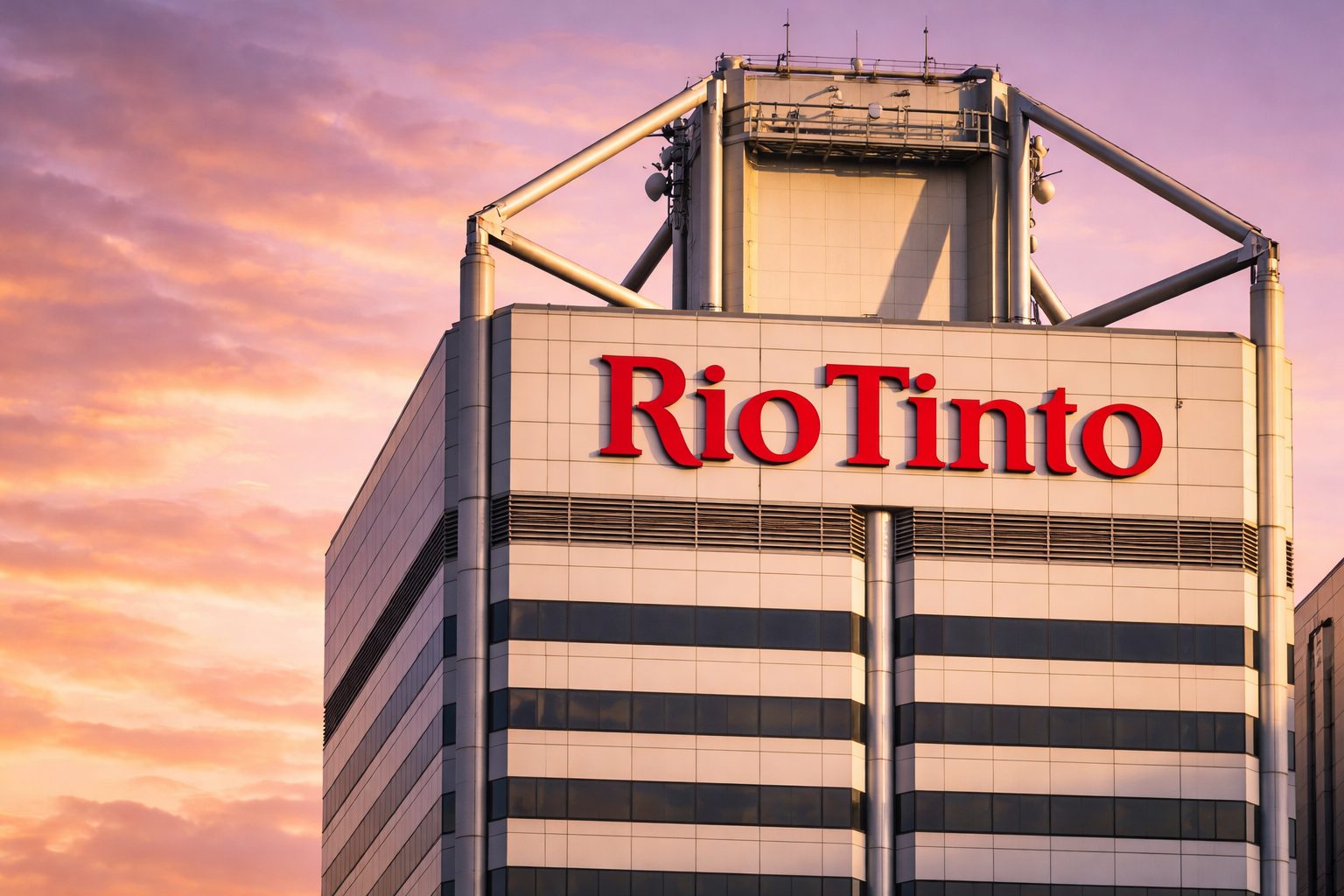
New York, March 4, 2026, 04:13 (EST) — Premarket
Rio Tinto’s U.S.-listed shares (RIO) were down 0.4% at $94.90 in premarket trading on Wednesday, after the stock fell 4.3% to $95.31 at Tuesday’s close. The New York line trades as American depositary receipts, or ADRs — certificates that represent shares in the London-listed miner. 1
The drift lower comes as investors stay defensive after a surge in oil prices tied to the widening Middle East conflict kept equity futures under pressure. Brent crude was up nearly 2% and had gained more than 13% this week, feeding fresh worries about inflation and interest rates. 2
For Rio, the bigger tell is iron ore — its biggest earner — and what Beijing signals on growth. Benchmark April iron ore on the Singapore Exchange slipped 0.3% to $98.75 a tonne, while Dalian’s most-traded contract rose 0.4% to 752 yuan. 3
Company news has been busy in the background. Rio Tinto won conditional approval for up to C$18.95 million ($13.2 million) in Canadian government support for a gallium project, a metal used in defence and semiconductors; it plans a pilot plant in Saguenay that could produce up to four tonnes a year by 2027 and potentially scale up later. “This strategic partnership will strengthen the North American supply chain for gallium,” aluminium and lithium chief executive Jerome Pecresse said. 4
In South Africa, Rio approved a $473 million restart of the Zulti South project at Richards Bay Minerals, which it owns 74%, after a six-year shutdown sparked by community unrest. The investment “signals our determination to grow RBM,” managing director Werner Duvenhage said; construction is set to start in the first quarter and production is expected in the fourth quarter of 2028. 5
Both projects underline a familiar trade in the stock: cash from bulk commodities now, options on smaller “critical” materials later. That can help on the story, but it does not always help on the day when the market is cutting risk.
Rivals such as BHP and Vale often move in the same direction when iron ore and sentiment swing, leaving the sector exposed when investors step away from cyclical bets.
But there are plenty of ways this turns the other way. Beijing could disappoint on stimulus, iron ore could slip, and any flare-up around South African operations could hit timelines again — the exact thing Rio says it has been working to prevent.
Traders are now looking to March 5, when China’s National People’s Congress opens and Premier Li Qiang is expected to deliver a work report that could set a 2026 growth target of 4.5%-5%. “If confirmed, this would signal a stronger willingness … to tolerate slower but more sustainable growth,” Societe Generale economist Michelle Lam said. 6