
SAN FRANCISCO, April 15, 2026, 13:06 (PDT)
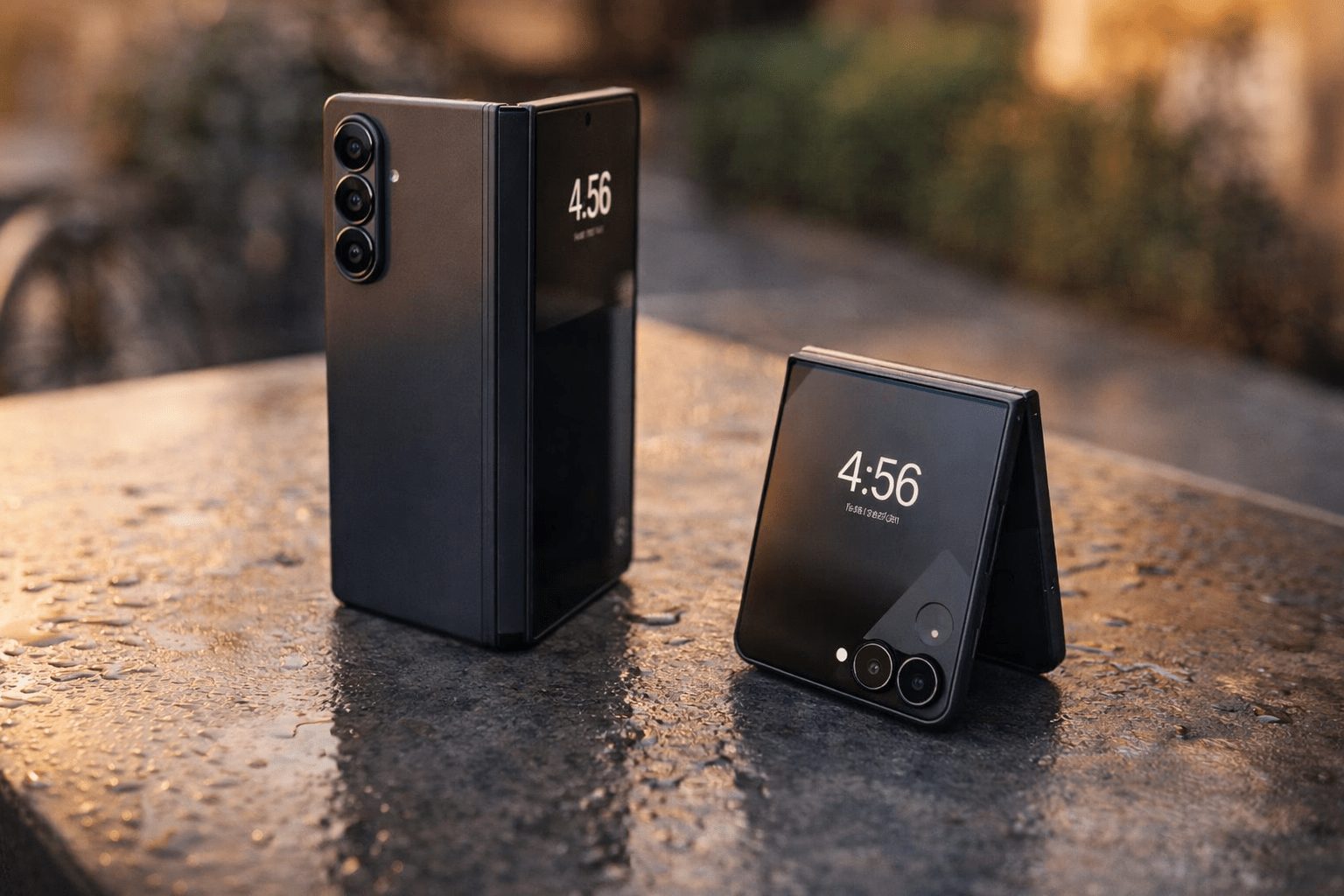
Samsung Electronics has bumped up U.S. list prices for a number of its Galaxy phones and tablets, with the 512GB Galaxy Z Flip7 now shown at $1,299.99 and the 1TB Galaxy Z Fold7 listed for $2,499.99 on Samsung’s U.S. store. The price changes were flagged by The Verge and other outlets.
This shift is starting to hit store shelves: DRAM—the memory that keeps apps alive—and NAND flash—the chips that store data—are both seeing shortages reflected in retail prices. “No company is immune,” Samsung co-CEO T.M. Roh said to Reuters back in January. Counterpoint’s Shilpi Jain noted just last week that memory suppliers are now favoring AI data centers instead of consumer electronics. Reuters
Samsung is feeling the pressure on two fronts. As the world’s top memory chipmaker, it flagged record quarterly profit earlier this month, with surging AI demand lifting prices. “Actual contract prices came in higher,” Meritz Securities analyst Kim Sunwoo noted, pointing to a scramble by customers to lock in supply. Reuters
The Verge reported Samsung bumped up prices on several phones: the 512GB Galaxy Z Flip7 now lists at $1,299.99, up from $1,219.99; the 256GB Galaxy S25 FE moves to $749.99, previously $709.99; and the 512GB Galaxy S25 Edge also jumps from $1,219.99 to $1,299.99. Those updated tags are already reflected on Samsung’s U.S. site.
Tablets haven’t escaped the squeeze. Samsung’s U.S. business store now posts the Galaxy Tab S11 at $899.99. Prices for the Tab S11 Ultra start at $1,299.99 for 256GB, climbing to $1,899.99 for the 1TB version. According to 9to5Google, that 1TB Ultra model saw the steepest hike—$280 more. The Galaxy Tab A11+ holds at $299.99; the Tab S10 FE shows $549.99.
So far, starting prices for certain recent devices haven’t budged. The base Galaxy Z Flip7, Galaxy S25 FE, and Galaxy S25 Edge are still sticking to their original launch tags. Samsung, for now, has only bumped up prices on models with more storage — a selective approach, likely to gauge just how much of the component cost pressure consumers are willing to absorb.
Not ideal timing. Counterpoint data shows Apple took the top spot in global smartphone shipments last quarter with a 21% share. Samsung’s slice slipped to 20% after a 6% year-on-year drop, and Xiaomi landed third at 13%. That puts added pressure on Samsung to hike prices just as the overall market cools.
List prices are climbing, but that doesn’t always reflect what buyers shell out at checkout. Samsung, for instance, is still dangling deals — look at the Galaxy Z Flip7 512GB and Galaxy Z Fold7 1TB, where discounts kick in and shave down the final price. IDC, meanwhile, projects a 12.9% drop in global smartphone shipments this year, with pricier components putting pressure on demand.
According to IDC, Apple and Samsung are in a stronger position than their smaller Android competitors to weather the crunch, while lower-cost brands are feeling the most strain. Emarketer’s Jacob Bourne flagged the risk back in January, noting that although some makers could swallow a portion of the costs, the supply squeeze would “show up as higher prices for consumers.” Reuters
Samsung bumped up prices for parts of its Galaxy S26 lineup in the U.S. and South Korea when the phones debuted in February. Now, fresh U.S. store adjustments point to that pricing squeeze hitting more than just the latest models—older storage options and even tablets sitting in stores are getting caught up too.