
Seoul, April 18, 2026, 02:41 KST
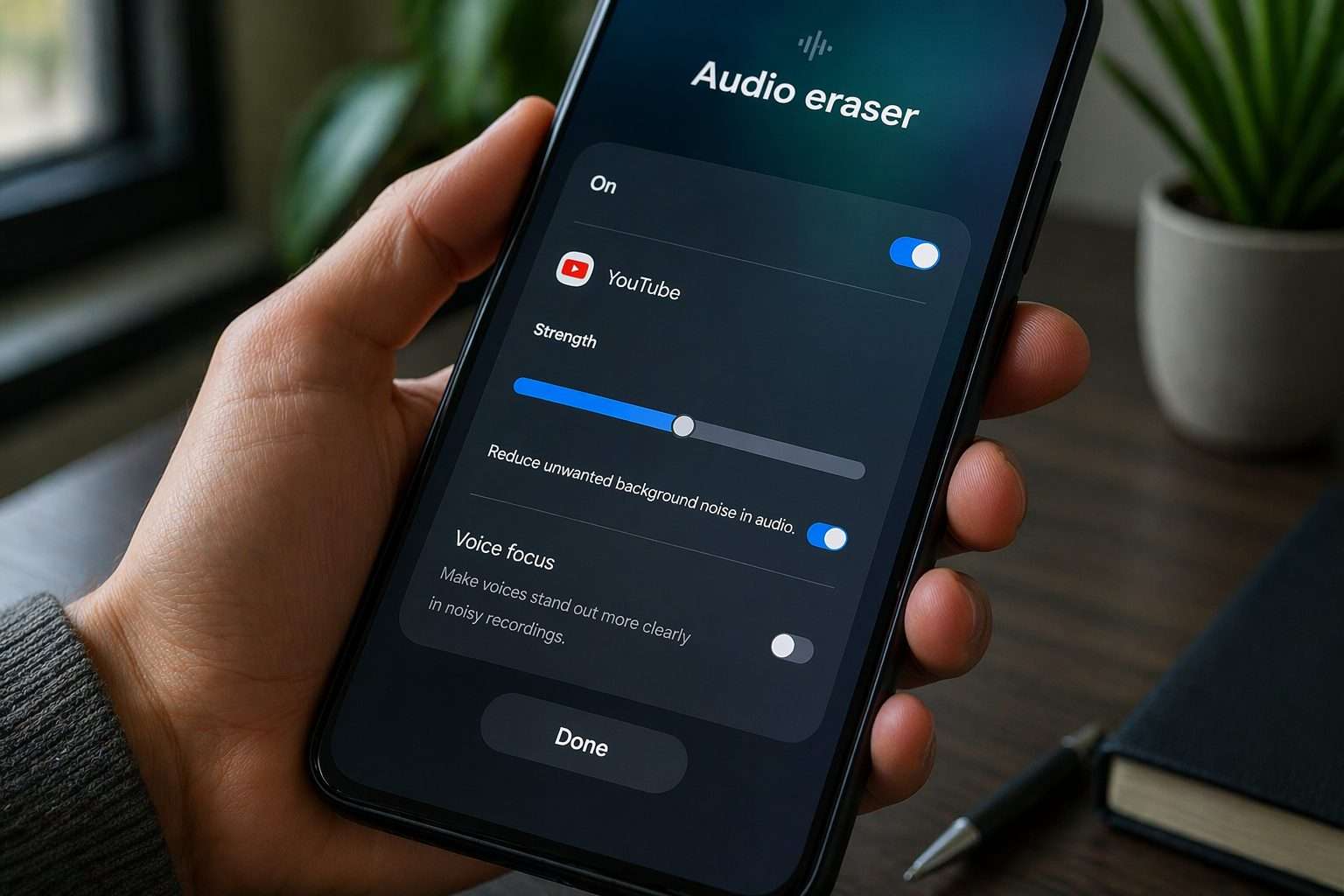
Samsung Electronics is doubling down on Audio Eraser for the Galaxy S26, moving the feature from just post-production cleanup into real-time playback. In an April 16 announcement, Samsung highlighted that users can tweak voices, music, and background sounds while a video is actually playing. Still, the company stopped short of confirming if this updated version will make its way to older flagships like the Galaxy S25 or S24, sticking to the S26 lineup in its specifics.
This detail is significant: Samsung’s banking on software to help sell its high-end phones, especially now as pricier memory chips bite and demand softens. Back in January, Samsung’s co-CEO T M Roh told Reuters he wanted AI in “all products, all functions, and all services” as fast as possible. Data from Counterpoint Research, also cited by Reuters, showed global smartphone shipments dropped 6% in the first quarter. Reuters
Audio Eraser debuted with the Galaxy S25, letting users clean up their saved audio clips. Samsung pushed the feature further, bringing real-time playback support to built-in apps like Gallery and Voice Recorder on the Z Fold7 and Z Flip7. The S26 lineup moves things forward again: now, Audio Eraser shows up in the Quick panel—just swipe down to find Voice Focus or tweak the strength slider, no need to listen to the recording first.
According to Samsung’s U.S. newsroom, the updated feature breaks sound down into six layers: voice, music, wind, nature, crowd, and other noise. It’s designed to function on third-party platforms like YouTube, Instagram, and Netflix. Support, though, only extends to certain apps on the S26 series and can differ depending on the specific model or operating system version. The company also cautions that outcomes may not always be consistent.
The gap itself has drawn attention. Samsung announced its One UI 8.5 beta on March 26 and again on April 9 — their Android skin, One UI, is rolling out to older phones, including the S24 series in specific regions. Still, there’s no detailed Audio Eraser rollout by device in the official documents. SamMobile and SammyFans later reported that Samsung talked about bringing additional Galaxy AI features to the S25 series, and mentioned an internal S24 build with Advanced Audio Eraser.
So Samsung ends up with a slimmer, yet legitimate, edge to tout versus Apple and Google. Google’s Audio Magic Eraser—on Pixel 8 or newer—lets users alter audio via Google Photos, but only after a video’s been saved. Apple’s Audio Mix also adjusts sound post-capture, if you’re on a supported iPhone. Samsung, for its part, is pushing real-time audio filtering as you play the video back.
Much of the sector is headed in this direction. IDC’s Francisco Jeronimo, posting after Mobile World Congress, said AI has now become part of the “core architecture” for devices. Instead of specs, user experience is starting to drive sales. Samsung’s Roh is on board, tying the company’s strategy to a goal of doubling its Galaxy AI device count to 800 million this year. IDC
The behind-the-scenes effort often goes unnoticed. Last year, Samsung researchers pointed out that Audio Eraser hinges on quick, low-power processing on the device itself. Researcher Hejung Yang called “wind” a tough challenge to model—one reason, perhaps, for Samsung’s conservative approach with older devices, even before considering app limitations or the company’s own warnings about accuracy. Samsung Global Newsroom
Analyst Thomas Husson at Forrester isn’t convinced there’s a standout AI use case yet. Speaking with Reuters during the Galaxy S25 debut, he said, “I don’t think there is really a killer application today.” Samsung, then, has the job of proving that improved live audio isn’t just a flashy demo—and that it’s enough to keep S25 and S24 users checking the One UI 8.5 update notes. Reuters