
SAN FRANCISCO, Feb. 4, 2026, 09:14 PST
- Uber projected first-quarter adjusted profit would miss Wall Street estimates, despite raising its forecast for gross bookings above expectations.
- The company announced plans to roll out robotaxi services in additional cities like Madrid, Hong Kong, Houston, and Zurich, backing partners with funding to secure more vehicles.
- Uber announced that CFO Prashanth Mahendra-Rajah is stepping down, and Balaji Krishnamurthy will take over the role.
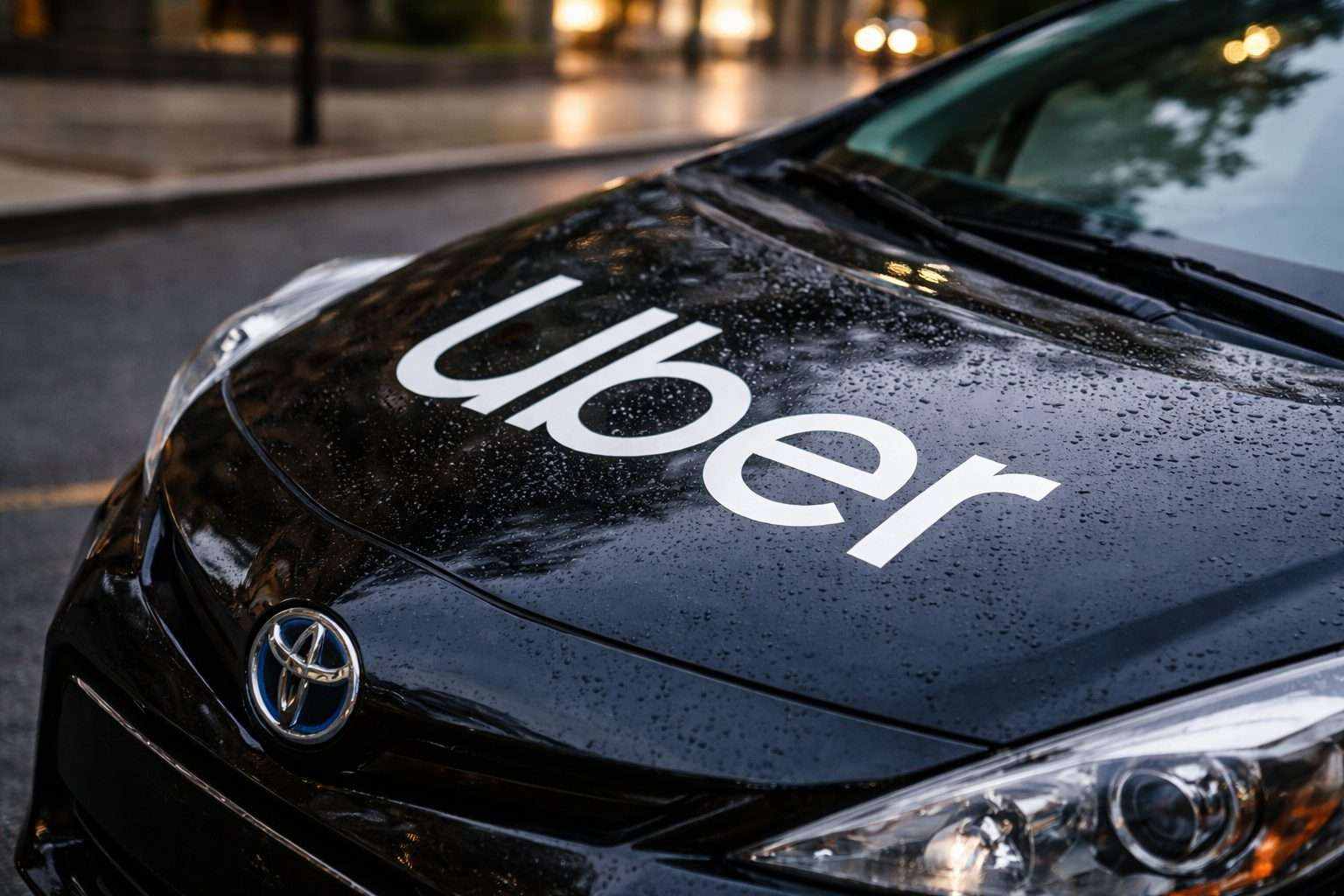
Shares of Uber Technologies dropped about 5% on Wednesday after the company projected first-quarter adjusted profits that fell short of expectations. The ride-hailing giant is doubling down on a costly push to integrate robotaxis into its platform, a move investors seem wary of.
The guidance arrives at a tricky time. Investors are still on board with growth in trips and users, but they’re growing more concerned about margins, tax expenses, and the cash Uber must invest in autonomous vehicles.
Uber is promoting budget options like shared rides to boost demand, but it cautions that a higher effective tax rate might hit profitability in 2026, given its presence in over 70 countries.
Uber predicted adjusted earnings per share of 65 to 72 cents for Q1, falling short of analysts’ 76-cent estimate. The company also forecasted gross bookings between $52.0 billion and $53.5 billion—this represents the total value of rides, deliveries, and other services sold through its platform.
The company announced plans to invest capital in vehicle partners to lock in early supply and accelerate deployments, alongside collaborating with banks and private equity firms to fund the majority of the autonomous fleets.
Uber believes robotaxis will grow the mobility market instead of cannibalizing current demand. By boosting supply, enhancing reliability, and cutting costs, the company expects more trips overall.
The company aims to roll out robotaxi rides in as many as 15 cities worldwide by the close of 2026, targeting expansion to Madrid, Hong Kong, Houston, and Zurich. Hong Kong will mark its debut autonomous ride service in Asia.
Uber CEO Dara Khosrowshashi noted that vehicles on Uber’s platform show higher utilization and quicker pickups compared to solo robotaxi services. Ralph Schackart, an analyst at William Blair, predicted the “continued AV debate” as the company’s autonomous vehicle strategy unfolds.
Uber highlighted its partnership with autonomous vehicle startup Waabi, revealing that the first 25,000 passenger vehicles Waabi manufactures will be used solely on Uber’s platform. The move aims to secure supply ahead of the competition.
Uber announced that Mahendra-Rajah will step down as chief financial officer, with longtime executive Krishnamurthy set to take over the role.
Uber’s latest quarterly report shows revenue hitting $14.4 billion in Q4, a 20% jump from last year. Gross bookings climbed 22%, reaching $54.1 billion. Net income, however, dropped sharply to $296 million compared to $6.88 billion the previous year, which had been lifted by tax and investment gains.
Uber reported a 35% jump in adjusted EBITDA, reaching $2.5 billion for the quarter. GAAP income from operations surged 130%, hitting $1.8 billion. The platform saw monthly active consumers climb to 202 million, with trips up 22% to roughly 3.8 billion.
Khosrowshashi described it as the company’s “largest and most engaged consumer base ever.” Meanwhile, Mahendra-Rajah labeled Uber a “once-in-a-generation company.” Krishnamurthy emphasized that Uber plans to invest carefully to “win in an AV future,” referring to autonomous vehicles.
MarketWatch reported that Uber’s stock took a hit after the company missed profit expectations, even though ride demand hit record highs. Investors are now zeroing in on the costs Uber faces as it gears up for robotaxis, especially with rivals like Tesla and Waymo accelerating their self-driving projects.
Timing is the big gamble here. Should robotaxi rollouts drag on or if regulators and cities clamp down with stricter rules, Uber might end up stuck with rising costs—think capital outlays and taxes—while battling for riders amid already squeezed margins from low fares.