
London, June 13, 2026, 15:08 BST
- Unilever PLC’s London-listed shares last traded at 4,386p on June 12, up 0.78%, but remained well below their 5,542.11p 52-week high.
- The next scheduled catalyst is Unilever’s Q2 and half-year 2026 results on July 28, when investors will test whether Q1’s volume-led growth is holding.
- The stock looks fairly valued rather than clearly cheap, with a near-20 times earnings multiple, a roughly 3.9% dividend yield and meaningful execution risk around the McCormick food-business transaction.
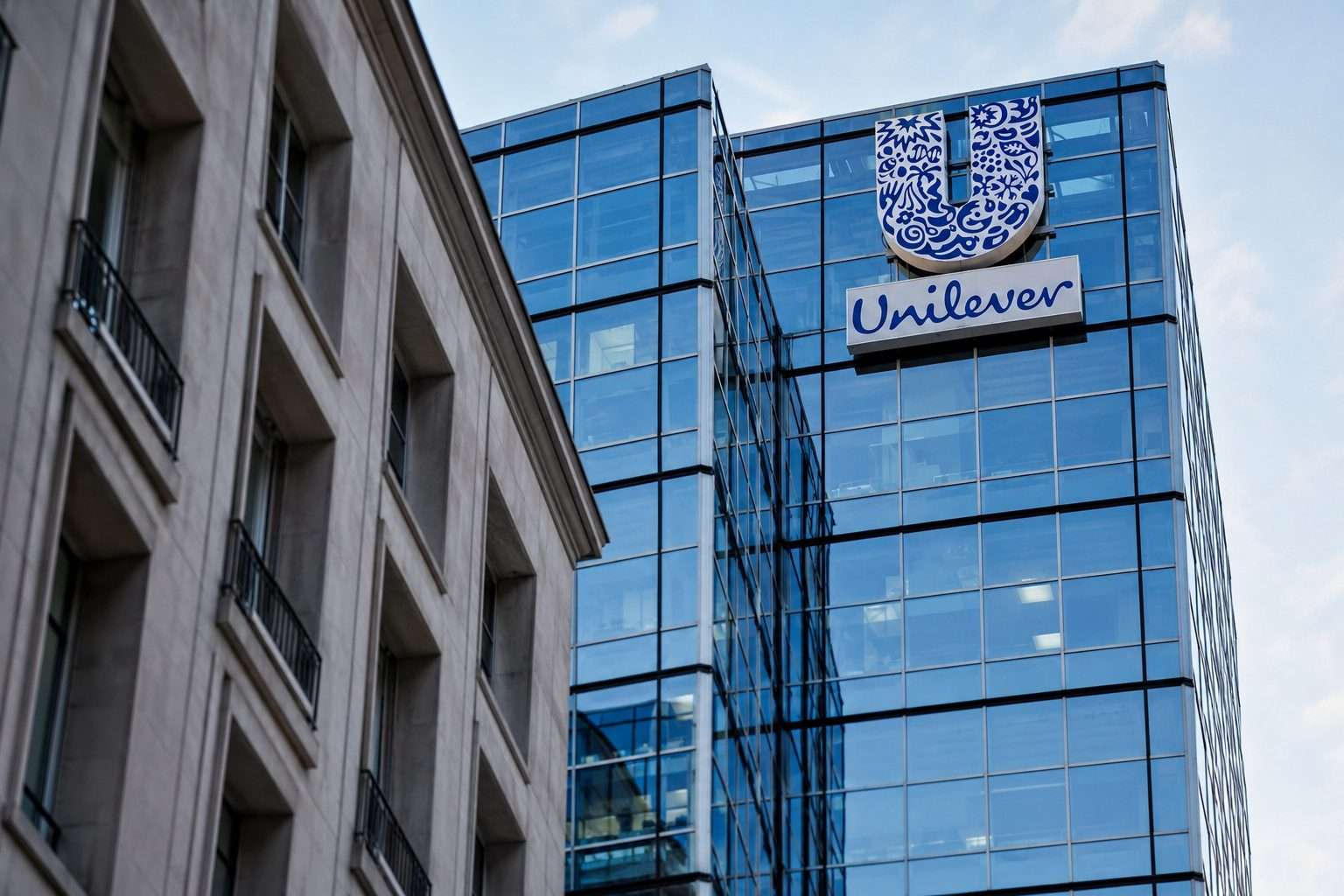
Unilever PLC ended the latest London trading session with a modest gain, giving investors a small rebound after a volatile stretch shaped by portfolio restructuring and questions over growth. The shares last traded at 4,386p on June 12, up 34p, or 0.78%, with reported volume of about 3.36 million shares; the stock’s 52-week range runs from 3,644p to 5,542.11p.
The move matters because Unilever is no longer being valued simply as a slow-moving consumer staples stock. Investors are judging whether CEO Fernando Fernandez can turn a sprawling group into a cleaner, faster-growing company after the Magnum Ice Cream demerger and the planned separation of most of the food business. In its Q1 2026 trading statement, Unilever reported 3.8% underlying sales growth — a measure that strips out distortions such as currency, acquisitions and disposals — with 2.9% volume growth and 0.9% price growth.
The bull case is that the quality of growth has improved. Volume growth means Unilever sold more products, not just charged higher prices, and its “Power Brands” delivered 5.0% underlying sales growth with 4.0% volume growth in Q1. Fernandez said Unilever was moving toward “a simpler, sharper Unilever with a structurally higher growth profile,” a message that supports the view that the company can earn a higher valuation if brand investment and portfolio focus translate into steadier sales. Unilever
The biggest strategic lever remains the planned combination of Unilever Foods with McCormick. The transaction values Unilever Foods at about $44.8 billion, gives Unilever and its shareholders 65% of the fully diluted combined company equity, and provides Unilever with $15.7 billion in cash, part of which is expected to support €6 billion of buybacks between 2026 and 2029. A buyback reduces the number of shares outstanding, which can lift earnings per share if profits are stable.
The bear case is that the deal is complex and not yet completed. Reuters reported that Unilever shares fell sharply when the McCormick plan was announced, with analysts and investors pointing to the structure, integration challenges and regulatory scrutiny; RBC analyst James Edward Jones said the route “does not strike us as a smooth way.” The deal is expected to close by mid-2027 and still requires McCormick shareholder approval, regulatory approvals and other closing conditions, leaving investors exposed to a long execution window. Reuters
The next major catalyst is July 28, when Unilever reports Q2 and half-year results. Investors will watch whether volume growth stays above the company’s target of at least 2%, whether emerging-market strength can offset slower developed markets, and whether management still expects 2026 underlying sales growth at the bottom end of its 4%–6% guidance range with modest margin improvement.
At today’s price, Unilever looks fairly valued rather than obviously attractive. A P/E ratio near 19.6 and a dividend yield around 3.86% give the shares defensive appeal, but the stock is not priced like a deep bargain, especially with the McCormick transaction, regulatory approvals and 2026 growth delivery still unresolved. For investors, the upside depends on proof that Unilever can turn portfolio simplification into faster, more reliable earnings growth; the risk is that deal complexity and uneven consumer demand keep the shares range-bound.