
London, July 9, 2026, 17:11 BST
- Unilever shares dropped 1.9% in London. The stock is now down about 2.6% from where it closed on Tuesday.
- Terry Smith is once again critical of the McCormick food merger, but most of his focus stays off near-term volumes.
- Investors are weighing if beauty and home care are enough to offset the risk from deal execution.
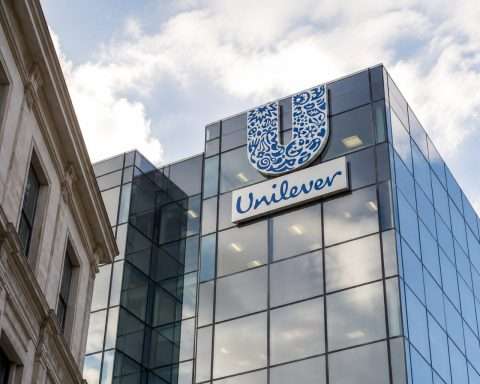
Unilever PLC LON:ULVR dropped almost 2% in London on Thursday, giving up most of Tuesday’s bounce. The move came as ex-shareholder Terry Smith renewed criticism of its $66 billion food deal, keeping focus on management and governance instead of product lines or profit margins. Delayed data from AJ Bell put the shares at 4,566p, off 1.9%, with market cap just under £98 billion. Based on Tuesday’s £46.89 close, the drop has wiped out about £2.6 billion from Unilever’s equity value.
This matters now because the latest drop isn’t about a new profit warning. Investors are reacting to Unilever’s plan for a new structure. The company aims to dig further into beauty, wellbeing, personal care and home care, while splitting off Foods via a merger with McCormick & Company NYSE:MKC. The deal would give Unilever and its shareholders 65% of the merged company and deliver $15.7 billion in cash to Unilever.
Pressure increased after FoodNavigator reported that Fundsmith founder Smith accused Unilever of misleading shareholders over its McCormick plan. Smith said he was told no more major disposals would follow the ice-cream demerger, yet said the McCormick deal “flies in the face” of that. Unilever called the move a “growth-led separation” creating two stronger businesses. Foodnavigator
| Unilever market snapshot | Latest cited figure | Investor read-through |
|---|---|---|
| London share price | 4,566p | Shed 1.9% today |
| Tuesday close | 4,689p | About 2.6% drop by Thursday |
| Market capitalisation | £97.99 bln | Value is £2.6 bln below Tuesday |
| Year high / low | 5,526p / 3,646p | Still trading far below the year’s peak after 2026 restructuring plan |
Smith’s criticism drew attention because Fundsmith didn’t just trim Unilever. Trustnet said Wednesday that Fundsmith exited Unilever as portfolio turnover hit 51.8% in the first half. The fund lost 2.9% while MSCI World rose 11.2% in sterling. Smith said he was “not fans of the idea that corporate activity solves fundamental problems.” Trustnet
But by the numbers, Unilever reported in April that its first-quarter underlying sales growth came in at 3.8%. That strips out currency and portfolio changes. Volume was up 2.9%. The company’s Power Brands segment rose 5.0% on the same underlying sales metric. Management reaffirmed its 2026 full-year outlook: growth expected at the low end of the 4%-6% target, and volume up at least 2%.
The focus for Unilever is still on Beauty and Wellbeing, where the company wants investors looking. On Thursday, Unilever said TRESemmé Professional was getting its biggest upgrade ever in the brand’s 75 years. The premium haircare market could jump to $252.95 billion by 2034 from $128.35 billion in 2026. Jopa Malantic, who heads the brand globally, said this was “not a refresh” but a new direction. Unilever
| Stock / index | Latest move cited | Why it matters for Unilever |
|---|---|---|
| Unilever PLC ADR NYSE:UL | $61.14, fell 1.1% in U.S. trading | Shows selling also hit U.S. shares, not just London |
| McCormick NYSE:MKC | $51.33, barely moved, slightly lower | Market still watching the deal partner |
| Procter & Gamble NYSE:PG | $147.05, slipped 0.9% | Sector competitor underperformed too |
| Colgate-Palmolive (NYSE:CL) | $91.94, off 1.2% | Consumer staples didn’t help buffer losses |
FTSE 100 dropped Thursday, dragged down by falling AstraZeneca (LON:AZN) shares and renewed Middle East tensions. The loss comes after the index’s largest single-day fall since May. While the broader market struggled, Unilever faces its own test. Investors are questioning if a slimmed-down group should trade at a higher multiple ahead of the food split.
There are some backing that idea. David Samra, managing director at Artisan Partners, told Reuters after the deal Unilever would “more logically separate” food and personal care, saying the remaining business should fetch a higher earnings multiple. Artisan called the transaction a portfolio-quality upgrade, not just a break-up, which could matter for sentiment. Reuters
The risk is simple. Regulators could hold up the deal. McCormick might have trouble with the bigger food company. Or investors could dump the U.S. shares they get. Any of that could weigh on valuation and slow the planned refocus. Unilever’s volume numbers show the core business is still working. But the stock price shows investors want more evidence the split will help, not hurt.