London, Feb 24, 2026, 08:40 GMT — Regular session
- LSEG dropped roughly 1.5% at the open in London.
- Attention shifts to the group’s FY 2025 preliminary results, expected Thursday.
- AI-fueled concerns about valuations linger, with activists still applying pressure in the background
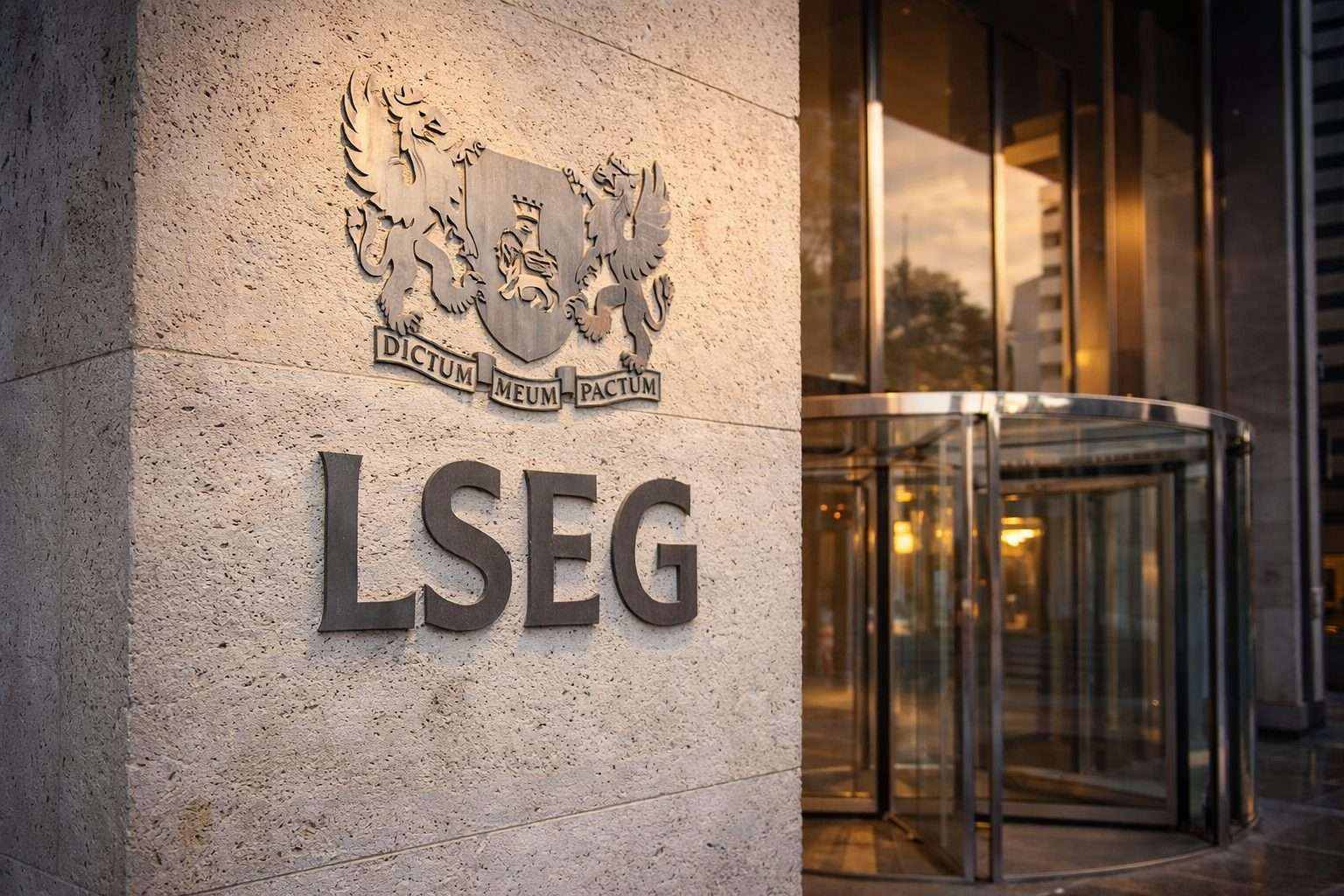
London Stock Exchange Group (LSEG.L) slipped 1.5% to 7,592 pence as of 0839 GMT, deepening losses after a sluggish start to the week for the market data and exchange giant. Shares have ranged from 7,590 to 7,696 pence so far in the session.
Timing here is key. LSEG’s preliminary FY 2025 results webcast lands on Thursday at 10:00 UK time, featuring chief executive David Schwimmer and CFO Michel-Alain Proch.
LSEG shares slid 2.5% to 77.06 pounds on Monday, underperforming a FTSE 100 that finished little changed, according to MarketWatch data. The company’s stock wrapped up the day still roughly 35% shy of its 52-week peak, the data showed.
Sentiment remains shaky. Another AI-driven selloff hit Wall Street, rattling investors once more. Reuters pointed to ongoing jitters over U.S. tariff policy and persistent geopolitical tensions in its latest global markets roundup.
Worries over AI have been circling the software and data space for weeks, with fresh nerves hitting U.S. cybersecurity names Monday after Anthropic rolled out its latest tool. “What you’re seeing today is really the continuation of a panic-driven, narrative-led selloff,” said Shrenik Kothari, a security and infrastructure analyst at Robert W. Baird. Reuters
The arrival of AI has put fresh pressure on LSEG, now under the watchful eye of Elliott Management. The activist investor has taken a stake and opened talks with the group, according to Reuters earlier this month, as calls mount from shareholders to boost both margins and performance. “LSEG maintains an active and open dialogue with our investors, while remaining focused on executing our strategy,” the company said in a statement. Goldman Sachs analysts, for their part, point out that AI-enabled analytic tools threaten only about 6% of LSEG’s total revenues. Reuters
The group has been pushing to prove it can expand into the next layer of market infrastructure. LSEG announced plans for an “on-chain” settlement platform—trading and settlements tracked across blockchain networks—designed for tokenised assets and built to work alongside traditional systems. “As tokenisation continues to mature, interoperability between traditional and digital market infrastructure will be critical,” said Angus Fletcher, global head of digital solutions at State Street. Reuters
London isn’t standing still on the exchange front. The London Stock Exchange’s Private Securities Market, operating under the UK’s PISCES regime—a framework built for periodic auctions of private company shares—is gearing up for its inaugural deal in the coming weeks, according to Reuters on Feb. 20. Over in the U.S., Nasdaq has been active in private markets for some time. “We are delighted that the first transaction will take place on our Private Securities Market in the coming weeks,” said LSE CEO Dame Julia Hoggett. Reuters
Thursday’s spotlight is on LSEG’s data-and-analytics growth, margin progress, and pricing defense—hard numbers matter, but tone could move the needle. With activists in the wings, even a suggestion of a larger capital return or portfolio shakeup won’t slip by unnoticed.
But that risk isn’t one-sided. Should results or guidance fall short, the stock could get stuck moving with the broader “AI disruption” narrative—here, valuations often shift abruptly on headlines, not fundamentals.
The financial calendar points to Thursday for preliminary results covering the year through Dec. 31, 2025. After that comes the group’s Q1 trading statement and annual general meeting, both set for April 23.