
London, June 19, 2026, 10:03 BST
- BP traded at 497.5 pence in a delayed quote, up 1.5%. The FTSE 100 was barely changed.
- Brent crude gained around 0.5% to trade back above $80 as talks between the U.S. and Iran in Switzerland were scrapped. Oil is still down sharply this week.
- BP shares dropped 2.9% to 490.05 pence on Thursday, the lowest in 15 weeks. The stock goes into Friday at that level.
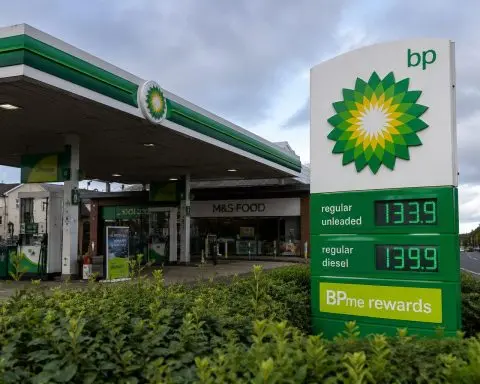
BP shares bounced at the open in London on Friday, trimming some of Thursday’s drop. The stock traded near 498.35 pence, or £4.98, after starting at 498.65 pence. Brent crude traded back above $80 a barrel.
The rebound didn’t make up for Thursday’s 2.9% drop, so BP is still close to 20% down from its 52-week high marked on March 31. The shares continue to move as a quick-trading stand-in for oil supply risk premium — traders are still pricing in the risk that crude deliveries could be interrupted.
Shell ticked up around 1% in London, a sign Friday’s action was mostly driven by the sector and not new BP news. BP’s bigger percentage gain pointed to how the stock has been reacting lately to moves in oil prices and news from the Middle East.
Brent added 0.6% to $80.36 after Switzerland announced Friday’s planned U.S.-Iran talks were off. Despite the gain, Brent and U.S. crude remained down about 8% for the week. Vandana Hari at Vanda Insights said prices “may have bottomed out.” KCM’s Tim Waterer said traders were looking for “hard evidence” of normal traffic in the Strait of Hormuz. Reuters
BP’s first-quarter underlying replacement-cost profit jumped to $3.2 billion, with help from its best oil trading since 2022. That figure, which matches up with adjusted net income, more than doubled on the back of the oil move. Oil and gas production came in a bit short of forecasts. BP also said fuel margins are still at risk if Middle East supply shifts.
Chief Executive Meg O’Neill is moving ahead with a company overhaul starting this month. BP is breaking down into an upstream division for oil and gas production and a downstream arm for refining, fuels, and customer units. The company now faces the challenge of delivering on the new structure, rather than planning another shake-up.
BP is looking to sell minority stakes in its Kaskida and Tiber Gulf of Mexico projects, according to people familiar with the matter. Both projects are each set up for around 80,000 barrels per day in capacity. BP is aiming for first oil at Kaskida in 2029 and Tiber in 2030. Any sale would raise cash for BP’s larger U.S. plans but would mean giving up some of the returns from what are currently two major developments.
There’s risk in both directions. If the U.S. and Iran hold to a deal and traffic through Hormuz picks up, the market could see extra crude, which might hit BP’s production earnings. Goldman Sachs sees Gulf exports nearing pre-conflict marks by the end of July, but says ongoing shipping and political threats could slow that. On the other hand, a flare-up would likely push oil prices up but create new supply snags and push BP’s costs higher.
BP’s move up on Friday mainly tracked oil prices, not a major jump in how the market values the company. For BP to keep climbing, investors want to see the company cut debt more, stick to stricter capital spending, and show that its reorganisation and asset disposals are actually helping cash flow. Last quarter’s numbers had some financial progress, but net debt still went up.