Washington, April 29, 2026, 14:04 EDT
- Gurwitch said the “cancer warrior” label made her feel at times “like a fraud,” shifting attention from daily life to performance. WTOP News
- The remarks come as her memoir, The End of My Life Is Killing Me: The Unexpected Joys of a Cancer Slacker, is drawing fresh coverage after its March 17 release.
- Lung cancer remains the leading cause of U.S. cancer deaths, even as treatment and early detection have improved.
Annabelle Gurwitch, the author and former television host, said the language often used around cancer can become its own burden, rejecting the idea that patients should always “seize the day” after a stage 4 lung cancer diagnosis.
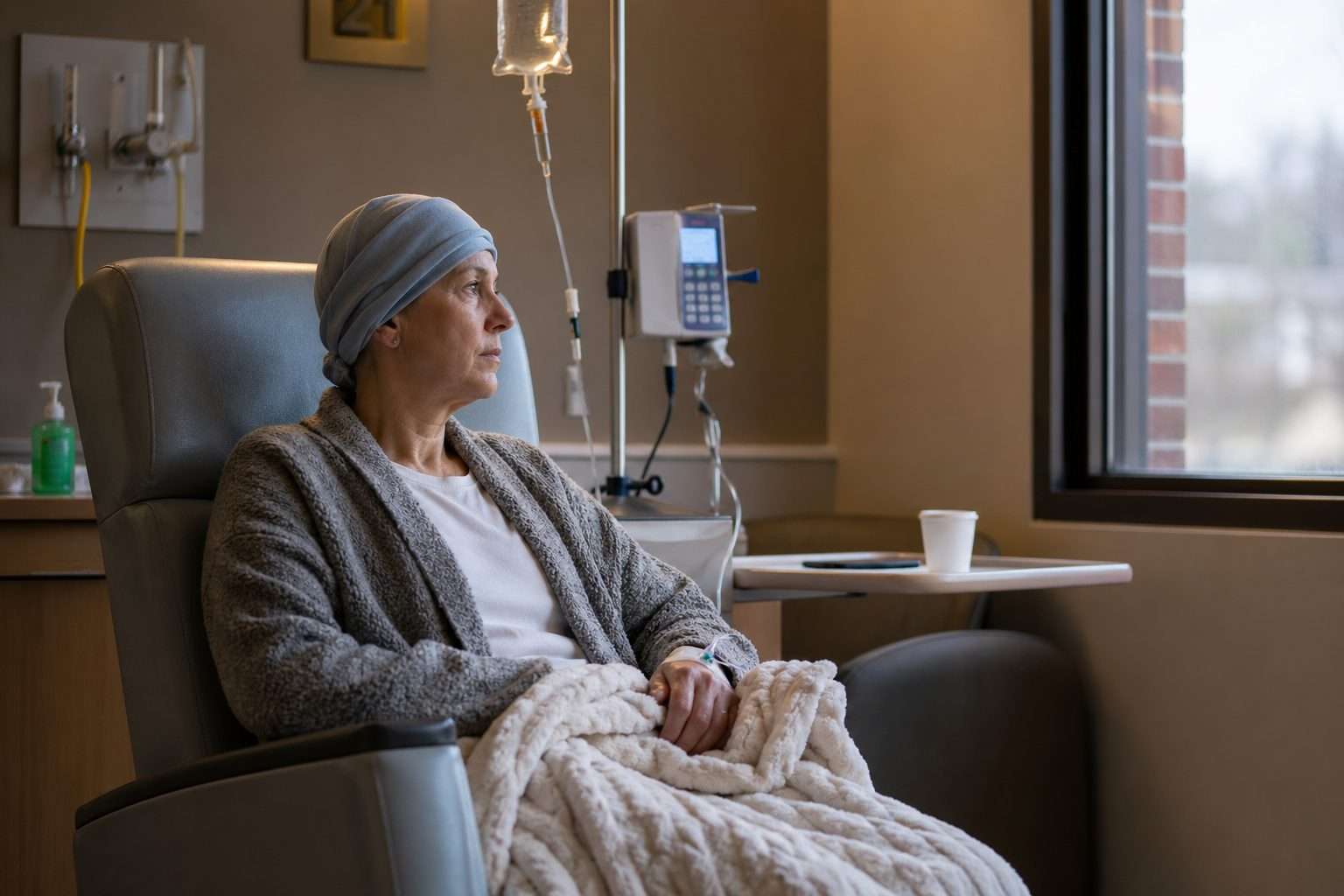
Gurwitch, 64, told WTOP she did not feel like a “warrior” after learning in 2020 that she had advanced lung cancer, despite having never smoked and having no symptoms. “I was asymptomatic for lung cancer,” she said. “I went in for a COVID test. I walked out with Stage 4 lung cancer.” WTOP News
The comments landed this week in a broader public moment for cancer survivorship, as more patients live longer with advanced disease but face years of treatment, scans and uncertainty. Gurwitch’s point is plain: longer survival does not turn illness into a motivational slogan.
She said the pressure to be brave could feel false. “When you get diagnosed, people will tell you you’re brave or you’re a warrior, and I don’t always feel brave and like a warrior,” Gurwitch told WTOP. “This lexicon of ‘cancer warrior’ … was not only limiting to me, but also made me feel some days like a fraud.” WTOP News
People, which published its account Wednesday, said Gurwitch is challenging that framing in her new book, The End of My Life Is Killing Me: The Unexpected Joys of a Cancer Slacker. The magazine said she credits advances in lung cancer treatment with helping her rebuild confidence and focus more on quality of life.
Gurwitch described the shock of diagnosis as disorienting, saying she got lost on the way to a grocery store two blocks from home, lost the ability to drive, fell behind on finances and had her car repossessed. She compared the mental blow to a brain injury.
Her treatment, she said, is a one-pill-a-day targeted therapy. Targeted therapy is cancer treatment aimed at specific proteins or changes that help cancer cells grow, divide and spread; the National Cancer Institute says tumors often need biomarker testing to see whether a drug target is present.
The medical backdrop is still severe. The American Cancer Society estimates about 229,410 new U.S. lung cancer cases and about 124,990 deaths in 2026, and says lung cancer accounts for roughly one in five U.S. cancer deaths.
But treatment has changed. The American Cancer Society says targeted drugs are most often used for advanced lung cancers, either with chemotherapy or on their own, and can work differently from standard chemotherapy, with different side effects.
The risk is that Gurwitch’s story, like many public cancer accounts, may sound more universal than it is. Targeted drugs depend on the cancer type, stage and molecular features, and the National Cancer Institute notes cancer cells can also become resistant to targeted therapy.
Gurwitch’s alternative to “seize the day” is quieter. “A better, kinder approach is to live each day like it’s the first day of your life, with curiosity for what is next,” she said. People
She is due to discuss the book and her experience Thursday night at Politics and Prose on Connecticut Avenue in Northwest Washington, WTOP reported. “There’s a greater percentage of us living longer now,” Gurwitch said. “There’s a lot of unknowns in the future.” WTOP News