
SAN FRANCISCO, March 24, 2026, 10:50 (PDT)
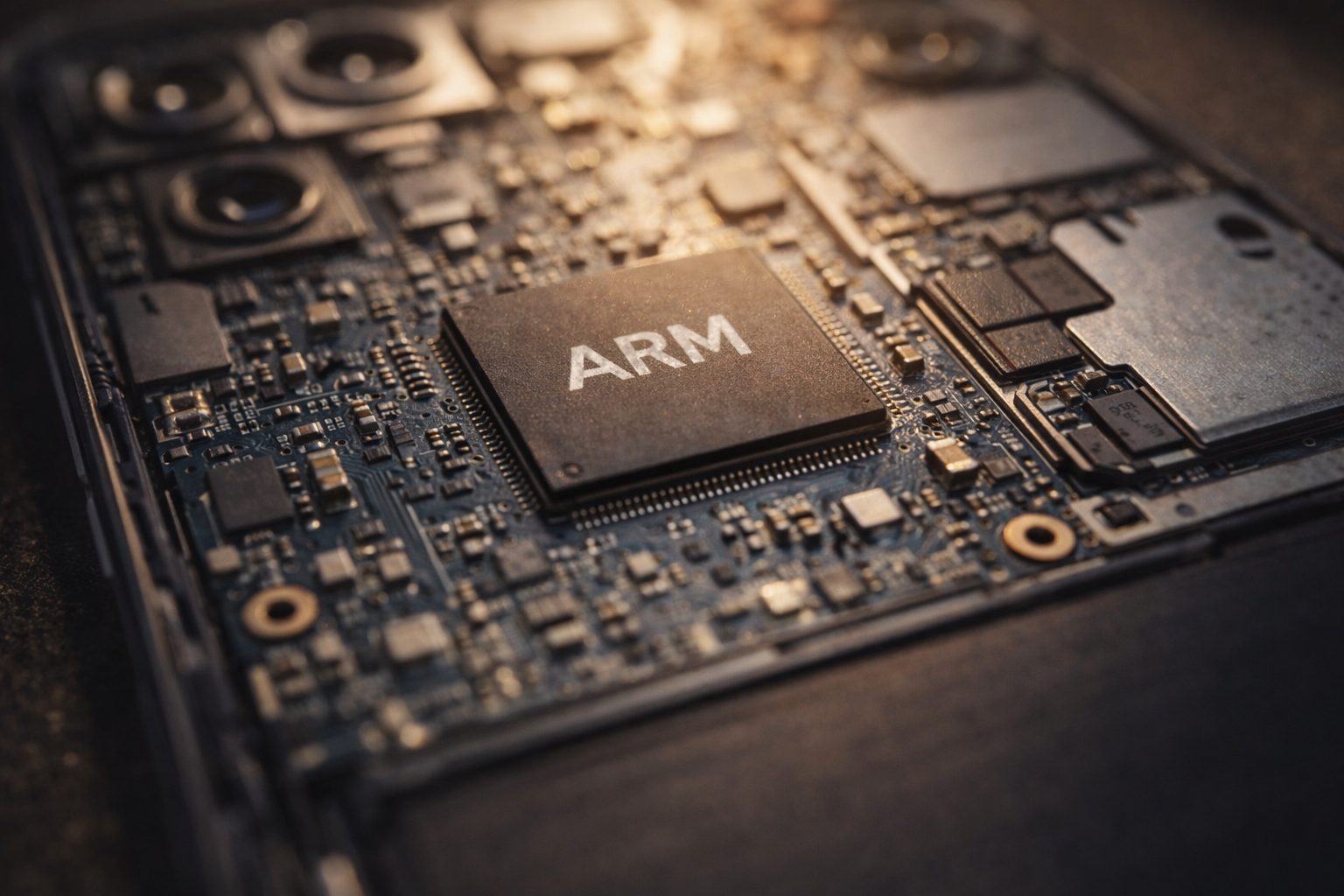
Arm Holdings shares gained 1.3% to $138.69 late Tuesday morning in New York after the British chip designer announced its AGI CPU, the company’s debut data-center processor built in-house for AI workloads.
This move is significant—it marks Arm’s shift from its traditional licensing and royalty model to actually selling finished silicon. That change comes as debate over the company’s valuation heats up, following HSBC’s claim just days ago that investors are missing the potential in Arm’s push into AI server CPUs, the workhorse chips at the center of data centers.
Frank Lee at HSBC called the move “game-changing” and bumped his rating on the stock up to buy from reduce, hiking his price target all the way to $205 from $90. According to Barron’s, that’s now the highest target on Wall Street. HSBC is projecting server CPU royalties will jump 76% per year through 2031, reaching around $4 billion. MarketWatch
“A very pivotal moment for the company,” is how Chief Executive Rene Haas described Tuesday’s launch to Reuters. The chip was co-developed with Meta, Arm said, and TSMC is set to handle manufacturing using a 3-nanometer process. Volume production? That’s on track for the second half of 2026. Reuters
Meta expects the new CPU to “significantly improve” density in its data centers as it expands its AI infrastructure. Arm, for its part, named OpenAI, Cloudflare, SAP, and SK Telecom as customers. OpenAI’s Sachin Katti said the chip should benefit the orchestration layer, which handles coordination of AI systems at scale. About Facebook
The product zeroes in on agentic AI—software designed to plan and execute actions with minimal human input, instead of merely responding to queries. That’s re-igniting demand for CPUs from entrenched server makers like Intel and AMD, whose chips take care of scheduling, memory, and managing data flow for AI accelerators.
Before Tuesday’s jump, shares were up roughly 25% this year. Arm says its power-efficient designs—mainstays in smartphones—are well-positioned for a bigger slice of the AI server market as computing needs ramp up.
Plenty of skepticism lingers around the rally. On Tuesday, a Simply Wall St piece flagged a contributor model valuing Arm at just $39.16 a share—well under where it trades now. Barron’s also pointed out that BofA is still sitting on the fence, holding a neutral rating and a $140 price target, citing weakness in the smartphone market.
The risks stack higher than the valuation debate. Back in February, Arm disclosed that developing a full chip was already pushing up its operating costs. Analysts caution that by moving into processor sales, Arm risks colliding head-on with existing customers like Qualcomm and Nvidia—companies still licensing its tech.
Malaysia is still weighing on sentiment. On March 4, the country’s anti-graft agency announced a probe into corruption and fraud claims linked to a 1.1 billion ringgit ($279 million) agreement. The deal in question: Malaysia’s 10-year commitment to pay Arm for chip design plans and associated knowhow.
According to LSEG, Arm is on track for $4.91 billion in revenue and net profit of $1.75 per share this fiscal year. Should the AGI CPU achieve widespread adoption, the conversation could shift—not to if Arm should get an AI premium, but to how big a slice of the data-center stack it might take.