
London, May 15, 2026, 10:03 BST
- Barclays slipped 2.8% to 422.55p in early London action, giving back some of Thursday’s advance.
- UK banks dropped after sterling slid to a five-week trough, while 10-year gilt yields pushed up near 5.11%.
- On Polymarket, Andy Burnham’s odds to be UK prime minister in 2026 sat near 42%. Across on Kalshi, traders pegged the chances of a Bank of England rate hold in June at 80%.
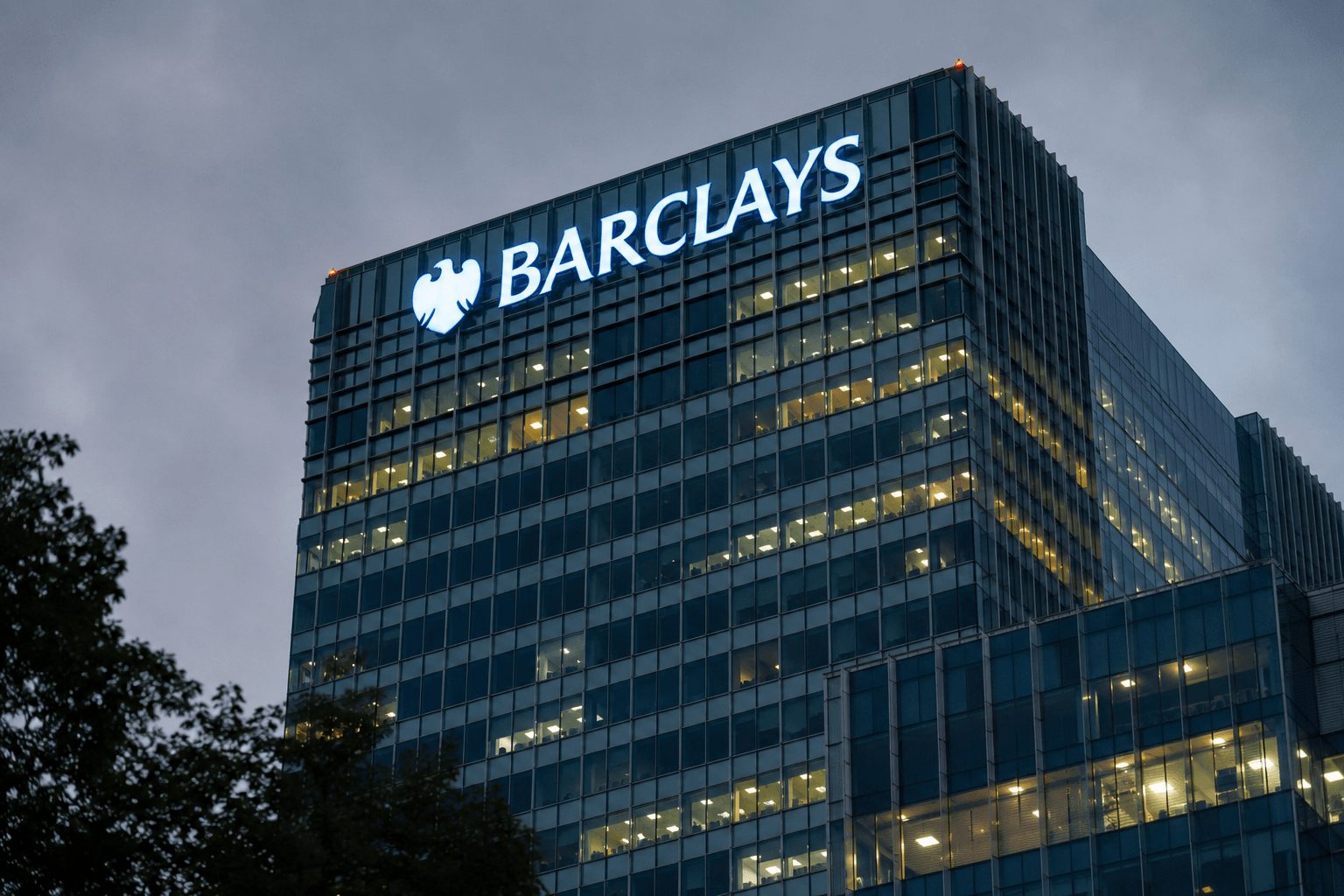
Barclays PLC slid Friday, losing ground as UK assets came under fresh pressure, dragging bank shares along and reviving political jitters in the market. By 09:47 London time, the stock was trading at 422.55p—down 12.15p, or 2.8%, from Thursday’s 434.70p close.
This shift is significant for Barclays, which faces two active threats: higher UK funding costs and uncertainty around potential Labour-led fiscal loosening. Reuters noted both Barclays and Lloyds dropped over 2% as UK banking shares slid on Friday.
UK gilt yields climbed across the board, with the 10-year jumping close to 12 basis points to around 5.11%. Sterling slipped to its lowest level in five weeks. The FTSE 100 shed 0.6%, and the FTSE 250, which tracks more UK-focused stocks, dropped 1.1%.
Jefferies economist Mohit Kumar told Reuters the worry in markets is that Andy Burnham could turn out “more left leaning.” If that’s the case, Kumar said, deficits may head higher. Reuters also noted Burnham has been given a route to a potential leadership challenge, should he secure a seat in Parliament. Reuters
Prediction markets are leaning into that story. Over on Polymarket, Burnham’s odds to be the next UK prime minister in 2026 sit at about 42%, topping “No Next PM in 2026” at 26%. The market has clocked $6.7 million in volume so far. Polymarket
Rates remain in focus. The Bank of England has its Bank Rate set at 3.75%, with its next move slated for June 18. Kalshi odds put the likelihood of no change at 80%, with a 16% chance for a minor increase. Over on Polymarket’s June BoE market, 89% are betting on a hold, 11% see a 25-basis-point hike.
Banks aren’t dealing with a one-sided picture here. While higher rates can boost lending margins, they also tend to put a damper on loan appetite and add to credit pressures. According to a Reuters poll this week, economists mostly see the BoE staying put at 3.75% this year. Still, close to 40% in the survey expect at least one hike before 2026 is through, and financial markets are betting on two moves.
Goldman Sachs analysts, responding to the poll, maintained their view that the BoE would hold rates steady, citing tighter financial conditions and a softening labour market. Even so, they flagged a “low hurdle” for rate increases if energy prices continue to rise. Over at HSBC, senior economist Elizabeth Martins said the bank had downgraded its UK outlook from “the good” to “the bad” scenario, citing economic fallout from the Middle East conflict. Reuters
Bank of England Chief Economist Huw Pill put fresh emphasis on rates Thursday, urging a “prompt but modest” hike to keep energy-driven inflation from taking hold. Pill—solo in backing a rise at April’s meeting—warned that delaying action until markets react could complicate things for the central bank. Reuters
Barclays has its own set of issues. In late April, the bank reported first-quarter pretax profit at £2.8 billion, edging higher from £2.7 billion the year before. But investors were underwhelmed by a £500 million buyback that fell short of the £614 million analysts had expected, and the bank took a £228 million hit related to the failure of lender MFS.
The investment bank is still the main wildcard for Barclays. The lender posted a 4% increase in investment-banking income, bringing it to £4 billion. But according to Reuters, its gains in fixed income, equities, and advisory trailed the average jumps notched by the heavyweight Wall Street banks. CEO C.S. Venkatakrishnan, speaking to Reuters, pointed to U.S. regulatory differences as handing American banks a “competitive edge.” Reuters
The picture could shift if things settle in Westminster, energy costs fall, and the BoE doesn’t budge. But trouble looms the other way: a prolonged leadership struggle, rising gilt yields, or steeper credit costs would put Barclays on the hook—not just for a broader UK bank slide, but also for fresh scrutiny of its risk management.
Barclays shares aren’t moving on earnings alone—lately, they’re tracking the ebb and flow of UK policy risk. Investors are tuned in to fiscal control, the Bank of England’s next steps, and whether a lender reliant on buybacks and markets revenue can hold that line.