
LONDON, May 15, 2026, 11:05 BST
- SSE bumped up its FY2025/26 adjusted EPS forecast to a range of 149p–154p, revising its prior 147p–152p outlook following an accounting shift at Neos Networks.
- Early Friday, Cboe Europe showed pricing for the shares at roughly 2,346.5p, a drop of 4.6%.
- The UK utility will release its preliminary results for the year ending March 31 on May 28.
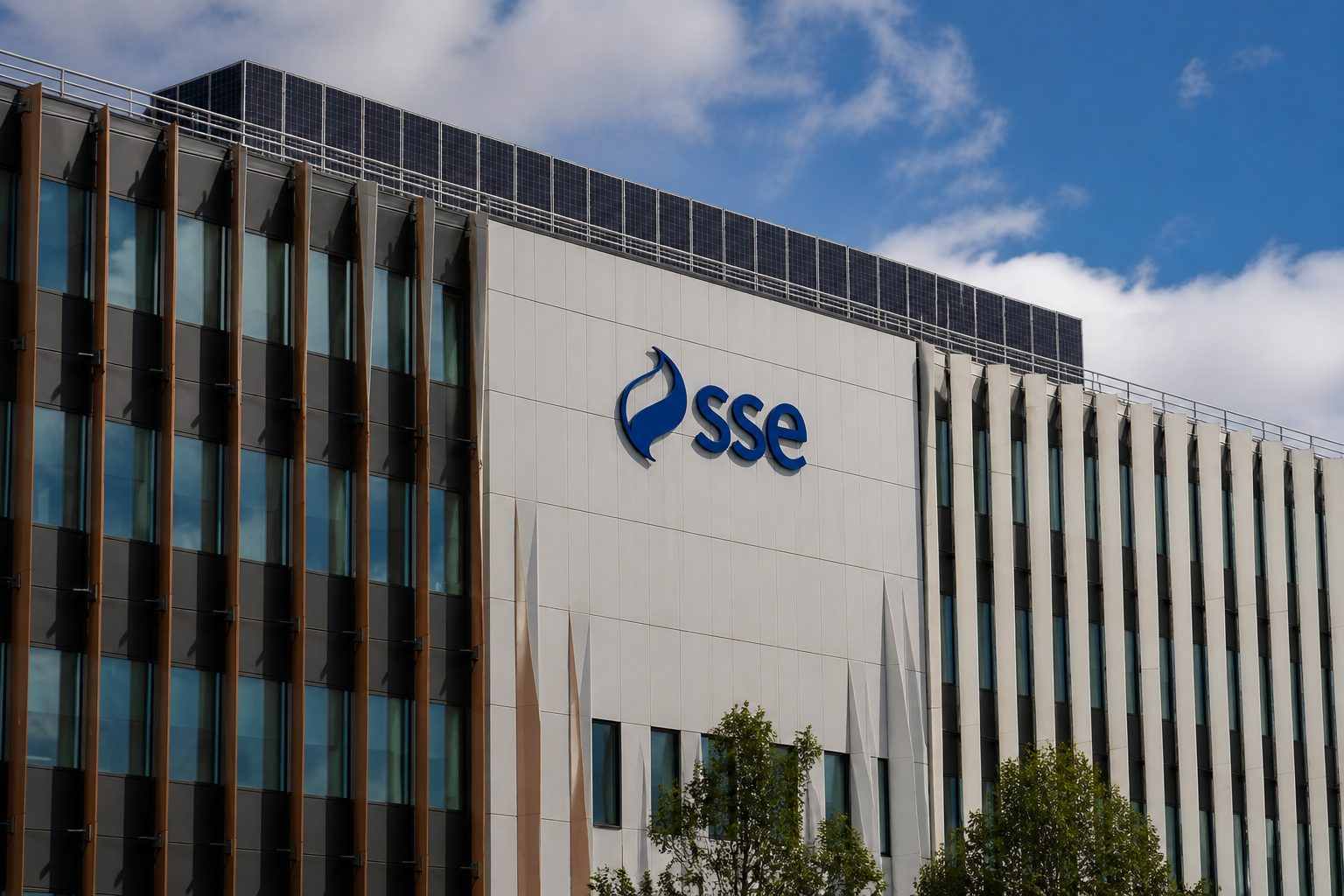
SSE PLC bumped up its full-year adjusted EPS outlook following a shift in how it tallies losses from Neos Networks, nudging the British utility’s profit target higher days ahead of its annual results. Adjusted EPS, the company’s preferred profit gauge, factors out certain items or restates them to give a cleaner earnings view.
What really matters for investors is where this upgrade comes from. Sure, the headline earnings get a lift, but it’s thanks to an accounting change—not because SSE has seen a real jump in wind output, power prices, or grid returns.
Timing is hardly trivial here. With SSE’s report coming up on May 28, investors are sizing up the company’s ability to bankroll its £33 billion spending spree on renewables and grid upgrades—pressure’s mounting as electric vehicle adoption, data centres, and electrification feed demand.
SSE has written down its equity in Neos to zero. With IAS 28 blocking it from booking any more losses from the associate, SSE’s adjusted earnings for FY2025/26 get a 1.9p bump—no need to revisit already published figures.
The firm has bumped its adjusted EPS guidance to 149p–154p from the previous 147p–152p range. Over in the Neos segment, adjusted operating profit improves, narrowing from a £17.9 million loss to just a £0.8 million loss, and adjusted profit after tax also shrinks its deficit—moving from a £23.2 million loss to £1.3 million.
SSE tweaked how it displays some of its alternative performance measures (APMs)—these are metrics defined by the company that sit alongside its statutory results. The group revised its FY2024/25 adjusted net debt and hybrid capital number down to £10.07 billion from the previous £10.19 billion. Guidance for FY2025/26 net debt, though, stays put at just over £10 billion.
SSE shares were already sliding. A live Cboe Europe read put the stock at 2,346.5p, off by about 4.6%. That drop came after declines across the previous five sessions as well.
After its April trading update, SSE reaffirmed that renewable power output should climb 10% to roughly 14.5 terawatt hours. Investment in regulated networks, the company said, is tracking about 60% higher than last year. Capital spending is still pegged at around £3.5 billion for the period.
The sector’s still wrestling with policy uncertainty. Last month, Britain detailed a plan to give fixed contracts to older low-carbon generators and bumped the Electricity Generator Levy up to 55% from 45%. That’s put pressure on utilities tied to UK power markets. SSE, like Centrica, RWE, and Ørsted, has been grouped among the most policy-exposed names.
Outside the numbers, SSE Airtricity and Activ8 Energies rolled out an all-island funded solar initiative this week, putting up as much as €200 million—roughly £170 million—for businesses across Ireland and Northern Ireland. Under the plan, customers sign power purchase agreements: they lock in a rate for on-site solar electricity, while the provider takes care of funding, installation, and ongoing maintenance.
Stephen Gallagher, managing director at SSE Airtricity, called the plan a way to deliver “price certainty” while taking away the “upfront cost barrier.” For Activ8, CEO Ciaran Marron pointed to energy price swings that “has become a real issue” for Irish businesses. SSE
The context in Ireland is driving momentum. On Thursday, the Irish government pointed to recent global energy shocks as a reason to ramp up domestic renewables. The Commission for Regulation of Utilities, for its part, attributes high energy prices to wholesale market costs, network structure, and required investments—not a breakdown in retail competition.
The cleaner EPS outlook leaves out cash, and risks remain clear-cut. Funding costs stand out: Kalshi showed 80% odds on no move from the Bank of England in June, with a 16% chance of a 1–25 basis point hike. Over on Polymarket, the probability of a 2026 BOE rate hike came in at 59%. Higher rates wouldn’t unwind the Neos accounting boost, but they could squeeze returns for SSE’s grid and renewables projects, both of which carry plenty of debt.