Hardware 6 August 2025 - 27 January 2026

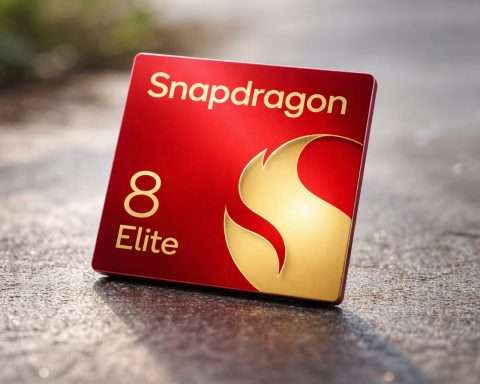
2nm chip showdown: Snapdragon 8 Elite Gen 6, Dimensity 9600 tipped to hit iPhone 18 month as Samsung foundry role debated

2nm chip showdown: Snapdragon 8 Elite Gen 6, Dimensity 9600 tipped to hit iPhone 18 month as Samsung foundry role debated

Flagship Android phones using Qualcomm’s Snapdragon 8 Elite Gen 6 and MediaTek’s Dimensity 9600 may launch the same month as Apple’s iPhone 18, according to tech reports. Some sources link Samsung’s 2nm process to a custom Qualcomm chip for the Galaxy S27 Ultra, but others say that shift is unlikely this cycle. Foundry capacity and possible DRAM shortages could affect release timing.
February 2, 2026
Tiny ‘earthquake-on-a-chip’ phonon laser aims to shrink smartphone wireless hardware

Tiny ‘earthquake-on-a-chip’ phonon laser aims to shrink smartphone wireless hardware

Researchers in Boulder have demonstrated an electrically driven “phonon laser” on a chip, generating surface acoustic waves at 1 GHz with 0.25 milliwatts output. The device, made from silicon, lithium niobate, and indium gallium arsenide, could shrink radio components in smartphones. Scaling to higher frequencies and mass production remain unresolved.
January 16, 2026
Xiaomi Redmi K90 Ultra leak hints at a built‑in cooling fan, IP68 protection, and an 8,000mAh+ battery

Xiaomi Redmi K90 Ultra leak hints at a built‑in cooling fan, IP68 protection, and an 8,000mAh+ battery

A leak points to Xiaomi testing a Redmi K90 Ultra prototype with a built-in cooling fan and IP68 water resistance, an unusual combination for mainstream phones. The device reportedly uses a MediaTek Dimensity 9500 chip and may feature a battery over 8,000mAh. The fan is said to be integrated into the camera module. Xiaomi has not confirmed the details.
January 10, 2026
Nvidia’s Tiny $4K Spark PC Puts a 1-PetaFLOP AI Supercomputer on Your Desk

Nvidia’s Tiny $4K Spark PC Puts a 1-PetaFLOP AI Supercomputer on Your Desk

Nvidia’s DGX Spark, billed as the world’s smallest AI supercomputer, is now shipping for $3,999 after delays and a price hike. The desktop device delivers 1 petaFLOP of AI performance with 128GB unified memory, powered by the new Grace-Blackwell Superchip. Major PC makers are launching their own Spark-based systems. Early adopters include universities, startups, and robotics labs.
October 14, 2025
Neuromorphic Computing: The Brain-Inspired Tech Revolutionizing AI and Beyond

Neuromorphic Computing: The Brain-Inspired Tech Revolutionizing AI and Beyond

Neuromorphic computing uses networks of artificial neurons and synapses on computer chips to mimic the structure and function of the human brain. These chips process and store information together, using spiking neural networks that activate only when needed, which sharply reduces energy use. The field began in the 1980s with research by Caltech’s Carver Mead.
August 19, 2025
IBM Quantum Supercomputer

IBM’s 4,000-Qubit Quantum Supercomputer Could Change Computing Foreve

IBM plans to build a 4,158-qubit quantum supercomputer by 2025 by linking three 1,386-qubit Kookaburra chips in its Quantum System Two platform. The company powered up the first System Two in late 2023, running three 133-qubit Heron processors. The new system will operate in the NISQ regime, using error mitigation rather than full error correction. Competitors include Google, IonQ, Quantinuum, and D-Wave.
August 17, 2025
How Quantum Key Distribution is Reinventing Secure Communication

Unhackable Codes: How Quantum Key Distribution is Reinventing Secure Communication

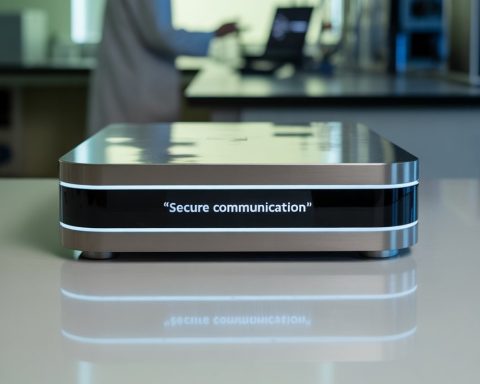
China’s Micius satellite enabled satellite-to-ground quantum key distribution over 1,200 km in 2016 and intercontinental QKD between Beijing and Vienna in 2017. In 2022, twin-field QKD reached 833 km in fiber. HSBC joined a London quantum-secured network in 2023. The NSA warns QKD is not ready for broad government use, urging a hybrid approach with post-quantum cryptography.
August 12, 2025
How Confidential Computing Lets Cloud Providers Process Your Data Without Decryption

No Peeking: How Confidential Computing Lets Cloud Providers Process Your Data Without Decryption

Major cloud providers expanded confidential computing in 2024–2025, enabling encrypted data processing on CPUs and GPUs with hardware TEEs such as Intel SGX, AMD SEV, and NVIDIA H100. Microsoft, Google, AWS, and IBM now offer confidential VMs and enclaves with attestation and key management. EU DORA and NIST CSF 2.0 drove adoption. ABI Research forecasts the market reaching $160 billion by 2032.
August 11, 2025
Zero Trust Security Explained

Zero Trust Security Explained: Principles, Real-World Use Cases, and 2025 Trends

Gartner forecasts 60% of enterprises will adopt Zero Trust as a baseline security model by 2025. NIST published detailed guidance on 19 Zero Trust architectures in June 2025. The U.S. government mandated Zero Trust plans for federal agencies, with the Department of Defense targeting full adoption by 2027. The Zero Trust market is projected to surpass $100 billion by 2032.
August 10, 2025
Energy Storage Revolution

2025 Energy Storage Revolution: Breakthrough Batteries, Gravity Systems & Hydrogen Powering the Future

The IEA says global storage capacity must hit 1,500 GW by 2030, a 15-fold jump, with batteries making up 90%. Battery prices dropped about 20% in 2024, averaging $115/kWh, as global manufacturing capacity reached 3.1 TWh. Rongke Power completed the world’s largest flow battery in China, while Energy Vault and Highview Power launched large-scale gravity and liquid air storage projects.
August 8, 2025
AI accelerators

Inside the $500‑Billion AI‑Chip Gold Rush: How Blackwell, Gaudi, Trainium & Friends Are Re‑Wiring the World in 2025

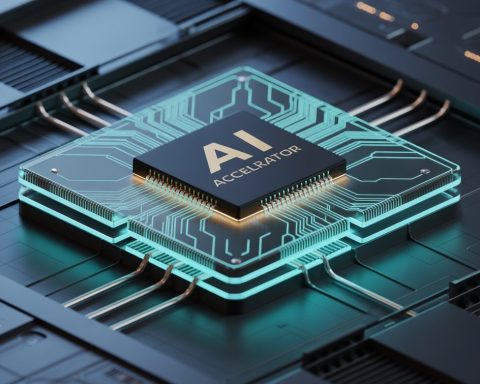
AMD CEO Lisa Su estimates the AI chip market will exceed $500 billion by 2028. NVIDIA’s Blackwell GPUs, AWS Trainium2, Intel Gaudi 3, and custom chips from Microsoft, Google, Meta, and Tesla are pushing performance and efficiency. MLPerf Training v5.0 shows Blackwell and Gaudi 3 leading benchmarks, with AMD’s MI350 debuting. Microsoft’s Maia 100 and Google’s TPU v5p highlight a shift to in-house AI silicon.
August 7, 2025
How Global Companies Are Leading the Green Computing Revolution

Eco-Tech Titans: How Global Companies Are Leading the Green Computing Revolution in 2025

Digital technology generates 2-4% of global carbon emissions, with projections reaching 14% by 2040 if trends continue. Data centers use up to 1.5% of the world’s electricity. Major tech firms including Amazon, Microsoft, Google, Apple, and others have set targets for net-zero emissions and increased renewable energy use, with several already powering operations with 100% renewable energy in multiple regions.
August 6, 2025