
Chip 6 August 2025 - 9 August 2025

Smart Fabrics with Sensors

Smart Fabrics with Sensors: The Wearable Tech Revolution You Didn’t See Coming

Imagine wearing a shirt that monitors your heart rate, a dress that lights up with your mood, or a soldier’s uniform that can transmit location and health data in real time. This isn’t science fiction – it’s the emerging reality of smart fabrics with sensors, also known as smart textiles or e-textiles. These are high-tech fabrics interwoven with sensors, microcontrollers, and conductive yarns to create clothing that “goes beyond mere attire; it becomes a tool for monitoring, enhancing performance, and providing data” spyscape.com. In other words, your clothing itself becomes a wearable gadget. Smart fabrics represent a quiet revolution in wearable technology, one that many people “didn’t see coming” because it’s seamlessly hidden in the clothes we already wear. Unlike
August 15, 2025
What is Silicon Photonics and How Does It Work

Silicon Photonics Revolution – Light-Speed Tech Transforming AI, Data Centers & More

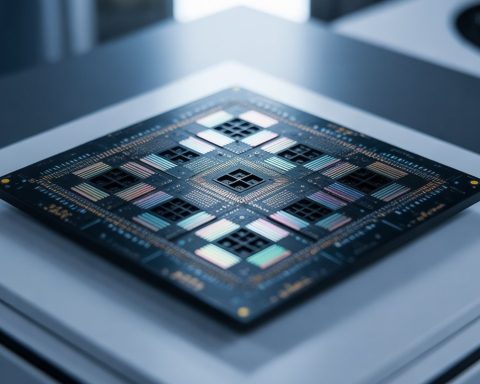
Silicon photonics is a technology that uses silicon-based photonic integrated circuits to manipulate light for processing and communication. In simple terms, it means building optical devices on silicon chips similar to how electronic circuits are made. These silicon photonic chips can send and receive data using light, enabling ultra-fast data transfer with high bandwidth and low energy loss ansys.com. Key components include waveguides, modulators, lasers, and photodetectors ansys.com. By integrating these on a silicon platform, engineers leverage well-established semiconductor manufacturing to mass-produce photonic devices, combining the speed of light with the scale of modern chip fabrication ansys.com. How does it work? Instead of electrical pulses in copper wires, silicon photonic circuits use infrared laser light coursing through micron-scale waveguides. Silicon
August 9, 2025
NPUs vs. TPUs

NPUs vs. TPUs: How On-Device AI Is Supercharging Your Gadgets in 2025

In a nutshell: Your smartphone, camera, and even your car are getting AI brains built-in – no cloud required. Special chips called NPUs and TPUs are transforming everyday devices into intelligent assistants capable of face recognition, voice commands, real-time translation, autonomous driving features and more. This on-device AI revolution promises lightning-fast responses, better privacy, and new features we once thought only possible with supercomputers. In this report, we’ll demystify NPUs and TPUs, see how they differ from CPUs/GPUs, and explore why tech giants like Apple, Google, Qualcomm, and Intel are racing to put these “AI brains” into everything from phones to cars. We’ll also highlight the latest 2024–2025 breakthroughs, expert insights, industry standards, and what the future holds for on-device
August 9, 2025
ultraviolet lithography

The Ultraviolet Revolution: Inside the Invisible $150M Machines Shaping the Future of Microchips

Every modern microprocessor – from the chip in your smartphone to the CPUs powering cloud AI – is born under ultraviolet light. In fact, some of the most advanced manufacturing machines on Earth shine invisible ultraviolet lasers onto silicon wafers to etch the nanoscale circuits that make microchips work. These machines cost upwards of $150 million each, are the size of a bus, and operate with almost sci-fi complexity – yet they are the unsung workhorses behind Moore’s Law and the continuous march of faster, smaller, more efficient processors reuters.com, technologyreview.com. Industry observers have even nicknamed the latest generation of these tools “the machines that saved Moore’s Law,” because without them, making cutting-edge chips would be practically impossible cloud.google.com. This
August 7, 2025
Superchips, Chiplet Breakthroughs, and a Global IC Boom

Silicon Revolution 2025: AI Superchips, Chiplet Breakthroughs, and a Global IC Boom

Integrated circuits are the invisible engines of our digital world, and 2025 is shaping up to be a landmark year for chip innovation and industry growth. After a brief downturn, the semiconductor sector is rebounding strongly – global chip sales in April 2025 hit $57 billion, up 22.7% from a year earlier semimedia.cc. Analysts predict double-digit growth will push annual semiconductor revenue to new records semimedia.cc, deloitte.com, putting the industry on track toward an aspirational $1 trillion market by 2030 deloitte.com. This surge is fueled by explosive demand for AI processors, massive data center build-outs, and recovering automotive and industrial chip orders semimedia.cc, deloitte.com. As one executive quipped, “Everything digital runs on semiconductors”, underscoring that chips have become as strategically
August 6, 2025
Inside the High-Stakes World of Global Semiconductor Production

Trillion-Dollar Chip Wars: Inside the High-Stakes World of Global Semiconductor Production

Semiconductors – those tiny silicon chips – are the brains of modern electronics, found in everything from smartphones and cars to data centers and fighter jets. In 2024, global semiconductor sales surged to over $600 billion and could hit $1 trillion by 2030, underscoring how critical chips have become to the world economy deloitte.com, blog.veolianorthamerica.com. These microchips enable trillions of dollars in downstream products and services, forming the hidden foundation of our digital lives steveblank.com. Yet over the past two years, semiconductor production has become a high-stakes arena of innovation and geopolitical tension. A pandemic-fueled chip shortage showed how fragile the supply chain can be, idling factories and driving up prices. At the same time, nations are racing to boost
August 6, 2025