Manufacturing 8 August 2025 - 23 January 2026

Boeing Flags 737 MAX Wiring Flaw, Putting First-Quarter Deliveries at Risk

Boeing Flags 737 MAX Wiring Flaw, Putting First-Quarter Deliveries at Risk

SEATTLE, March 10, 2026, 11:42 AM PDT Boeing on Tuesday flagged a wiring defect affecting certain undelivered 737 MAX aircraft, a setback that could push first-quarter deliveries off schedule. The issue marks yet another production snag for its flagship single-aisle jet, coming as Chief Executive Kelly Ortberg faces mounting pressure to restore confidence in the brand. Boeing shares were off roughly 1.4% by midday in U.S. trading.

March 10, 2026
Pegatron’s Texas factory deadline: Apple supplier targets end-March finish as AI server push heats up

Pegatron’s Texas factory deadline: Apple supplier targets end-March finish as AI server push heats up

TAIPEI, Jan 24, 2026, 03:17 Pegatron’s first factory in the U.S., located in Texas, is set to be finished by the end of March, the company’s CEO said Friday. Trial production — test runs before full-scale manufacturing — should kick off in late March or April. The facility will focus on AI server products, including systems powered by Nvidia chips.
January 23, 2026
artificial intelligence predictive maintenance

AI Maintenance Is Quietly Saving Trillions: Guide to Predictive & Prescriptive Maintenance – What It Is, Who’s Winning, and How to Start

Predictive maintenance forecasts failure risk from condition signals. Prescriptive maintenance goes further by recommending actions, parts, and timing to optimize cost, uptime, and risk. In 2025, the stack typically combines: “Now operators, reliability engineers, and technicians can interact with the AI directly and do their jobs much more efficiently.” — Anuradha Bhamidipaty, IBM Research. IBM Research
August 17, 2025
active vibration isolator

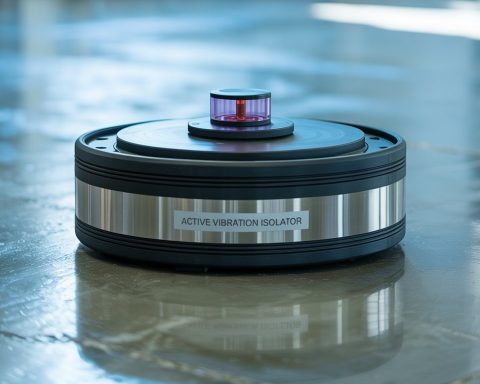
Silencing the Shake: How Dynamic Adaptive Vibration Isolators Are Revolutionizing Vibration Control

Dynamic adaptive vibration isolators are next-generation systems designed to sense and adapt to changing vibrations in real time. Unlike traditional vibration dampers that have fixed properties, these smart isolators can alter their stiffness or damping on the fly to maintain optimal performance. Essentially, they act like “intelligent shock absorbers” that tune themselves to cancel out unwanted shakes as conditions change. For example, a recent design incorporates a stiffness-adjustable structure with sensors to detect the incoming vibration frequency and an intelligent controller that switches the isolator between soft and stiff settings in real timenature.com. Analogous to the human body’s reflexes, the system perceives external vibrations and responds instantaneously, offering broad-spectrum vibration control rather than working well only in a narrow band
August 16, 2025
How Smart Production Lines Are Transforming Manufacturing

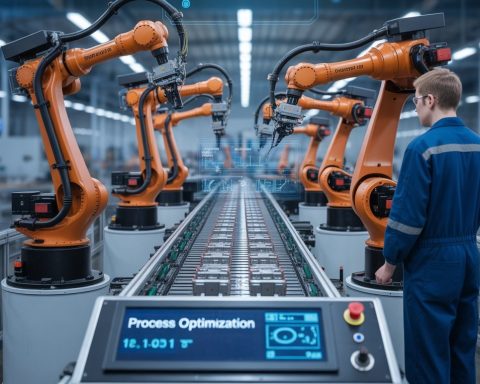
Inside the Industry 4.0 Revolution: How Smart Production Lines Are Transforming Manufacturing

Factories are getting a futuristic makeover. In the era of Industry 4.0, production lines are becoming “smart” – equipped with sensors, robots, and AI algorithms that communicate and make decisions in real time. The result is a new industrial revolution defined by intelligent, connected manufacturing systems. As one industry expert describes it, Industry 4.0 “encompasses all interconnected systems that exchange data to enhance factory efficiency” apollotechnical.com. No longer just hype, this transformation is well underway: 86% of manufacturing executives believe smart factory technologies will be the primary driver of competitiveness in the next five years blog.roboflow.com. Analysts project the value potential of Industry 4.0 to reach a staggering $3.7 trillion by 2025 mckinsey.com. In this report, we’ll explore what smart
August 10, 2025
What is Silicon Photonics and How Does It Work

Silicon Photonics Revolution – Light-Speed Tech Transforming AI, Data Centers & More

Silicon photonics is a technology that uses silicon-based photonic integrated circuits to manipulate light for processing and communication. In simple terms, it means building optical devices on silicon chips similar to how electronic circuits are made. These silicon photonic chips can send and receive data using light, enabling ultra-fast data transfer with high bandwidth and low energy loss ansys.com. Key components include waveguides, modulators, lasers, and photodetectors ansys.com. By integrating these on a silicon platform, engineers leverage well-established semiconductor manufacturing to mass-produce photonic devices, combining the speed of light with the scale of modern chip fabrication ansys.com. How does it work? Instead of electrical pulses in copper wires, silicon photonic circuits use infrared laser light coursing through micron-scale waveguides. Silicon
August 9, 2025
3D Printing is Transforming Manufacturing

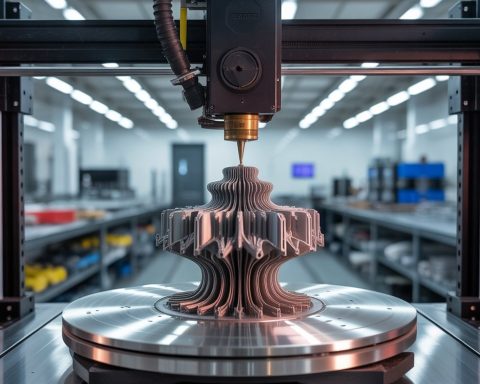
From Sci-Fi to Factory Floor: How 3D Printing is Transforming Manufacturing (2025 Report)

Additive manufacturing – better known as 3D printing – has evolved from a sci-fi concept into a revolutionary technology reshaping how we design and produce goods. Unlike traditional methods that cut or mold materials, 3D printing builds objects layer by layer, enabling unprecedented design freedom mitsloan.mit.edu. First used for prototyping in the 1980s, it has since expanded into producing functional parts across industries mitsloan.mit.edu. Today, anyone from hobbyists to aerospace engineers can “print” complex parts on demand, and the global 3D printing market has surged past the $20 billion mark wohlersassociates.com. In this 2025 report, we’ll explore the technology’s origins, how it works, its applications in key sectors, the advantages and limitations, current market trends, the latest news, expert insights,
August 9, 2025
The AI-Driven Revolution Saving Factories Millions

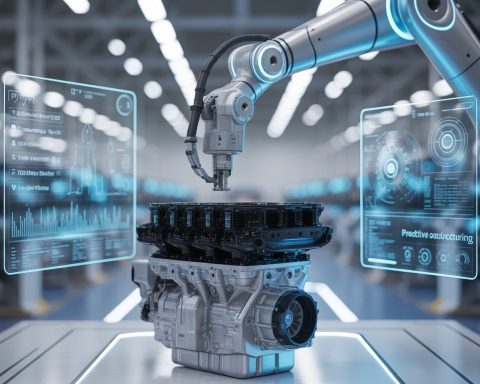
Predictive Manufacturing: The AI-Driven Revolution Saving Factories Millions

Predictive manufacturing refers to using data and advanced analytics to foresee events in production and act before problems occur. In simple terms, factories collect data from machines and processes, analyze it with AI algorithms, and predict issues or outcomes in advance germanedge.com. This approach grew out of predictive maintenance – the practice of anticipating equipment failures – and extends the idea to entire operations. Instead of reacting to machine breakdowns or quality defects, predictive manufacturing lets companies fix anomalies before they impact product quality, yield or downtime my.avnet.com. For example, by continuously monitoring sensor data, a manufacturer can catch a slight vibration or temperature spike in a machine and intervene before it causes a breakdown. As one industry expert explains,
August 8, 2025