Industry Innovation 9 August 2025 - 16 August 2025

Digital DNA - A New Era of Secure and Transparent Supply Chains

Digital DNA: A New Era of Secure and Transparent Supply Chains

Global supply chains have become incredibly complex – and increasingly vulnerable. Recent high-profile breaches and counterfeit scandals have shown that a weak link in one supplier can compromise an entire network. In fact, supply chain attacks are rising by hundreds of percent each year siliconangle.com, and a Dell survey found only 40% of organizations demand security details from their suppliers, leaving dangerous gaps siliconangle.com. To bolster trust and resilience, companies worldwide are turning to “Digital DNA” – a new approach to supply chain security and transparency. Much like genetic DNA uniquely identifies a person, Digital DNA refers to the unique digital fingerprint or record of a product throughout its lifecycle. By capturing everything about an item – from its origin
August 16, 2025
active vibration isolator

Silencing the Shake: How Dynamic Adaptive Vibration Isolators Are Revolutionizing Vibration Control

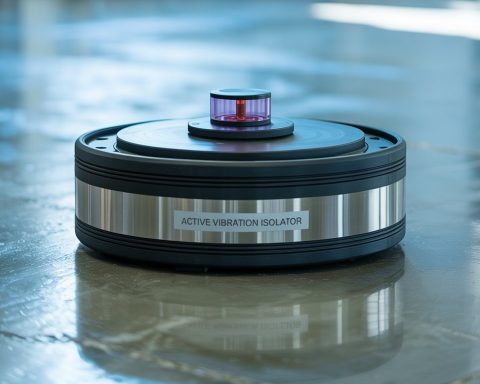
Dynamic adaptive vibration isolators are next-generation systems designed to sense and adapt to changing vibrations in real time. Unlike traditional vibration dampers that have fixed properties, these smart isolators can alter their stiffness or damping on the fly to maintain optimal performance. Essentially, they act like “intelligent shock absorbers” that tune themselves to cancel out unwanted shakes as conditions change. For example, a recent design incorporates a stiffness-adjustable structure with sensors to detect the incoming vibration frequency and an intelligent controller that switches the isolator between soft and stiff settings in real timenature.com. Analogous to the human body’s reflexes, the system perceives external vibrations and responds instantaneously, offering broad-spectrum vibration control rather than working well only in a narrow band
August 16, 2025
How Smart Production Lines Are Transforming Manufacturing

Inside the Industry 4.0 Revolution: How Smart Production Lines Are Transforming Manufacturing

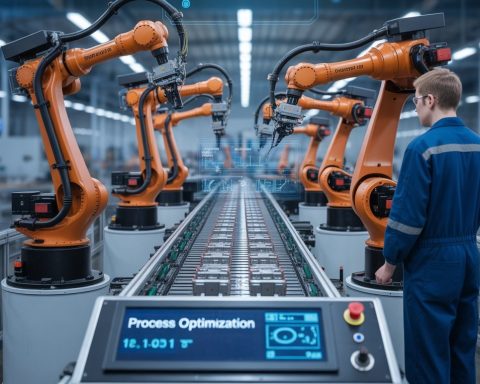
Factories are getting a futuristic makeover. In the era of Industry 4.0, production lines are becoming “smart” – equipped with sensors, robots, and AI algorithms that communicate and make decisions in real time. The result is a new industrial revolution defined by intelligent, connected manufacturing systems. As one industry expert describes it, Industry 4.0 “encompasses all interconnected systems that exchange data to enhance factory efficiency” apollotechnical.com. No longer just hype, this transformation is well underway: 86% of manufacturing executives believe smart factory technologies will be the primary driver of competitiveness in the next five years blog.roboflow.com. Analysts project the value potential of Industry 4.0 to reach a staggering $3.7 trillion by 2025 mckinsey.com. In this report, we’ll explore what smart
August 10, 2025
3D Printing is Transforming Manufacturing

From Sci-Fi to Factory Floor: How 3D Printing is Transforming Manufacturing (2025 Report)

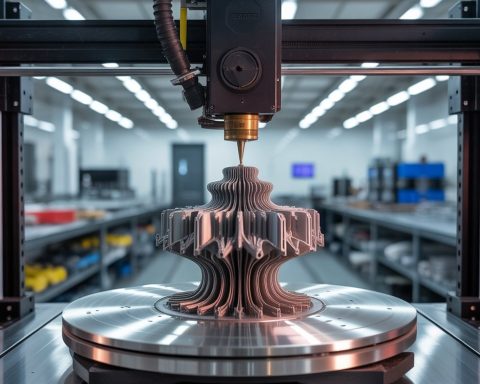
Additive manufacturing – better known as 3D printing – has evolved from a sci-fi concept into a revolutionary technology reshaping how we design and produce goods. Unlike traditional methods that cut or mold materials, 3D printing builds objects layer by layer, enabling unprecedented design freedom mitsloan.mit.edu. First used for prototyping in the 1980s, it has since expanded into producing functional parts across industries mitsloan.mit.edu. Today, anyone from hobbyists to aerospace engineers can “print” complex parts on demand, and the global 3D printing market has surged past the $20 billion mark wohlersassociates.com. In this 2025 report, we’ll explore the technology’s origins, how it works, its applications in key sectors, the advantages and limitations, current market trends, the latest news, expert insights,
August 9, 2025
Hydrogen Storage Revolution

The Hydrogen Storage Revolution: Unlocking Clean Energy’s Missing Link

Hydrogen is often touted as the “fuel of the future” in a clean energy economy. But to fulfill that promise, we must solve a critical challenge: how to store hydrogen efficiently, safely, and at scale. Why is this so important? Hydrogen can be produced in unlimited quantities from water and renewable electricity, and when used it emits no greenhouse gases – only water. It also carries more energy per pound than any other fuel, yet as a gas it’s extremely low-density energy.gov. In practical terms, that means uncompressed hydrogen would need a tank larger than a house to match the energy in a gasoline tank. Effective storage methods are therefore essential to pack enough hydrogen into reasonable volumes for use
August 9, 2025
Autonomous Mobile Robot Revolution

The Autonomous Mobile Robot Revolution: How AMRs Are Changing Industry and Society

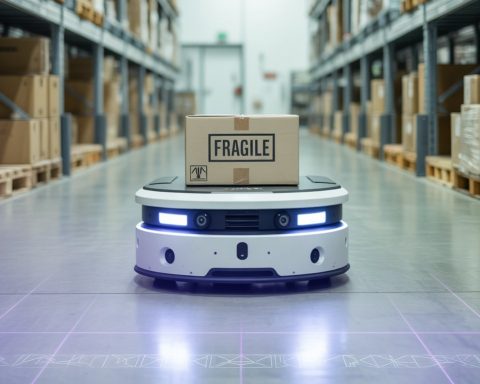
Imagine a robot zipping through a warehouse aisle at midnight, restocking shelves while workers sleep – or a knee-high machine trundling down the sidewalk to deliver your lunch. This isn’t science fiction, it’s happening today. Autonomous Mobile Robots are on the rise, quietly transforming how goods are moved, hospitals operate, and even how we get our groceries. In warehouses, online giants like Amazon would have difficulty keeping up with demand if it weren’t for these robots control.com. These smart machines take on the dull, heavy, or tedious jobs, freeing humans for safer and more skilled work. And they aren’t confined to factories – you might spot delivery robots on a college campus or cleaning robots scrubbing floors at the supermarket
August 9, 2025