Physics 7 August 2025 - 19 August 2025

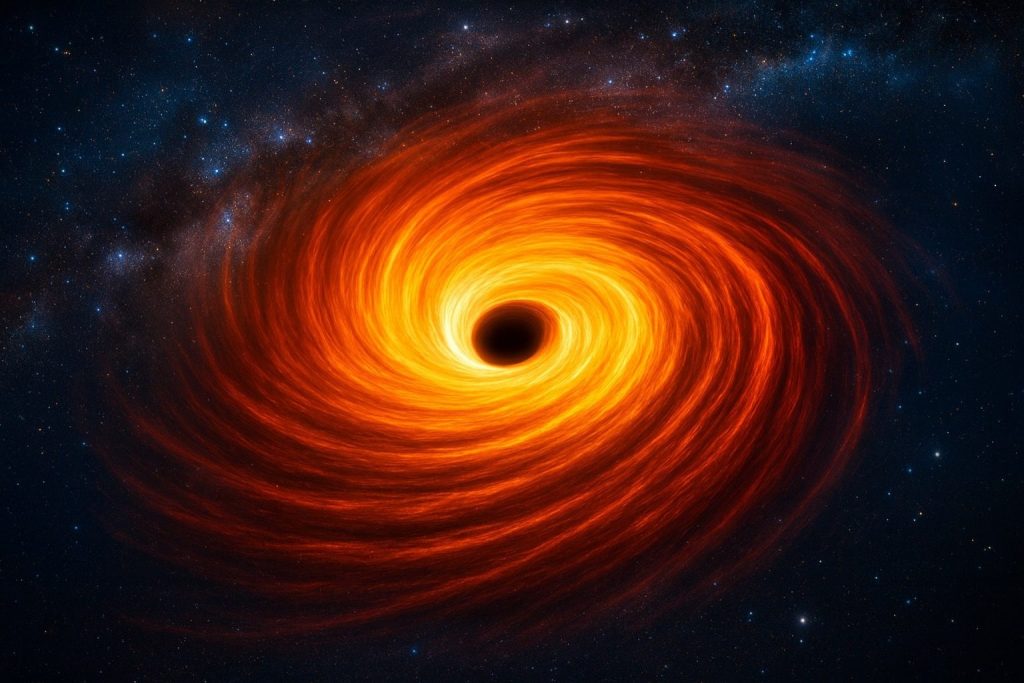
Tiny Primordial Black Holes and the Human Body: New Study Calculates the Real Risk of a Cosmic “Bullet”

Tiny Primordial Black Holes and the Human Body: New Study Calculates the Real Risk of a Cosmic “Bullet”

A new study in International Journal of Modern Physics D finds a tiny primordial black hole passing through a human would cause little or no injury unless it weighed at least 140 billion tons. Even then, the odds of such an event are estimated at one in a quintillion years. The research has drawn widespread media coverage since November 21.
November 26, 2025
nuclear fusion

Fusion Energy Frenzy: Are We Closer Than Ever to Unlimited Clean Power?

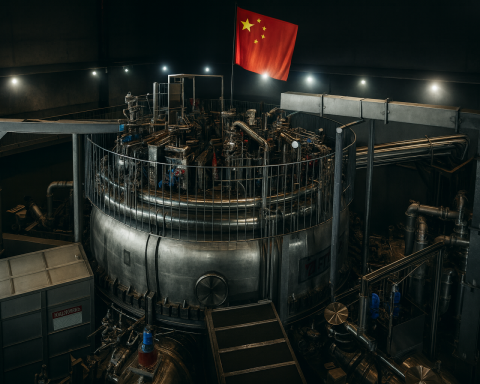
China’s EAST tokamak set a world record in January 2025, sustaining high-performance fusion plasma for 1,066 seconds. ITER in France, funded by 33 countries, targets first plasma in 2035 but faces delays and cost overruns. The US NIF achieved fusion ignition in December 2022. Net power from fusion remains unproven, despite recent milestones.
August 19, 2025
Cosmic Gold Rush

Cosmic Gold Rush: Inside the 2025 Race to Harvest Asteroid Riches

NASA’s OSIRIS-REx returned 121.6 grams of asteroid Bennu material to Earth in 2023, the largest sample yet. The Psyche mission, launched in 2023, targets the metal-rich asteroid 16 Psyche, valued at $10,000 quadrillion, for a 2026 rendezvous. AstroForge received the first FCC deep-space mining license in late 2024 and plans two asteroid missions in 2025. China launched Tianwen-2 on May 29, 2025, to collect samples from Kamoʻoalewa.
August 19, 2025
IBM Quantum Supercomputer

IBM’s 4,000-Qubit Quantum Supercomputer Could Change Computing Foreve

IBM plans to build a 4,158-qubit quantum supercomputer by 2025 by linking three 1,386-qubit Kookaburra chips in its Quantum System Two platform. The company powered up the first System Two in late 2023, running three 133-qubit Heron processors. The new system will operate in the NISQ regime, using error mitigation rather than full error correction. Competitors include Google, IonQ, Quantinuum, and D-Wave.
August 17, 2025
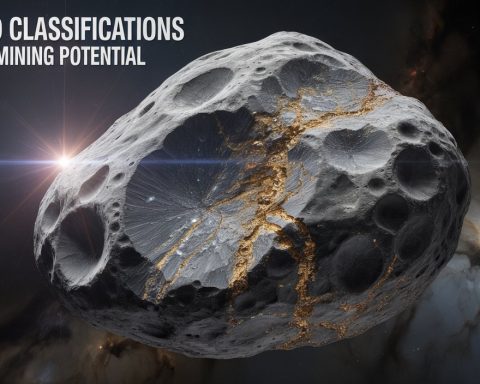
Asteroid Classifications and Their Mining Potential

Asteroid Minerals: Mining C-Type, S-Type & M-Type Space Rocks Worth Trillions

C-type asteroids make up over 75% of known asteroids and are rich in water and organics, while S-types contain significant metals including platinum and gold. M-type asteroids, though rare, hold vast iron-nickel and platinum-group metals. NASA's Psyche mission launched in 2023 to study asteroid 16 Psyche, and OSIRIS-REx returned Bennu samples in 2023. Launch costs have dropped below $2,000 per kilogram.
August 17, 2025
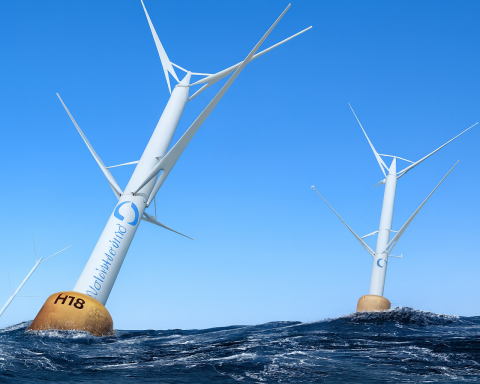
Deep-Water Wind - Floating Turbines

Deep-Water Wind Revolution: Floating Turbines Set to Transform Offshore Energy

Hywind Scotland, the world’s first floating wind farm, began operation in 2017 with five spar-buoy turbines totaling 30 MW and a 54% capacity factor. By mid-2025, global floating wind capacity reached about 200–250 MW, with Europe accounting for 208 MW by late 2023. Industry forecasts expect 6–7 GW operational worldwide by 2030. Current costs exceed $200/MWh but are projected to drop sharply by 2050.
August 16, 2025
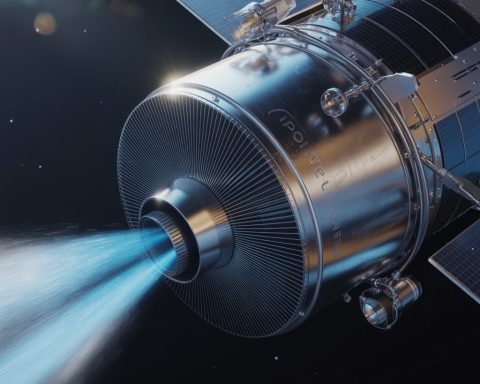
Satellites Powered by Water

Satellites Powered by Water? The Revolutionary Propellant Changing Spaceflight

Momentus Space’s Vigoride-5 raised its orbit by 3 km in January 2023 using a microwave electrothermal thruster powered by water. HawkEye 360 and Capella Space began commercial use of water thrusters in 2018, with BlackSky Gen-2 joining by 2024. ArianeGroup plans a dual-mode water engine demo in 2026. Pale Blue’s water ion thrusters launched in 2024, with further tests set for 2025.
August 16, 2025
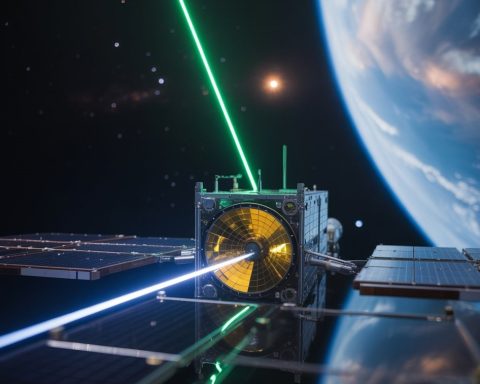
Laser Reflectors are Revolutionizing Satellite Communications

How Laser Reflectors are Revolutionizing Satellite Communications

NASA’s Lunar Laser Communication Demonstration in 2013 achieved 622 Mb/s downlink from lunar orbit. In June 2023, MIT’s TBIRD CubeSat set a record with a 4.8 TB transfer in five minutes. By 2024, Europe’s SpaceDataHighway logged over 80,000 laser links and 2.5 petabytes downloaded. In December 2023, NASA linked the ISS to its LCRD optical relay, completing a two-way laser relay.
August 14, 2025
How Quantum Key Distribution is Reinventing Secure Communication

Unhackable Codes: How Quantum Key Distribution is Reinventing Secure Communication

China’s Micius satellite enabled satellite-to-ground quantum key distribution over 1,200 km in 2016 and intercontinental QKD between Beijing and Vienna in 2017. In 2022, twin-field QKD reached 833 km in fiber. HSBC joined a London quantum-secured network in 2023. The NSA warns QKD is not ready for broad government use, urging a hybrid approach with post-quantum cryptography.
August 12, 2025
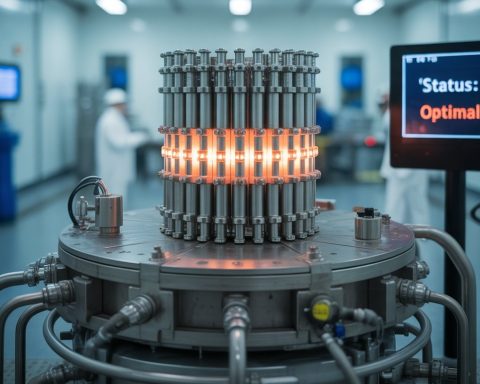
Small Modular Reactors

Small Modular Reactors: Tiny Nukes, Big Revolution in Clean Energy

NuScale’s 77 MWe SMR became the first design certified by the U.S. NRC in 2020, with a six-module plant planned in Idaho by 2029. China’s HTR-PM began commercial operation in December 2023, while Canada licensed a 300 MWe BWRX-300 at Darlington in April 2025. The UK selected Rolls-Royce SMR for at least three units in June 2025, targeting grid connection in the mid-2030s.
August 11, 2025
Sodium-Ion Batteries

Sodium-Ion Batteries Are Coming – Cheaper, Safer and Poised to Disrupt Lithium-Ion

CATL announced a second-generation sodium-ion cell with 175 Wh/kg energy density, targeting mass production by December 2025. China’s HiNa and Datang connected a 100 MWh sodium-ion storage farm in Hubei in July 2024. JAC began serial production of a sodium-ion EV in January 2024. Natron Energy opened North America’s first mass-production sodium-ion battery plant in Michigan in 2022.
August 10, 2025
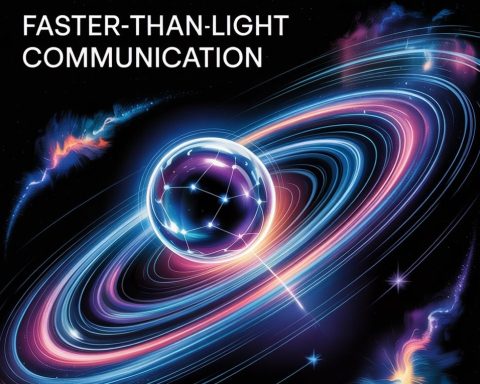
Faster-Than-Light Communication

Breaking the Universe’s Speed Limit: The Quest for Faster-Than-Light Communication

The speed of light in vacuum is 299,792 km/s, and relativity forbids information from exceeding it. In 2023, UK researchers proposed “Hyperwave” communication using warp bubbles for superluminal data transfer, but technical barriers persist. In July 2024, physicists argued tachyons could be consistent if future states affect the present, renewing debate over faster-than-light particles.
August 7, 2025