WASHINGTON, March 11, 2026, 10:06 EDT
- The latest public U.S. Space Force projection, cited by CBS News, moved the likely re-entry to 12:03 a.m. ET Wednesday from NASA’s earlier 7:45 p.m. Tuesday estimate. 1
- NASA says most of the 1,323-pound spacecraft should burn up, with the risk of harm to anyone on Earth about 1 in 4,200. 2
- The probe is falling years earlier than expected because stronger solar activity increased atmospheric drag. 2
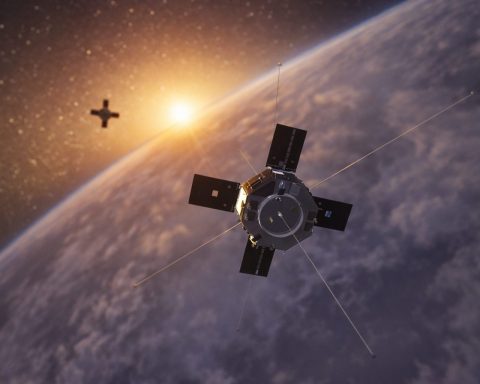
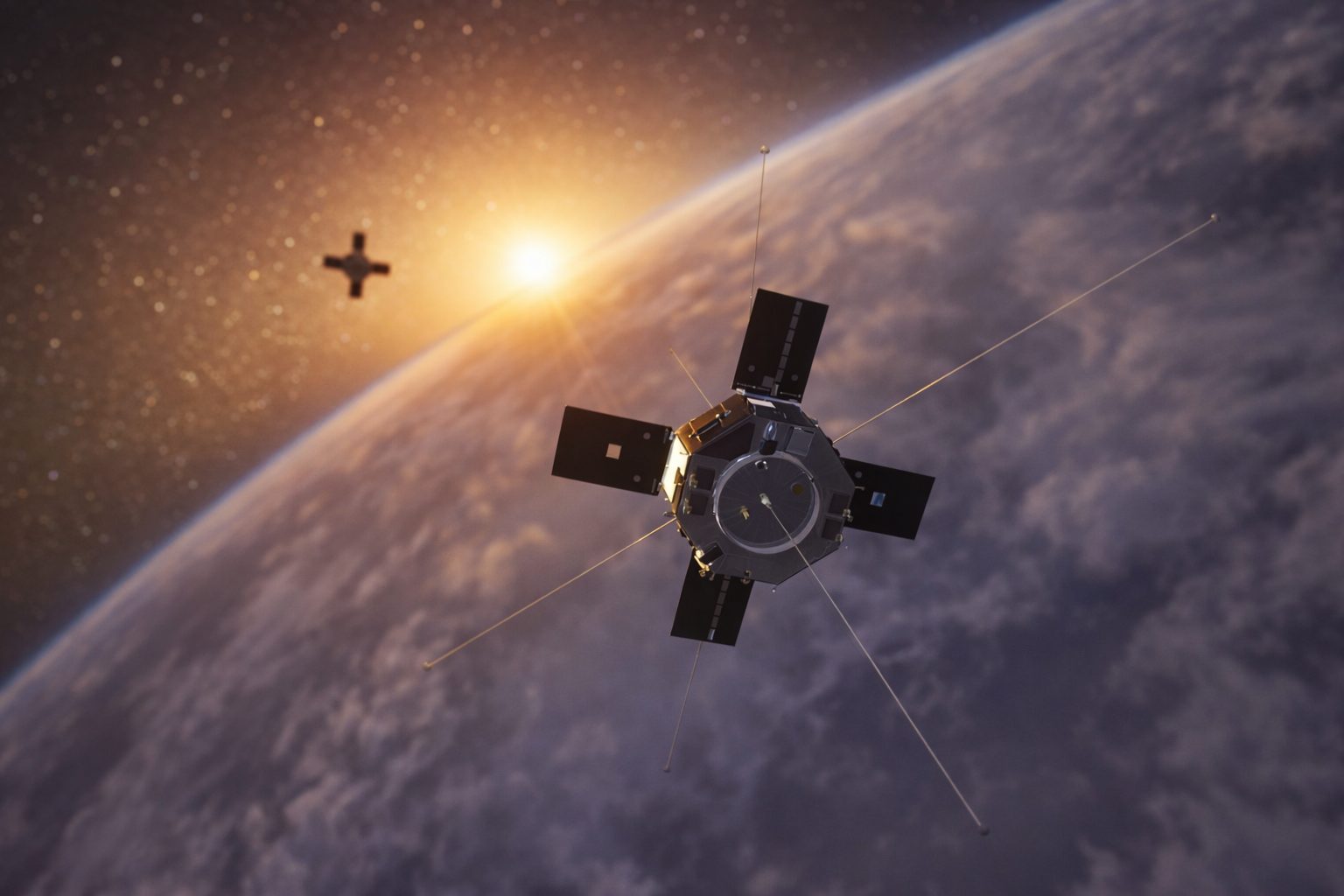
The latest public tracking on NASA’s retired Van Allen Probe A had pushed the spacecraft’s most likely re-entry past midnight U.S. Eastern time on Wednesday, leaving the timing of its return to Earth uncertain even in the final stretch. NASA says most of the 1,323-pound craft should burn up in the atmosphere, though some components may survive. 1
That matters now because the re-entry window slipped from NASA’s initial Tuesday-evening estimate and remains wide, showing how hard it can be to pin down the fall of an aging satellite in a stronger solar cycle. It also marks the end of a mission whose data still helps scientists study space weather, shorthand for solar activity that can hit satellites, astronauts, communications, navigation and even power grids on Earth. 1
CBS News reported late Tuesday that the latest U.S. Space Force projection put the most likely re-entry at 12:03 a.m. Eastern on Wednesday. NASA’s public notice, posted on March 9 and last updated on March 10, had earlier pointed to about 7:45 p.m. Eastern on Tuesday, with a plus-or-minus 24-hour margin. 1
Probe A launched with its twin, Probe B, on Aug. 30, 2012 for what was meant to be a two-year mission. The pair flew through the Van Allen belts — rings of charged particles trapped by Earth’s magnetic field — to track how particles are gained and lost in that region. 2
NASA says the mission was the first built to operate for years inside the belts, an area where most spacecraft and astronaut missions try to limit exposure because radiation can damage hardware and people. Managed and operated by Johns Hopkins University Applied Physics Laboratory, the probes also produced the first data showing that a temporary third radiation belt can form during periods of intense solar activity. 2
When the mission was retired in 2019, project scientist Sasha Ukhorskiy said the probes “rewrote the textbook on radiation belt physics.” In the same NASA summary, mission scientist David Sibeck said the observations had already produced more than 600 peer-reviewed papers and over 55 Ph.D. theses. 3
The timing, though, remains slippery. Jonathan McDowell, an astrophysicist who tracks satellites and launches, told Scientific American on Tuesday that the re-entry time is “still very uncertain,” underscoring how quickly drag estimates can move on an object in a highly elliptical orbit. 4
The main downside scenario is straightforward: tougher components survive, and debris falls over land rather than open water. A NASA spokesperson told Scientific American there was no targeted landing area if any pieces made it through re-entry, though analysts note water covers roughly 70% of Earth’s surface, tilting the odds toward an ocean splashdown. 4
NASA says Probe A is coming down years earlier than planners expected because the current solar cycle has been more active than forecast. After scientists confirmed solar maximum in 2024, stronger space weather expanded the upper atmosphere and increased drag on the retired spacecraft, pulling it lower faster than earlier models projected. 2
Uncontrolled re-entries are common enough that the episode is notable more for the spacecraft than for the mechanics. The Guardian reported that only one person is known to have been struck by falling manufactured space debris, an Oklahoma woman in 1997 who was not injured. 5
Probe B is not expected to re-enter before 2030, NASA says. The public risk from Probe A may be small, but its end comes with a familiar lesson: tracking can narrow the window, not erase the uncertainty. 2