
LONDON, April 28, 2026, 18:32 BST
- Gradient Weather, a new Android weather app, is picking up attention as an alternative to Pixel Weather.
- Timing is notable here, following Google’s shift that left most non-Pixel Android users with stripped-down weather search results.
- Custom alerts, a shifting weather interface, and privacy promises drive its appeal—though several features are locked behind Premium.
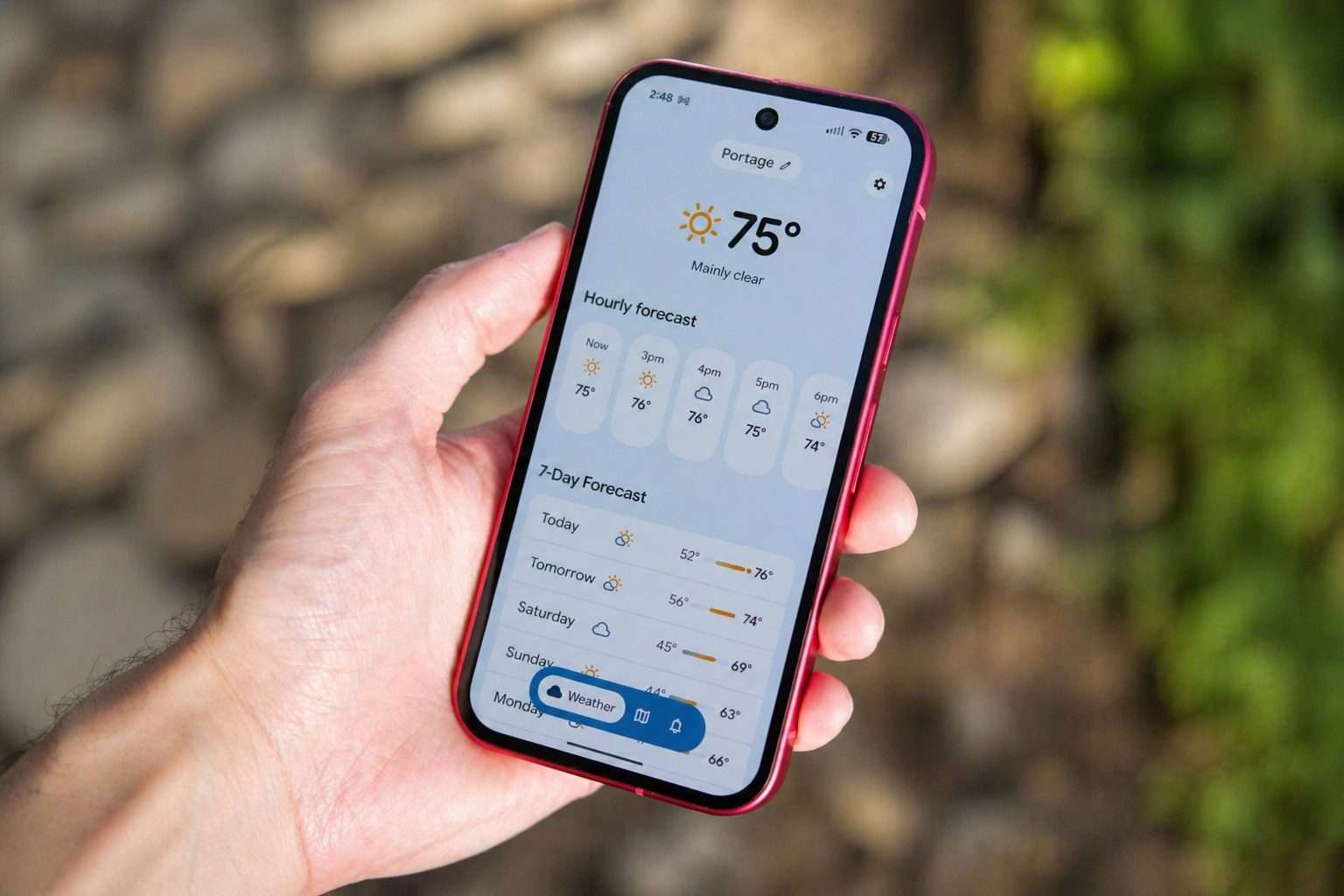
Gradient Weather, a fresh weather app out of London, is making waves after Joe Maring at Android Authority said he’s switching from Google’s Pixel Weather. He points to more customizable alerts, a flexible UI, and better visual forecast features as the reasons.
Timing is critical here. Google’s Pixel Weather still only runs on Pixel devices. For Android users not using Pixel, the older Google weather shortcut has disappeared, replaced by stripped-down search results, 9to5Google and Android Authority reported earlier this year.
This opens the door for smaller apps to vie for users’ day-to-day routines instead of competing only on data. Local timing stays in demand: WPRI in Providence, for instance, highlighted a “nice stretch” ahead for Rhode Island and southeastern Massachusetts in its Monday outlook. Over in Michigan, ABC12 warned that sun will yield to clouds, with southeast winds expected to hit 30 mph. Yahoo
Gradient Weather says it’s out to make routine weather checks more worthwhile. On Google Play, the app is billed as customizable, offering users the ability to set up their own alerts, tweak the dashboard layout, and get animated weather visuals. Features include hourly and seven-day forecasts, along with in-app purchases. The listing, which can be found here, shows downloads topping 1,000.
Subtle Signals, the developer, claims the app draws on “real data from five independent sources” and relies on its own accuracy engine. What does that really mean? The app checks forecast data against actual local measurements, then tweaks its output accordingly. Outcomes depend on the area. Subtle Signals
Alerts are another big focus for the app. According to the Play Store description, users get options to enable notifications for frost, UV index, pollen, air quality dips, pressure swings, government-issued warnings, and those minute-by-minute rain nowcasts. Free accounts hold two active alerts at a time, while Premium subscribers get to set as many as they want.
Pixel Weather remains the standard to beat. According to Google, Pixel Weather works on Pixel 6 and newer devices—including the Pixel Tablet—and offers users a customizable detail page, notifications, summaries, 10-day forecasts, air quality readings, a weather map, and pollen count.
For Maring, Gradient stands out mostly for its range. He highlighted in his review the in-app alert pages, interactive map layers covering temperature, wind speed, pressure, and cloud cover, plus user-submitted weather reports. There’s also an expanded sunrise and sunset card, not to mention notification settings that go beyond what Pixel Weather offers.
The business model gets more complicated. According to Android Authority, you’ll need to pay for Premium—$22 per year, $3.50 monthly, or a $33 lifetime license—to unlock things like full notification features, theme and layout controls, and widget tweaks. Meanwhile, Pixel Weather doesn’t cost a thing if you’re an eligible Pixel user.
Privacy comes baked in. According to Subtle Signals, Gradient Weather doesn’t ask users to sign up, runs with zero ads, and skips tracking altogether; the company’s privacy policy notes that location is pulled strictly to provide forecasts, and background location only kicks in for geofence-based alerts—if the user decides to turn those on.
Still, boundaries remain. According to the company’s privacy policy, forecasts and alerts are meant as general guidance—not as the sole input for crucial safety decisions. Android Authority flagged missing features compared to Pixel Weather, pointing out the lack of pollen-tracker support in the reviewer’s region.
The real test: will Android users shell out for a bit of polish in a space that’s long been free for most? Gradient Weather is a small player, but it’s jumped into the spot left by Google trimming the old non-Pixel weather setup. Now, someone new is betting that gap can become a daily paid download.