
New York, April 24, 2026, 11:48 EDT
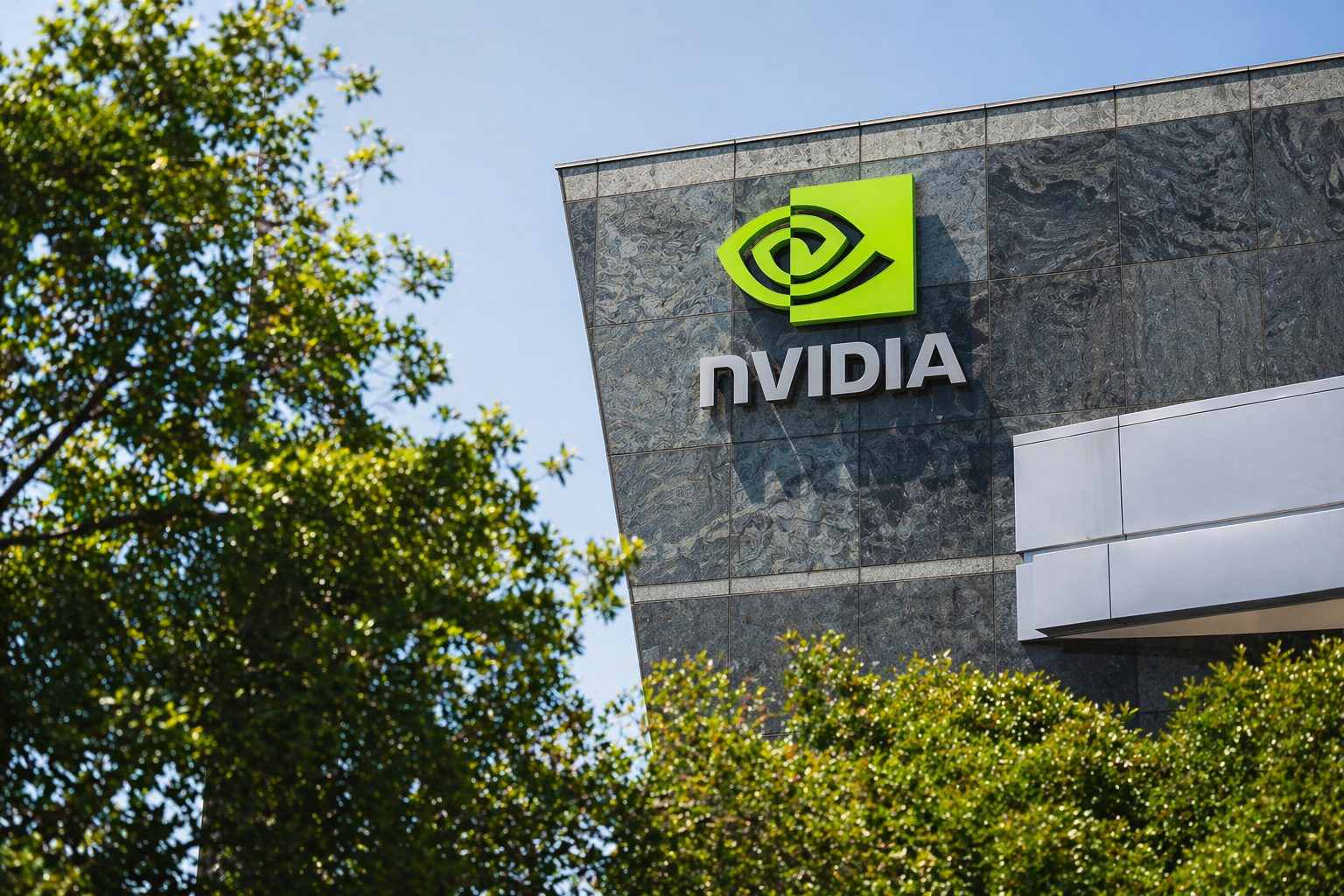
- Nvidia climbed roughly 4.8% early Friday, trading at $209.15 and closing in on its 52-week high. Investors are bracing for the AI chipmaker’s earnings report coming up next month.
- Nvidia posts its fiscal Q1 numbers on May 20, sticking to its earlier revenue projection of $78 billion, give or take 2%. The forecast leaves out any data-center compute revenue from China.
- Demand isn’t the issue anymore. The focus now: how much of the upcoming AI investment Nvidia can hold onto, as Google, Amazon and Broadcom ramp up their custom chip efforts.
Nvidia shares pushed higher Friday, approaching record territory and reigniting talk of the $300 level. The move comes just weeks ahead of the company’s May earnings report, with investors watching closely for any indication that its next-generation Vera Rubin systems will cement Nvidia’s lead in the AI race.
The shares climbed $9.51 to $209.15 late morning in New York, after reaching $209.67 earlier. Nvidia’s market cap hovered near $5.12 trillion, close to the 52-week high of $212.19. Even so, getting to $300 would demand another big leap for the chipmaker.
The chip rally isn’t just about Nvidia anymore. According to a 24/7 Wall St. analysis out Friday, Nvidia shares were up just 7% for the year through Thursday’s close. But the spotlight shifted: Marvell, Micron, Advanced Micro Devices, Taiwan Semiconductor Manufacturing, and Broadcom all logged much bigger 2026 gains as investors widened their bets on AI—from memory and networking, to foundry and custom silicon.
The expectations aren’t letting up. Nvidia posted fiscal fourth-quarter revenue that hit a record $68.1 billion, marking a 73% jump year-over-year. Data-center sales didn’t lag, climbing 75% to $62.3 billion. “Enterprise adoption of agents is skyrocketing,” CEO Jensen Huang said at the time, pointing to AI systems that go beyond just responding—they’re now able to plan and execute tasks. NVIDIA Newsroom
Nvidia is looking for $78 billion in revenue for the April quarter, give or take 2%, and has pegged its non-GAAP gross margin at 75%. The forecast also made clear: no China data-center compute sales are included, a nod to ongoing export control risks despite strong demand in other markets.
Vera Rubin’s up next. Nvidia claims its new platform slashes inference token costs by as much as 10x compared to Blackwell; that’s the process where a trained AI model spits out answers, code, images, whatever you need. Barron’s put the short-term focus on whether big cloud clients are hungry enough for Vera Rubin to lift shares above their previous peaks.
Google wears both hats—as a customer and as a competitor. At its Cloud Next event, Google introduced its own TPU 8t chip for AI training and the TPU 8i for inference. Those TPUs—short for tensor processing units—are custom silicon designed specifically for AI. Google also committed to being one of the first cloud providers to roll out instances built on Nvidia’s Vera Rubin platform once it launches later this year.
Nvidia and Google painted the split as more partnership than rivalry. Mark Lohmeyer, a Google Cloud executive, pitched the pairing of Google’s infrastructure with Nvidia’s platforms as a way for customers to train, tune, and deploy models with more control over performance, cost, and sustainability.
Amazon is making its own push. CEO Andy Jassy, in his 2025 shareholder letter, wrote that the company’s chip segment—which covers Graviton, Trainium, and Nitro—was on track for more than $20 billion in yearly revenue, with growth running in the triple digits, year over year. He added that Trainium3, which started shipping at the beginning of 2026, was already almost fully booked.
Custom AI chips are giving Broadcom a bigger slice of the action. CEO Hock Tan reported $8.4 billion in AI revenue for the fiscal first quarter—a 106% jump from last year—thanks to gains in custom AI accelerators and networking. For the second quarter, Broadcom is projecting $10.7 billion in AI semiconductor sales.
Here’s where things get tricky for Nvidia bulls. Shares might keep climbing with another solid earnings print, yet pressure could mount on margins and the lofty valuation if hyperscalers pivot toward their own chips or turn to custom silicon vendors to rein in expenses. And Nvidia’s sheer scale is a hurdle—tacking on 50% to the stock price now means finding trillions more in market cap, not just stacking up another good quarter.
Even so, Nvidia hasn’t lost its grip on the ecosystem. On Friday, Futurum analyst Brendan Burke said Google’s move to provide both its own TPUs and Nvidia’s Vera Rubin GPUs shifts things—it’s not just a “zero-sum chip war” anymore, but a competition between platforms fighting for AI workloads. For now, that’s the simplest way to look at it: Nvidia is still the go-to name, though investors are starting to branch out beyond just one option for the AI push. Futurumgroup