
London, June 20, 2026, 18:03 BST
- Prudential finished the week up 2.6%, ending at 1,006.5 pence.
- The shares outpaced the FTSE 100, which dropped 1.0%, with buybacks and an insider purchase getting market attention.
- Hong Kong’s market reopening and a fresh review of China’s lending rate are in focus for Monday.
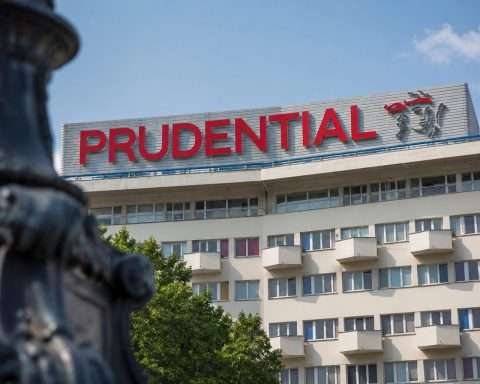
London markets were shut for the weekend. Prudential plc finished Friday at 1,006.5 pence, slipping 0.35% on the day but still up 2.6% from last week’s close of 981.2p. The FTSE 100 was off 1.0% over the same stretch, as worries over U.S.-Iran tensions and political uncertainty in Britain kept risk appetite low.
That relative strength comes after an early-June drop. Prudential, HSBC, Standard Chartered and AIA all slid on a report saying mainland Chinese residents would face tighter rules to open new offshore investment accounts in Hong Kong. The news raised worries about wealth flows across the border.
Capital return was front and center this week. Prudential reported Monday it bought 2.09 million shares from June 8 to June 12, pushing total buybacks since January 6 to 38.98 million shares. The average price paid was 1,107.4983p, weighted by trade size. These shares are set for cancellation.
Prudential has spent around £432 million so far in its $1.2 billion buyback, or about 49% of the programme’s £889 million cap. The company paid an average price about 9% above where the stock closed on Friday. Canceling shares lifts the value of the stock that remains, but the numbers show the market is pricing shares under what Prudential paid in much of the buyback.
Douglas Flint, who took over as chair in May, picked up 12,500 shares of Prudential at £9.592 each on June 11, putting about £119,900 into the stock. The filing landed on Monday, with shares up 2.5% at 1,006p; the disclosure alone doesn’t confirm the purchase led to the gain.
Prudential’s operating base is described as constructive. New business profit for the first quarter increased 10% at constant exchange rates to $686 million. Sales on an annual premium equivalent climbed 6% to $1.82 billion. Chief Executive Anil Wadhwani said the group is “confident in delivering double digit growth” for its main financial targets in 2026. Prudential plc
Competition is still tough. AIA, the main listed rival to Prudential in Asian life insurance, posted a 13% jump in first-quarter value of new business to $1.76 billion. The two firms use different metrics, but AIA’s growth sends a message: investors will look at Prudential’s distribution, product margins, and how it executes instead of just rewarding it for being exposed to Asia.
Prudential posted a 12% rise in its 2025 new business profit, up to $2.78 billion. The insurer is planning to send over $7 billion back to shareholders between 2024 and 2027, with $1.3 billion set for 2027. “Buybacks and shareholder returns [are] a key theme for 2026 and beyond,” said Marc Jocum, senior product and investment strategist at Global X ETFs. Reuters
Asia trading picks up next week. Hong Kong, where Prudential is primarily listed, opens again on Monday, June 22, after the market shut for Friday’s Tuen Ng Festival. China is also due to publish new loan prime rates, with benchmark rates for quality borrowers in focus; a Reuters poll of 30 expected the one- and five-year rates to stay at 3.00% and 3.50%. “Beijing is showing patience,” said Henry Hao, senior China economist at Commerzbank, citing weak domestic demand. HKEX
But there are risks. More limits on cross-border finance, another jump in oil prices or softer demand from Chinese households could hurt policy sales and pressure margins. Prudential has said smaller ASEAN markets are more vulnerable to inflation driven by energy costs. UOB Kay Hian analyst Kenny Lim Yong Hui said if oil stays high, inflation could keep climbing in those countries. In that case, the buyback may lower the share count, but won’t make up for weaker business.