
ZURICH, February 4, 2026, 16:18 (CET)
- Researchers from ETH Zurich deployed a four-legged robot on Mount Etna to collect volcanic gas samples in dangerous terrain
- The setup combines a quadruped robot with a mass spectrometer to detect and analyze gases near the ground
- Wind and rough conditions continue to scatter plumes, limiting fully autonomous operations
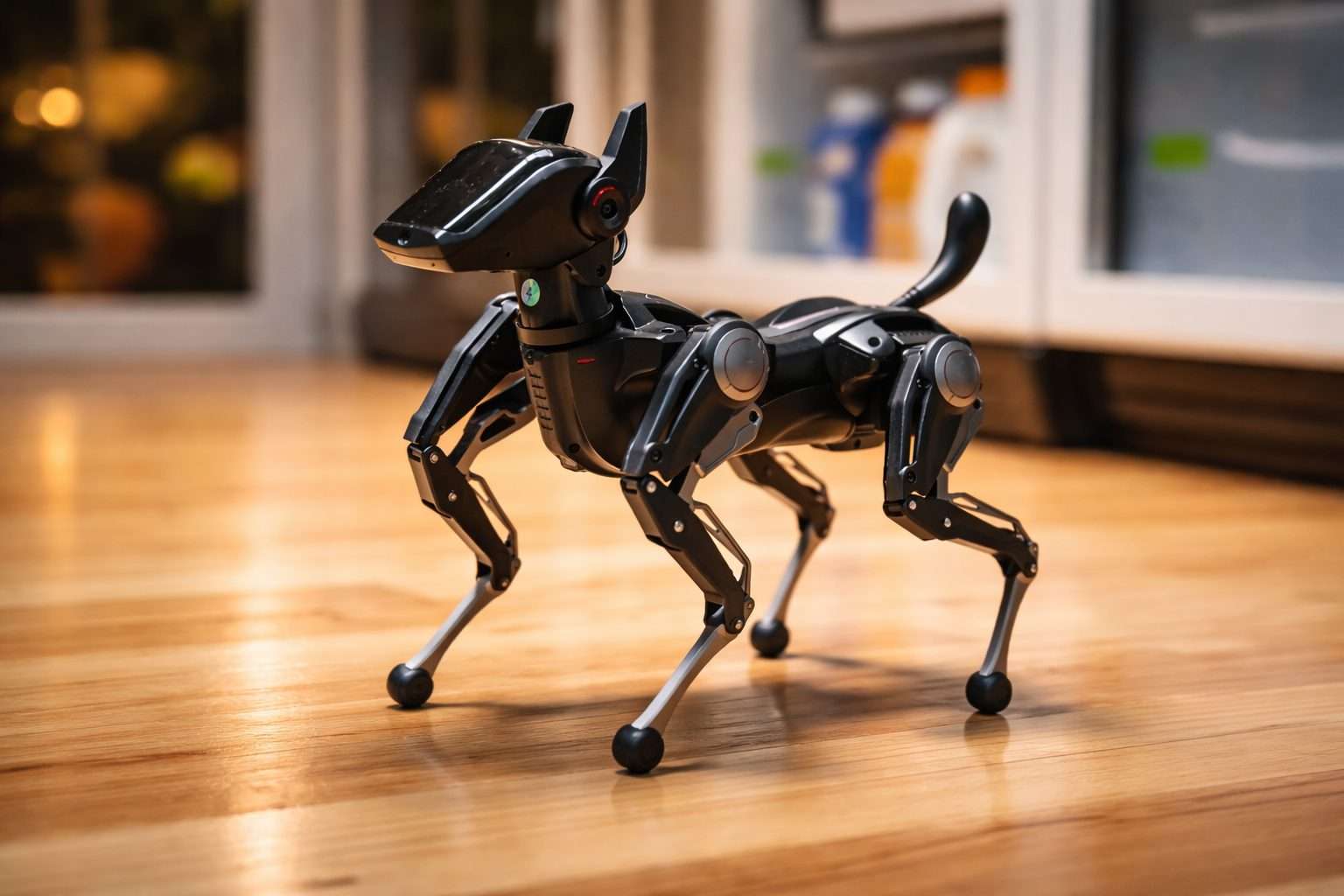
ETH Zurich researchers deployed a four-legged robot “dog” on the slopes of Italy’s Mount Etna to autonomously detect gases that hint at shifts in volcanic activity. The goal: cut down on the dangers for humans venturing into risky areas. Reuters
Volcano research is often a trade-off: the most accurate readings usually come from the harshest spots. Approaching vents means dealing with loose rocks, dust, and intense heat—and conditions can shift rapidly.
The idea behind a walking robot is straightforward. Place the sensor exactly where it’s needed, more frequently, but without risking a human standing there.
Julia Richter and her team detailed a system on arXiv featuring ANYmal, a four-legged robot equipped with a quadrupole mass spectrometer—an instrument that sorts molecules by mass to identify gases. They noted that “Volcanic gas emissions are key precursors of eruptive activity” and shared results from three autonomous missions on Mount Etna, achieving autonomy rates between 93% and 100%. Additionally, they ran a remotely controlled test at fumaroles, detecting sulfur dioxide and carbon dioxide. arXiv
A project page detailed that the roughly 50‑kg robot was equipped with an INFICON Transpector MPH mass spectrometer housed in a protective cage. Lidar and multiple cameras provided mapping and navigation input. The team planned missions based on OpenStreetMap data and terrain-aware local navigation. They employed a reinforcement-learning controller, trained through trial and error, specifically tuned to manage the extra payload. According to the page, the robot detected five out of eight helium sources deployed, with wind-driven plume dispersion posing a significant challenge. The robot achieved around 96% autonomy across its missions.
Volcano terrain, however, pays no mind to your autonomy system. Fierce winds can tear apart a gas plume before any sensor catches it, and rough ground can still demand manual control.
The work also underscores a practical truth often missed in robot demos: sensing is the tough challenge, not walking. A mass spectrometer—designed for labs—is now forced to operate amid grit, vibration, and swirling air.
Volcano monitoring relies heavily on fixed stations, satellite overpasses, and drones—but each method has its limits. Legged robots can handle close-up sampling in rough terrain where wheels get stuck and drones run out of flight time, trading speed for durability and slower coverage.