
Seoul, April 20, 2026, 03:36 KST
- The Galaxy Z TriFold’s limited batch has vanished from Samsung’s U.S. website, marked as “completely sold out.”
- The last reported U.S. restock landed April 10, capping a run of choppy supply before that date.
- There’s still no official word on a TriFold follow-up, but talk about new hinge designs is already circulating.
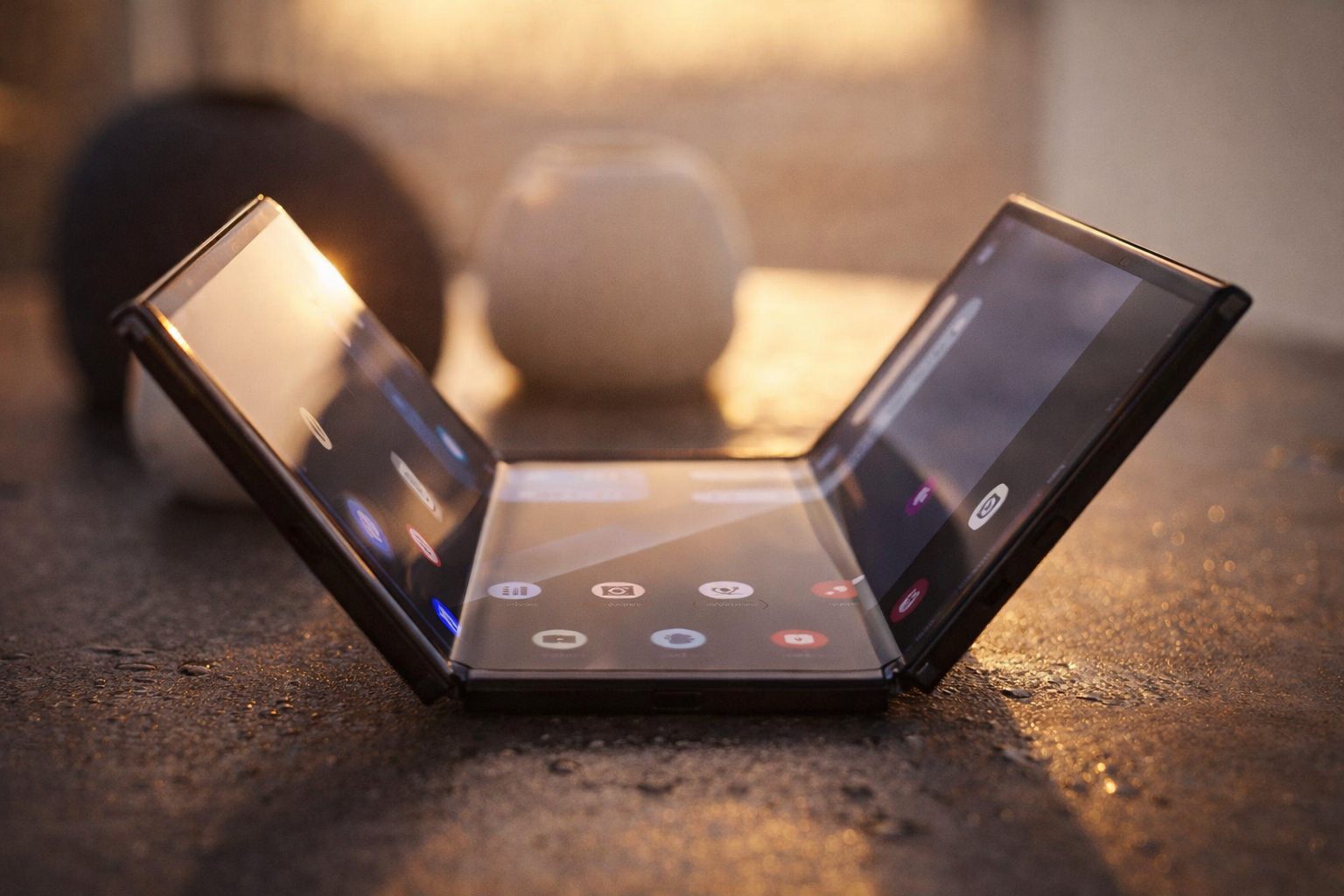
Samsung Electronics’ Galaxy Z TriFold has vanished from the company’s U.S. store. The product page now reads the “limited-run” model is “completely sold out.” That wraps a short-lived stretch on the market for Samsung’s debut two-hinge phone—a tri-fold design that unfolds to reveal a 10-inch screen. Samsung
Timing is key here: the TriFold isn’t just a new phone. Samsung went further than usual with this model, aiming to prove foldables aren’t limited to the typical Galaxy Z Fold book shape. Yet the segment is still niche—high prices, tricky components, and nagging doubts about how long these devices really last have held it back.
Samsung has started steering visitors on its TriFold page over to the Galaxy Z Fold7 and Galaxy S26 Ultra—devices with a wider market appeal. According to 9to5Google, Samsung’s U.S. site once encouraged buyers to check Samsung Experience stores for leftover TriFold stock. Now, the message is simple: sold out.
Samsung’s Galaxy Z TriFold hit U.S. shelves Jan. 30, priced at $2,899. The device comes in a Crafted Black finish and packs 512GB of storage, according to the company. Drew Blackard, who heads mobile product management at Samsung Electronics America, described it as a “standout form factor,” blending both smartphone and tablet features into a single pocket-friendly package. Samsung Global Newsroom
Samsung put the spotlight on hardware here. Unfolded, the phone hits just 3.9 millimeters at its thinnest spot; fold it up, and you’re looking at 12.9 millimeters. There’s a 200-megapixel wide camera, a Snapdragon 8 Elite for Galaxy chip, and a 5,600 mAh battery divided among three panels, according to the company.
But this wasn’t designed with mass appeal in mind. At launch, Samsung’s Alex Lim told Reuters the phone targeted buyers who actually sought it out—not a device meant to move big numbers—and pointed out that higher component costs complicated the pricing decision.
From the outset, analysts flagged the device as more of a tech statement than a volume driver. “Hard to see Samsung pushing large volumes,” said Ryu Young-ho, senior analyst at NH Investment & Securities, pointing out to Reuters that even a commercial tri-fold is still just a first-generation product. Reuters
Competition remains tough. Huawei rolled out a three-way folding phone before, and Apple, Reuters said, is likely to join the foldables race. Still, Counterpoint Research doesn’t see foldables grabbing more than 3% of the smartphone market by 2027, even if sales pick up.
Samsung hasn’t signed off on a Galaxy Z TriFold 2. Mobile Experience COO Won-Joon Choi told Bloomberg—via Business Standard—that the company “not made a decision yet” on another model. Choi also suggested a broader display could be on the table for future foldables. Business Standard
The rumor mill is spinning quickly. Reports from Android Authority, PhoneArena, and SamMobile say Samsung may be developing a revamped hinge for its next device—aimed at making it lighter and slimmer. Android Authority pointed out, though, that this is still just a rumor, not verified.
Samsung faces a risk here: the TriFold could end up highlighting the disconnect between what engineers can build and what customers actually want. Sure, a slimmer hinge is nice, but that doesn’t tackle the main concerns—price, tricky repairs, production yields, or whether people even want a phone that opens up almost like a tablet.
So far, the TriFold’s limited release could be just what Samsung wants. It landed a true multi-folding phone on the market ahead of Apple’s rumored debut and kept up the squeeze on Huawei. Turning that success into a phone shoppers can grab off the shelf, though—that’s the tricky bit.