
WASHINGTON, March 10, 2026, 17:58 EDT
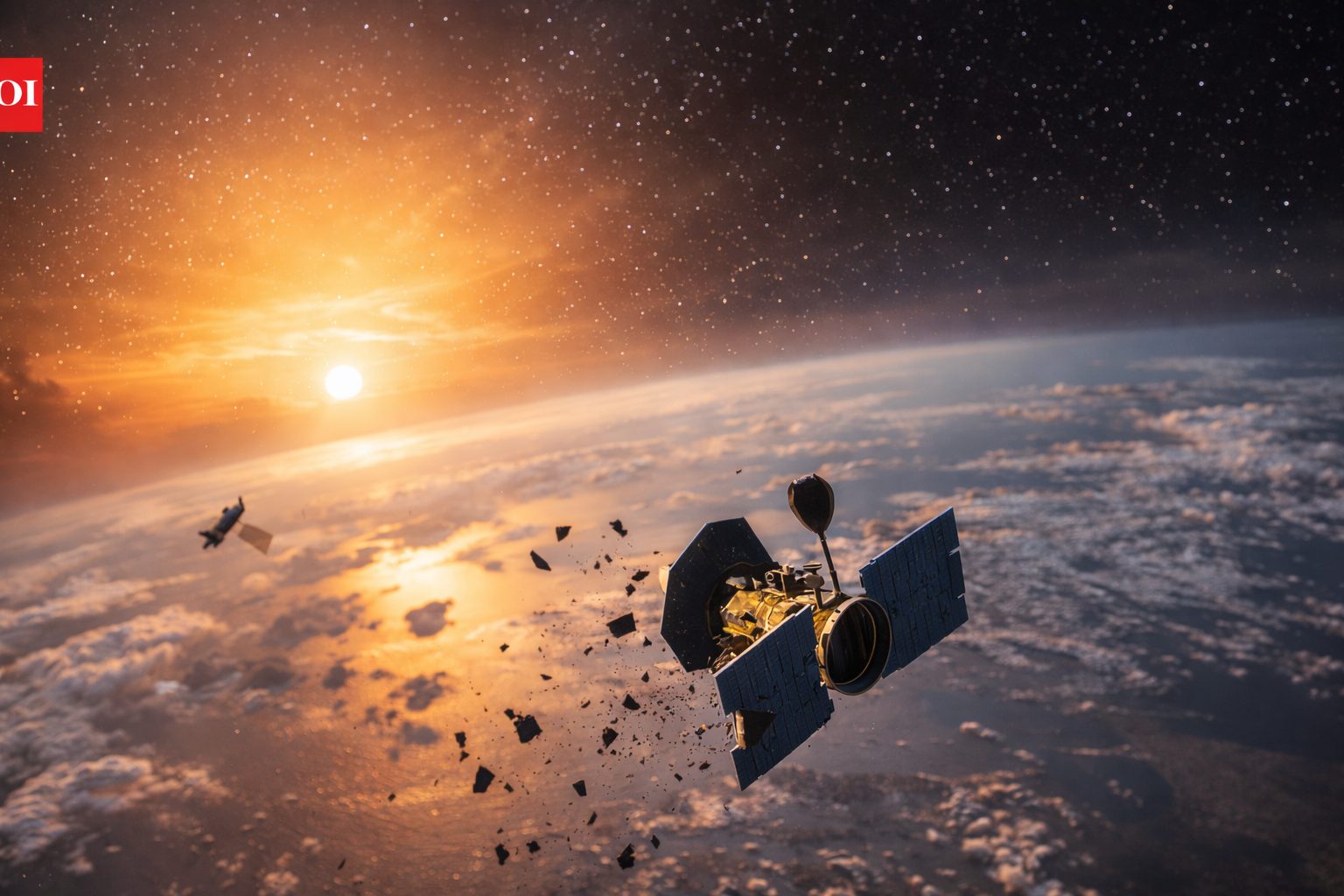
NASA on Tuesday said its Van Allen Probe A, out of commission, was projected to plunge back through Earth’s atmosphere at about 7:45 p.m. EDT. A few pieces could make it all the way down, but the odds of anything causing harm are still low. The satellite, launched in 2012, tips the scales at around 1,323 pounds.
The re-entry is in the spotlight, with forecasts offering only a broad time frame and no set landing zone for any fragments that might survive. The lack of a designated target comes as worries mount over debris in congested orbits. NASA told Scientific American there’s “no targeted area” for any pieces that could make it through. Scientific American
NASA launched Probe A and Probe B together to investigate the Van Allen belts—those charged particle rings circling the planet’s magnetic field, notorious for posing risks to satellites and astronauts alike. The mission, according to NASA, shed light on particle movement inside the belts and, during periods of strong solar activity, captured the first evidence of a temporary third belt forming.
The mission wrapped up in 2019 when the spacecraft exhausted its fuel supply. According to NASA and Johns Hopkins Applied Physics Laboratory, researchers are still tapping into archived data to analyze space weather—solar disturbances capable of disrupting satellites, communications, navigation tools, and power grids.
The timeline for Probe A’s descent took an unexpected turn. NASA had predicted a 2034 re-entry, but with the sun hitting solar maximum in 2024 and solar activity running hotter than projections, drag from the upper atmosphere ramped up and yanked the spacecraft down sooner than planned.
Under NASA guidelines, U.S. spacecraft have 25 years after their missions wrap up to either re-enter Earth or be safely disposed of. Back in 2019, as the agency started lowering the probes’ orbits, project manager Nelli Mosavi described the move as a way to “prevent more space debris”—but also to leave enough window for additional science. KRDO
Just how accurate the latest estimate actually is? Still up in the air. Astrophysicist Jonathan McDowell described the re-entry timing as “very uncertain” when speaking to Scientific American, while Space.com noted the Space Force’s forecast is likely to keep moving as new tracking info rolls in. Scientific American
Still, outside analysts see the public risk as limited. Darren McKnight, senior technical fellow at LeoLabs, told CNN it’s “not a horrible day for mankind”—though the odds this time are higher than they were for some previous re-entries, such as China’s Tiangong-1 in 2018. KRDO
Debris is the main concern here. Marlon Sorge at The Aerospace Corporation notes there’s been “a lot more awareness” around the problem lately. According to CNN, fragments from the International Space Station, plus parts linked to SpaceX and Blue Origin, have recently landed on a Florida house, beaches, and private land. KRDO
Things could shift—there’s still time for the forecast to change before Probe A comes down, and officials admit they can’t yet pinpoint where debris might fall. NASA and the U.S. Space Force plan to keep adjusting their projections as the probe descends.
NASA doesn’t expect Probe B to re-enter before 2030. According to NASA and the Johns Hopkins Applied Physics Laboratory, the mission’s data continues to aid scientists watching how solar activity impacts satellites, astronauts, and Earth-based systems.