Innovation 5 August 2025 - 9 August 2025

3D Printing is Transforming Manufacturing

From Sci-Fi to Factory Floor: How 3D Printing is Transforming Manufacturing (2025 Report)

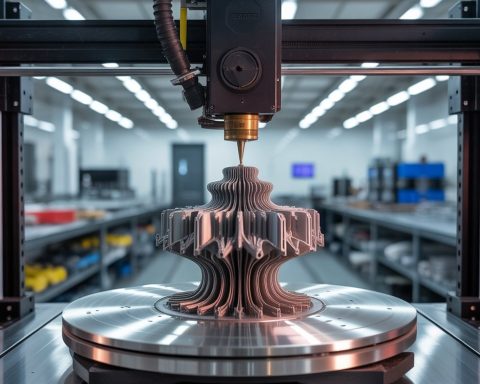
Additive manufacturing – better known as 3D printing – has evolved from a sci-fi concept into a revolutionary technology reshaping how we design and produce goods. Unlike traditional methods that cut or mold materials, 3D printing builds objects layer by layer, enabling unprecedented design freedom mitsloan.mit.edu. First used for prototyping in the 1980s, it has since expanded into producing functional parts across industries mitsloan.mit.edu. Today, anyone from hobbyists to aerospace engineers can “print” complex parts on demand, and the global 3D printing market has surged past the $20 billion mark wohlersassociates.com. In this 2025 report, we’ll explore the technology’s origins, how it works, its applications in key sectors, the advantages and limitations, current market trends, the latest news, expert insights,
August 9, 2025
Metal-Organic Frameworks - MOFs

Metal-Organic Frameworks (MOFs): Sponge-Like Crystals Poised to Transform Carbon Capture, Clean Energy and More

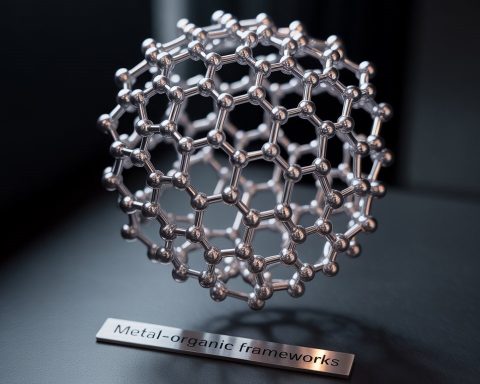
Imagine a material with so much internal surface area that a pinch of it contains the equivalent of six football fields of area news.berkeley.edu. Such metal-organic frameworks are porous, crystalline compounds made of metal nodes connected by organic linkers, creating sponge-like networks at the molecular scale. Scientists tout MOFs as having “seemingly limitless possibilities” for building custom structures with tailored properties cas.org. Over the past 20 years, research on MOFs has exploded – nearly 90,000 unique MOF structures have been created cas.org. This surge is driven by the promise that MOFs can tackle critical challenges in sustainability and technology. From capturing climate-warming carbon dioxide and storing clean hydrogen fuel to delivering drugs and harvesting water from desert air, MOFs are
August 9, 2025
Digital Twins How Virtual Replicas

Digital Twins: How Virtual Replicas Are Transforming Our World in 2025

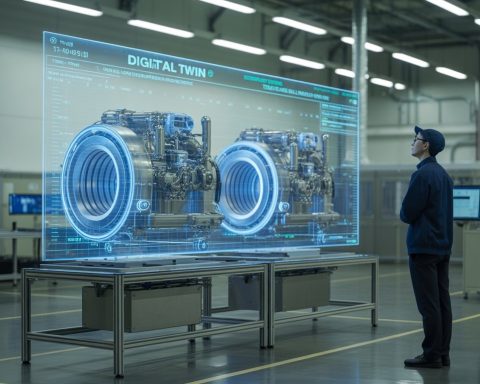
Imagine having a living digital copy of a city, a factory, or even yourself. This is the promise of digital twin technology, a rapidly growing field projected to reach a global market of $73.5 billion by 2027 mckinsey.com. In essence, a digital twin is a virtual replica of a physical object or system, continuously updated with real-world data to mirror its behavior and state mckinsey.com. By linking real-world sensors and data streams to immersive 3D models, digital twins enable organizations to simulate scenarios, predict outcomes, and optimize decisions in ways never before possible. From manufacturing plants and hospitals to entire smart cities and even the human body, digital twins are revolutionizing industries and blurring the line between physical and digital
August 8, 2025
ultraviolet lithography

The Ultraviolet Revolution: Inside the Invisible $150M Machines Shaping the Future of Microchips

Every modern microprocessor – from the chip in your smartphone to the CPUs powering cloud AI – is born under ultraviolet light. In fact, some of the most advanced manufacturing machines on Earth shine invisible ultraviolet lasers onto silicon wafers to etch the nanoscale circuits that make microchips work. These machines cost upwards of $150 million each, are the size of a bus, and operate with almost sci-fi complexity – yet they are the unsung workhorses behind Moore’s Law and the continuous march of faster, smaller, more efficient processors reuters.com, technologyreview.com. Industry observers have even nicknamed the latest generation of these tools “the machines that saved Moore’s Law,” because without them, making cutting-edge chips would be practically impossible cloud.google.com. This
August 7, 2025
The Gene Editing Revolution Transforming Medicine

How CRISPR Is Curing the Incurable – The Gene Editing Revolution Transforming Medicine

In the last decade, CRISPR/Cas9 gene editing has rapidly evolved from a lab curiosity into a revolutionary medical tool. This technology allows scientists to edit human DNA with unprecedented precision, offering the possibility to cure genetic diseases once deemed incurable medlineplus.gov, news.stanford.edu. In 2023, the first CRISPR-based therapy earned regulatory approval, signaling that the era of gene editing medicine has truly arrived innovativegenomics.org, fda.gov. From sickle cell anemia and cancer to rare metabolic disorders, CRISPR-driven treatments are already transforming lives. At the same time, these breakthroughs have sparked intense ethical debates – about safety, equitable access, and even the prospect of “designer babies.” This report provides an in-depth, up-to-date overview of CRISPR/Cas9 in human medicine: how it works, its applications,

August 6, 2025
Inside the High-Stakes World of Global Semiconductor Production

Trillion-Dollar Chip Wars: Inside the High-Stakes World of Global Semiconductor Production

Semiconductors – those tiny silicon chips – are the brains of modern electronics, found in everything from smartphones and cars to data centers and fighter jets. In 2024, global semiconductor sales surged to over $600 billion and could hit $1 trillion by 2030, underscoring how critical chips have become to the world economy deloitte.com, blog.veolianorthamerica.com. These microchips enable trillions of dollars in downstream products and services, forming the hidden foundation of our digital lives steveblank.com. Yet over the past two years, semiconductor production has become a high-stakes arena of innovation and geopolitical tension. A pandemic-fueled chip shortage showed how fragile the supply chain can be, idling factories and driving up prices. At the same time, nations are racing to boost
August 6, 2025
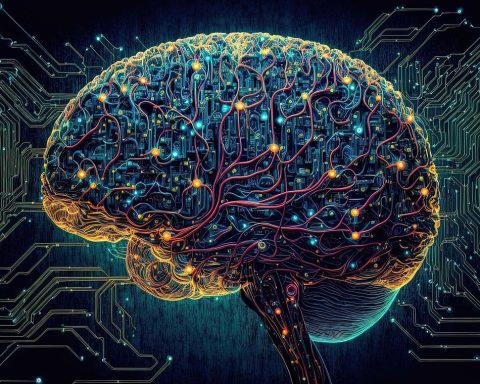
Mind Over Machine: The Astonishing Rise of Brain-Computer Interfaces (BCIs)

Mind Over Machine: The Astonishing Rise of Brain-Computer Interfaces (BCIs)

Brain-computer interfaces – devices that connect our brains directly to computers – are no longer science fiction. Today, brain implants are letting people move, speak, and interact with machines using only their thoughts worksinprogress.co. Although no BCI has FDA approval for general use yet, experts predict the first might arrive within the next five years worksinprogress.co. In the meantime, BCIs are already helping paralyzed patients control computers, pilot prosthetic limbs, and even regain the ability to speak or walk. This in-depth report will explain what BCIs are, how they work, where they came from, what they can do today, and how they might transform our future – for better or worse. A brain-computer interface – also called a brain-machine interface
August 5, 2025
1 6 7 8