Space 9 August 2025 - 14 January 2026

SpaceX’s Starlink phone idea surfaces as IPO plans and new services take shape

SpaceX’s Starlink phone idea surfaces as IPO plans and new services take shape

SpaceX announced its Stargaze service to track low-Earth orbit traffic using Starlink satellites. Sources say the company is developing a Starlink-connected phone and direct-to-device internet. Starlink generated an estimated $8 billion profit on $15–16 billion revenue in 2025, making up most of SpaceX’s earnings. SpaceX is also preparing for a possible IPO later this year.
February 5, 2026
FCC clears SpaceX to add 7,500 more Starlink satellites — and loosen a key limit that caps capacity

FCC clears SpaceX to add 7,500 more Starlink satellites — and loosen a key limit that caps capacity

The FCC approved SpaceX to launch 7,500 more second-generation Starlink satellites, doubling its Gen2 fleet to 15,000. The order allows lower orbital altitudes of 340–485 km and grants a temporary waiver on certain U.S. EPFD interference limits, while capping overlapping Ku-band beams at eight. SpaceX must have half of the authorized Gen2 satellites in orbit by December 1, 2028, and the rest by December 1, 2031.
January 14, 2026
Your Smartphone Can Now Text via SpaceX’s Starlink Satellites – Here’s Everything You Need to Know

Your Smartphone Can Now Text via SpaceX’s Starlink Satellites – Here’s Everything You Need to Know

SpaceX’s Starlink has launched satellite texting for ordinary smartphones, allowing users to send SMS without cell towers in initial coverage areas. The “Direct to Cell” service works with standard 4G LTE phones and requires no extra hardware. Partner carriers, including T-Mobile and Rogers, plan to expand the service in 2025. Voice and data features are expected to follow after further network upgrades.
September 2, 2025
Cosmic Gold Rush

Cosmic Gold Rush: Inside the 2025 Race to Harvest Asteroid Riches

NASA’s OSIRIS-REx returned 121.6 grams of asteroid Bennu material to Earth in 2023, the largest sample yet. The Psyche mission, launched in 2023, targets the metal-rich asteroid 16 Psyche, valued at $10,000 quadrillion, for a 2026 rendezvous. AstroForge received the first FCC deep-space mining license in late 2024 and plans two asteroid missions in 2025. China launched Tianwen-2 on May 29, 2025, to collect samples from Kamoʻoalewa.
August 19, 2025
Asteroid Classifications and Their Mining Potential

Asteroid Minerals: Mining C-Type, S-Type & M-Type Space Rocks Worth Trillions

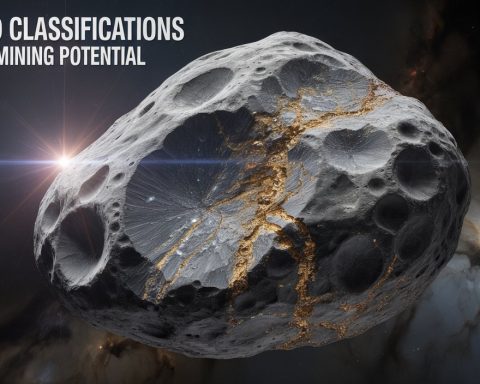
C-type asteroids make up over 75% of known asteroids and are rich in water and organics, while S-types contain significant metals including platinum and gold. M-type asteroids, though rare, hold vast iron-nickel and platinum-group metals. NASA's Psyche mission launched in 2023 to study asteroid 16 Psyche, and OSIRIS-REx returned Bennu samples in 2023. Launch costs have dropped below $2,000 per kilogram.
August 17, 2025
Inside the Race to Scout and Mine Space’s Richest Rocks

Asteroid Gold Rush: Inside the Race to Scout and Mine Space’s Richest Rocks

NASA’s OSIRIS-REx returned 250 grams of carbon- and water-bearing soil from Bennu in September 2023. The Psyche probe launched in October 2023 to a metal-rich asteroid valued at $10 quadrillion, with arrival set for 2029. China’s Tianwen-2 will attempt a sample return from Kamoʻoalewa by 2027. Private ventures and international agreements are shaping the future of asteroid resource extraction.
August 16, 2025
Satellites Powered by Water

Satellites Powered by Water? The Revolutionary Propellant Changing Spaceflight

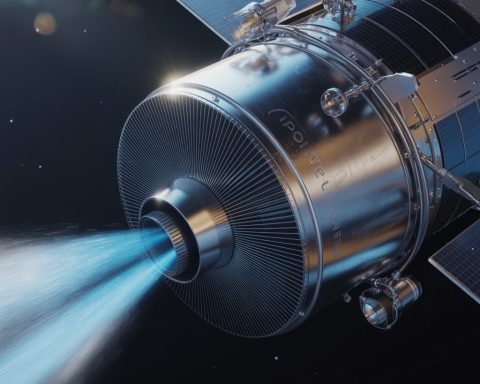
Momentus Space’s Vigoride-5 raised its orbit by 3 km in January 2023 using a microwave electrothermal thruster powered by water. HawkEye 360 and Capella Space began commercial use of water thrusters in 2018, with BlackSky Gen-2 joining by 2024. ArianeGroup plans a dual-mode water engine demo in 2026. Pale Blue’s water ion thrusters launched in 2024, with further tests set for 2025.
August 16, 2025
Asteroid Mining

The New Gold Rush: How Asteroid Mining Could Create Trillionaires and Change Earth’s Future (2025 Update)

NASA’s OSIRIS-REx returned 250 grams of Bennu material in 2023, revealing water-rich clays and organics. The DART mission altered Dimorphos’s orbit by 32 minutes in 2022. Psyche launched in 2023 to a metal-rich asteroid valued at $10,000 quadrillion, with arrival set for 2026. China’s Tianwen-2 and AstroForge’s Odin and Vestri missions target asteroid sample return and mining by 2027.
August 14, 2025
Laser Reflectors are Revolutionizing Satellite Communications

How Laser Reflectors are Revolutionizing Satellite Communications

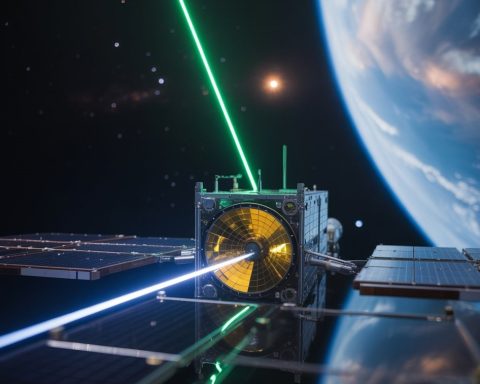
NASA’s Lunar Laser Communication Demonstration in 2013 achieved 622 Mb/s downlink from lunar orbit. In June 2023, MIT’s TBIRD CubeSat set a record with a 4.8 TB transfer in five minutes. By 2024, Europe’s SpaceDataHighway logged over 80,000 laser links and 2.5 petabytes downloaded. In December 2023, NASA linked the ISS to its LCRD optical relay, completing a two-way laser relay.
August 14, 2025
Guide to Satellite Earth Monitoring

Complete Guide to Satellite Earth Monitoring: How Space Tech Is Watching Our Planet Now

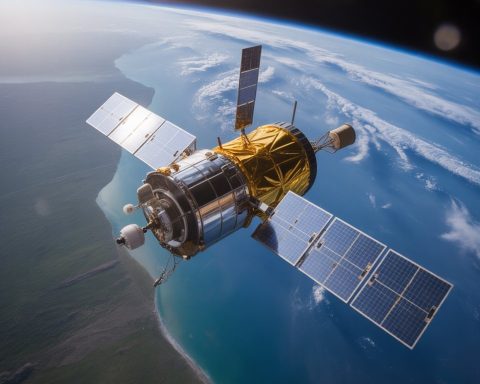
Landsat-1, launched in 1972, began continuous satellite mapping of Earth's land. By 2008, over 150 Earth observation satellites were in orbit, collecting more than 10 terabits of data daily. ESA’s Copernicus program, active since 2014, delivers over 25 terabytes of free data each day. NASA-ISRO’s NISAR radar mission is scheduled for launch in late 2024 or 2025.
August 10, 2025
What Are Nano-Satellites and CubeSats

What Are Nano-Satellites and CubeSats?

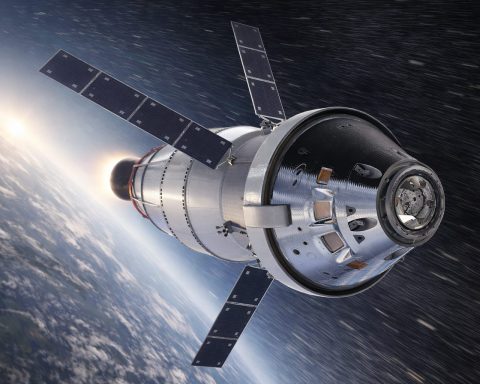
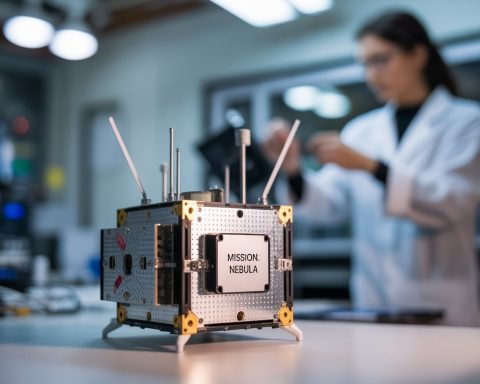
Over 2,300 CubeSats had launched by the end of 2023, following a standard 10×10×10 cm unit design and mass up to 2 kg per unit. NASA’s CubeSat Launch Initiative has sent more than 150 into orbit since 2010. Planet Labs deployed 28 from the ISS in 2014. Artemis I carried 10 CubeSats, including CAPSTONE, into cislunar space in 2022.
August 9, 2025
How Reusable Rockets Are Revolutionizing Space Travel

Launch, Land, Repeat: How Reusable Rockets Are Revolutionizing Space Travel

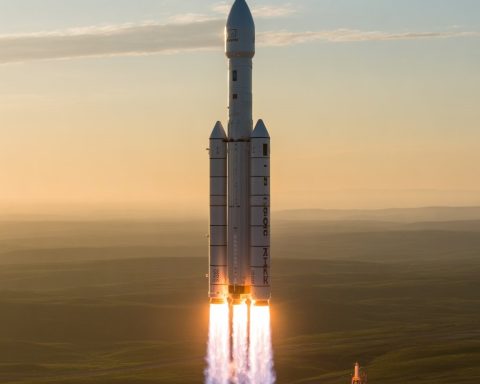
SpaceX’s Falcon 9 achieved the first orbital-class booster landing in December 2015 and the first drone-ship landing in 2016. By 2023, SpaceX had over 170 booster landings, with some boosters flying up to 16 times. On June 6, 2024, Starship completed its first orbital flight, landing in the Indian Ocean. Blue Origin resumed New Shepard passenger flights in December 2023 after an engine redesign.
August 9, 2025