WASHINGTON, January 17, 2026, 10:32 (EST)
- NASA announced that its Transiting Exoplanet Survey Satellite will temporarily halt part of its observing schedule this month to follow the interstellar comet 3I/ATLAS.
- The agency confirmed that the comet data will be calibrated and made publicly available immediately, without any proprietary hold.
- 3I/ATLAS marks just the third interstellar object ever confirmed to cross through our solar system.
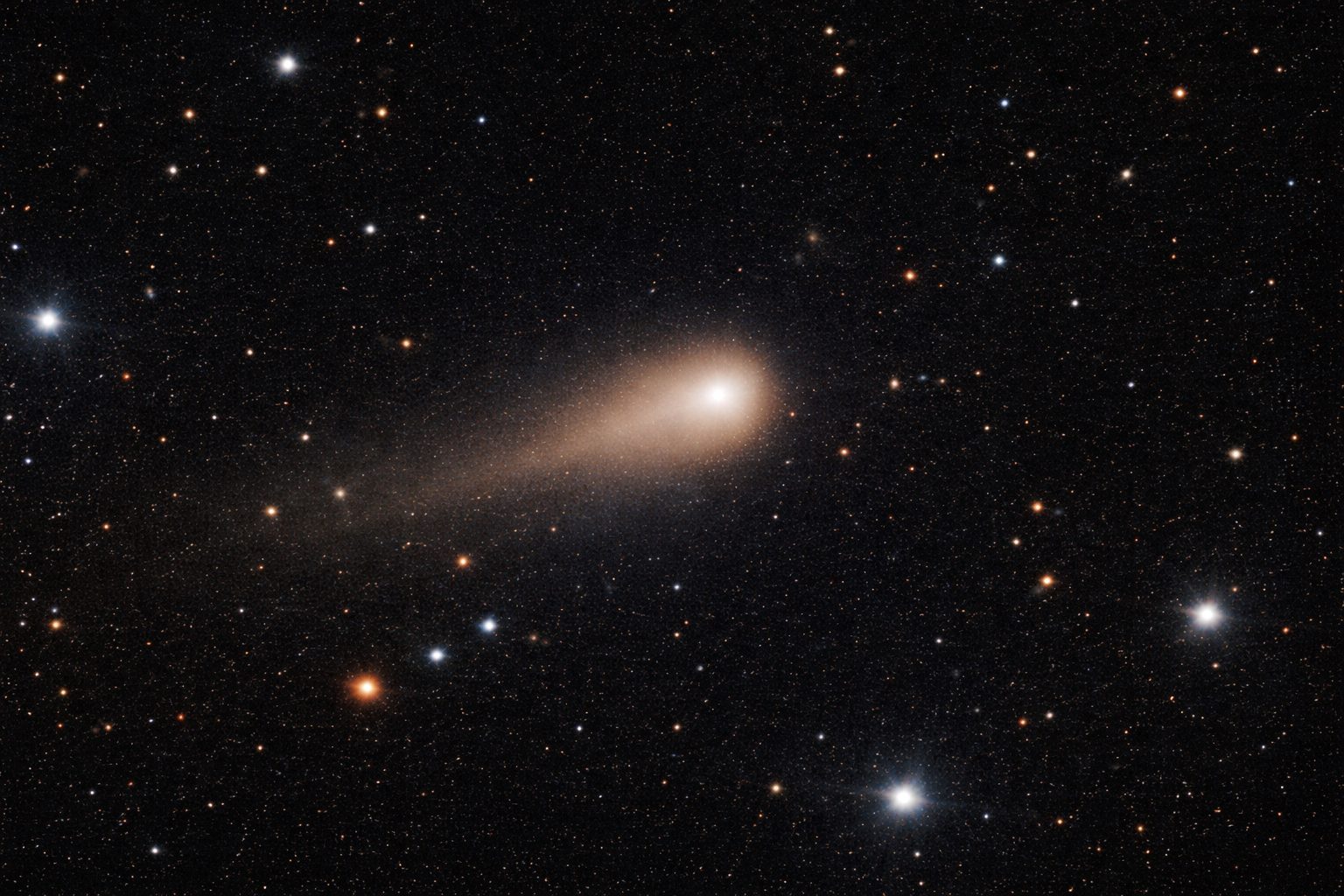
NASA announced on Friday that its Transiting Exoplanet Survey Satellite (TESS) will pause its ongoing Sector 99 observations for a special campaign tracking the interstellar comet 3I/ATLAS. The data collected from this comet will be calibrated and made publicly accessible following the mission’s usual protocols. 1
This development is significant because 3I/ATLAS is a rare visitor from beyond our solar system—only the third confirmed object of its kind, following 1I/ʻOumuamua in 2017 and 2I/Borisov in 2019. Interstellar comets like this carry material that formed around other stars, providing a distant but direct glimpse into how planets and smaller bodies develop elsewhere. 2
The window here is tight. The comet is fading fast, shrinking and dimming each week. That leaves scientists relying heavily on instruments capable of continuous, long-duration observations.
TESS is designed to detect minute fluctuations in brightness — photometry, simply put — when objects pass in front of stars. Aimed along the comet’s trajectory, this capability can monitor shifts in the comet’s activity following its closest approach to the sun, catching any rapid brightening or dimming that might slip past ground-based observers.
Comet 3I/ATLAS was first spotted on July 1, 2025, by the NASA-backed ATLAS survey telescope in Río Hurtado, Chile. NASA identified it as interstellar due to its hyperbolic, unbound orbit. It swung closest to the sun around Oct. 30, 2025, then flew past Earth on Dec. 19 at about 1.8 astronomical units — roughly 170 million miles away. NASA confirms it doesn’t pose any danger to our planet. Both the Hubble and James Webb Space Telescopes have captured observations of the comet. 3
NASA reports that 3I/ATLAS was moving at around 137,000 miles per hour when first spotted, accelerating to roughly 153,000 mph at perihelion, its closest point to the sun. The comet’s trajectory can be slightly altered by outgassing—gas released as ices warm—but NASA notes these effects on 3I/ATLAS are minimal. It should stay visible from Earth with a small telescope in the pre-dawn sky through spring 2026, and it’s set to pass Jupiter in March as it heads outbound. 4
But the science won’t always be straightforward. Comets evolve quickly, and spotting a faint, moving target in wide-field data can get complicated—especially if the comet’s activity wanes or its dust output fluctuates, muddying the signal.
Beyond official agency efforts, a network of amateur astronomers and observatories has been monitoring the comet as it moves away. The Virtual Telescope Project in Italy set up a livestream for Jan. 16, describing it as a “very precious opportunity” to catch 3I/ATLAS live, according to founder Gianluca Masi. 5
Researchers are drawn by a straightforward appeal: ongoing brightness measurements precisely as the comet calms following its close solar pass, a phase when jets and dust emissions remain unpredictable.
Once the data set goes public, analysts both within NASA and beyond can jump right in, hunting for patterns that reveal how this outsider stacks up against comets formed closer to Earth.