Artur Ślesik

Artur Ślesik is a technology and financial markets journalist at Bez-kabli.pl, covering artificial intelligence, semiconductors, technology stocks and emerging innovations. A graduate of Warsaw University of Technology, he combines a technical background with market analysis to explain how new technologies are shaping industries, businesses and investment trends worldwide.

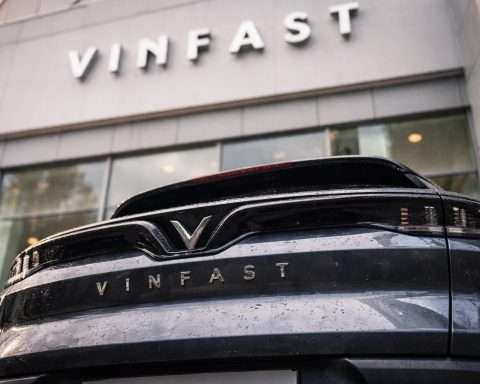
VinFast’s cheap self-driving play: Autobrains deal targets Tesla-style “Robo-Car” tech

VinFast’s cheap self-driving play: Autobrains deal targets Tesla-style “Robo-Car” tech

Vietnamese EV manufacturer VinFast announced on Monday a partnership with AI company Autobrains to create advanced autonomous driving tech, including a budget-friendly “Robo-Car” system. The partnership comes as automakers push to roll out more driver-assistance tech without letting sensor and development expenses spiral out of control. VinFast is seeking a more affordable path following years of expensive and slow progress in self-driving efforts.

January 26, 2026
EU puts WhatsApp Channels under toughest Digital Services Act rules, giving Meta until May

EU puts WhatsApp Channels under toughest Digital Services Act rules, giving Meta until May

On Monday, the European Commission classified Meta’s WhatsApp “Channels” as a very large online platform under the Digital Services Act, increasing the company’s responsibilities to address illegal and harmful content. WhatsApp’s Channels saw an average of 51.7 million monthly users in the EU during the first half of 2025, surpassing the 45 million user threshold set by the law, the Commission noted. Meta now has until mid-May to meet the new requirements. This matters because Channels is designed for one-to-many broadcasts, not private messaging, allowing it to rapidly deliver content to large EU audiences. Brussels has been ramping up enforcement of the DSA, a broad regulation aimed at making major online platforms identify and mitigate risks related to illegal content
January 26, 2026
Google to pay $68 million to end Google Assistant “recordings” lawsuit — who’s covered

Google to pay $68 million to end Google Assistant “recordings” lawsuit — who’s covered

Google will pay $68 million to resolve a lawsuit alleging its Google Assistant recorded and shared private conversations without user consent, fueling targeted advertising. The class-action deal, filed Friday in federal court in San Jose, California, covers users impacted by “false accepts”—moments when the assistant mistakenly triggers on its wake word—dating back to May 18, 2016, according to court documents. The deal arrives as voice assistants embedded in phones, earbuds, and smart home devices become ubiquitous, evolving from a convenient tool into a growing privacy headache. Plaintiffs argue simply: gadgets designed to capture commands can also overhear without consent, and those recordings might be shared beyond what users expect.
January 26, 2026
New James Webb dark matter map exposes the universe’s hidden “cosmic web” in record detail

New James Webb dark matter map exposes the universe’s hidden “cosmic web” in record detail

Astronomers using NASA’s James Webb Space Telescope have created the most detailed map yet of dark matter in the COSMOS field, tracing the invisible substance that makes up roughly 85% of the universe’s matter. The data aligns with the leading Lambda-CDM model — which stands for dark energy and cold dark matter. Diana Scognamiglio described Webb as “a new pair of glasses for the universe,” while co-author Jacqueline McCleary called dark matter halos the “nurseries of galaxies.” The improved map is crucial because researchers rely on it to study galaxy growth and the way matter clusters across cosmic time—key to understanding everything from galaxy clusters to the Milky Way. Scognamiglio noted that the Webb-based map is “twice as sharp” as
January 26, 2026
Nvidia’s open-source Earth-2 AI weather models drop as a U.S. winter storm tests forecasts

Nvidia’s open-source Earth-2 AI weather models drop as a U.S. winter storm tests forecasts

On Monday, chipmaker Nvidia launched a new series of open AI weather models, aiming to speed up forecasts using graphics processors and make advanced weather prediction more accessible. The timing of the launch coincided with the American Meteorological Society’s annual meeting in Houston, as a winter storm sweeping parts of the U.S. exposed just how much forecasts can vary when models clash. Nvidia claims its Earth-2 Medium Range model outperformed Google DeepMind’s GenCast on over 70 forecasting variables. GenCast, which debuted in December 2024, had already set a new standard for AI-powered medium-range weather predictions. Mike Pritchard, Nvidia’s climate simulation director, described their approach as “a return to simplicity,” emphasizing a pivot toward “simple, scalable transformer architectures.”
January 26, 2026
Treasury Drops Booz Allen After Trump Tax Leak, Rattling Federal Contractor Trust

Treasury Drops Booz Allen After Trump Tax Leak, Rattling Federal Contractor Trust

The U.S. Treasury Department has terminated all contracts with Booz Allen Hamilton, citing the consulting firm’s failure to secure sensitive data related to its work for the Internal Revenue Service. https://www.reuters.com/sustainability/boards-policy-regulation/treasury-cancels-all-booz-allen-hamilton-contracts-2026-01-26/?utm_source=chatgpt.com The Trump administration is ramping up pressure on agencies to clamp down on government spending and secure taxpayer data, following a breach that both embarrassed the IRS and raised concerns over contractor oversight.
January 26, 2026
Microsoft’s Maia 200 AI chip takes a swing at Nvidia’s CUDA lock-in as Azure rollout starts

Microsoft’s Maia 200 AI chip takes a swing at Nvidia’s CUDA lock-in as Azure rollout starts

Microsoft revealed its Maia 200 chip on Monday, marking the second generation of its custom AI hardware. The company also introduced new software tools designed to chip away at Nvidia’s lead among developers. This shift is crucial as the expense of running generative AI systems climbs rapidly, with cloud providers scrambling to manage both the availability and pricing of the hardware behind them. Nvidia remains the leader in AI computing, largely because a lot of developers rely on its CUDA software platform.
January 26, 2026
Nvidia pours $2B into CoreWeave as 5‑gigawatt AI data center push accelerates

Nvidia pours $2B into CoreWeave as 5‑gigawatt AI data center push accelerates

SANTA CLARA, Calif., Jan 26, 2026, 07:09 On Monday, Nvidia poured $2 billion into CoreWeave, becoming the AI infrastructure firm’s second-largest shareholder as they ramp up efforts to expand U.S. data center capacity. The chipmaker agreed to purchase roughly 23 million shares at $87.20 each, nearly doubling its previous 6.3% stake, according to Reuters calculations using LSEG data. CoreWeave confirmed the funds will be used to acquire land and power for new facilities, explicitly not for buying Nvidia processors.
January 26, 2026
EU launches fresh X probe after Grok sexual deepfake outcry, widens algorithm case

EU launches fresh X probe after Grok sexual deepfake outcry, widens algorithm case

Brussels, 26 January 2026, 16:15 On Monday, the European Commission opened a new probe into Elon Musk’s social media platform X, zeroing in on the spread of manipulated, sexually explicit images tied to its Grok chatbot. Simultaneously, regulators widened an ongoing investigation into X’s recommender systems—the algorithms that decide what content users see.
January 26, 2026
IonQ to buy SkyWater for $1.8 billion to bring quantum chipmaking in-house

IonQ to buy SkyWater for $1.8 billion to bring quantum chipmaking in-house

Quantum computing company IonQ announced Monday it plans to acquire chipmaker SkyWater Technology for roughly $1.8 billion. The deal aims to bring semiconductor production under IonQ’s control, boosting its development of next-gen quantum processors. IonQ’s stock climbed about 4% in early trading, while SkyWater’s shares surged nearly 8%. The timing is key since building larger quantum machines is becoming more of an engineering and supply-chain challenge than just a lab issue. IonQ is banking on owning a U.S. foundry—a chip-making factory—to gain tighter control over everything from design to packaging as it ramps up projects for government and defense clients.
January 26, 2026
Zuckerberg to testify as Meta, TikTok and YouTube face first youth addiction trial

Zuckerberg to testify as Meta, TikTok and YouTube face first youth addiction trial

This week, a U.S. jury will hear the first major trial accusing Meta Platforms, TikTok, and Google’s YouTube of designing their social media platforms to addict children and damage their mental health. This case arrives amid growing pressure from lawmakers, parents, and regulators demanding stricter limits on teens’ screen time, while companies battle to keep legal responsibility for online harms tightly restricted.
January 26, 2026
Samsung’s HBM4 Push: Production Seen in February as Nvidia Supply Deal Nears

Samsung’s HBM4 Push: Production Seen in February as Nvidia Supply Deal Nears

Samsung Electronics is set to begin manufacturing its next-gen high-bandwidth memory chips, HBM4, as soon as next month, according to a source familiar with the matter who spoke to Reuters. The company will supply these chips to Nvidia. Reuters High-bandwidth memory, or HBM, is a stacked type of DRAM placed near AI processors to speed up data transfer. Nvidia relies heavily on it for its AI accelerators, but supply has been limited as data center demand remains strong.
January 26, 2026
Windows 11 January 2026 update chaos: Microsoft probes boot failures as emergency fixes pile up

Windows 11 January 2026 update chaos: Microsoft probes boot failures as emergency fixes pile up

Microsoft is looking into reports of certain Windows 11 machines failing to boot after the January security updates, with users encountering the “UNMOUNTABLE_BOOT_VOLUME” stop code. The company says these incidents are limited and affected devices might require manual recovery. So far, no similar issues have been reported on virtual machines. Timing is crucial since many organisations rely on Microsoft’s monthly “Patch Tuesday” updates as a narrow operational window. When a patch renders PCs unbootable, what should be a routine update quickly becomes a desk-by-desk recovery mission—and the costs mount immediately.
January 26, 2026
Drugmakers say AI is shaving weeks off clinical trials and regulatory submissions

Drugmakers say AI is shaving weeks off clinical trials and regulatory submissions

Drugmakers are increasingly relying on artificial intelligence to accelerate clinical trials and regulatory filings, slashing weeks off processes that often slow down development, according to executives and analysts. While AI hasn’t yet cracked the code for discovering groundbreaking new drugs, it’s already making a dent in the “messy middle” of drug development. This matters since the timeline remains brutal. Companies report that developing a drug can take around a decade and cost close to $2 billion. Even when results seem promising, the slow grind of trial setup and paperwork can drag timelines out much longer.
January 26, 2026
US set for $1.6 billion USA Rare Earth stake deal as Washington chases homegrown magnets

US set for $1.6 billion USA Rare Earth stake deal as Washington chases homegrown magnets

The Trump administration is set to take a 10% stake in USA Rare Earth as part of a $1.6 billion debt-and-equity deal designed to develop a domestic rare earth mine and magnet factory, according to two sources who spoke to Reuters. Alongside this, a separate $1 billion private investment is also expected to be announced Monday, with USA Rare Earth planning an investor call that morning, one source said. The White House didn’t immediately comment, and USA Rare Earth declined to respond. Rare earths comprise 17 minerals essential to various electronics and military gear. China dominates global processing, while U.S. production remains minimal. Washington has been pushing to narrow this gap by funding new domestic projects.
January 25, 2026
150 Million Passwords Exposed: Gmail and Facebook Logins Found in Open Database

150 Million Passwords Exposed: Gmail and Facebook Logins Found in Open Database

An unsecured database holding roughly 149 million usernames and passwords — including 48 million tied to Gmail and 17 million linked to Facebook — was taken offline after a security researcher alerted the hosting provider, according to reports. Allan Liska, a threat intelligence analyst at Recorded Future, noted that “infostealers create a very low barrier of entry for new criminals,” pointing to tools available to rent for just a few hundred dollars a month. This exposure is serious since password lists like these enable hackers to take over email and social media accounts—gateways to resetting credentials on other platforms. They also fuel phishing attacks, where scammers impersonate banks, colleagues, or support teams to steal additional information.
January 25, 2026
Galaxy S26 leak hints Samsung may get Google Pixel’s Scam Detection call alerts

Galaxy S26 leak hints Samsung may get Google Pixel’s Scam Detection call alerts

Samsung’s next Galaxy S26 lineup could soon include Google’s “Scam Detection” feature, which Pixel phones have used for a while to flag suspicious calls immediately. This tip surfaced from recent code found in the Google Phone app. Phone fraud is on the rise, with scammers moving away from obvious robocalls toward longer, more subtle conversations where the danger often appears midway through. Google’s approach focuses on flagging these risky points without sending the call’s audio to its servers.
January 25, 2026
Black hole breaks the “speed limit”: astronomers spot a quasar feeding 13x faster than theory

Black hole breaks the “speed limit”: astronomers spot a quasar feeding 13x faster than theory

Astronomers have spotted a quasar—a luminous galactic core fueled by an actively feeding black hole—growing its central black hole at about 13 times the usual theoretical limit, yet still emitting strong X-rays and radio waves. This pairing is crucial because it challenges common assumptions about how supermassive black holes feast on gas, and it fuels the ongoing debate over how these giants grew so massive so quickly.
January 25, 2026