Astronomy 21 January 2026 - 5 February 2026

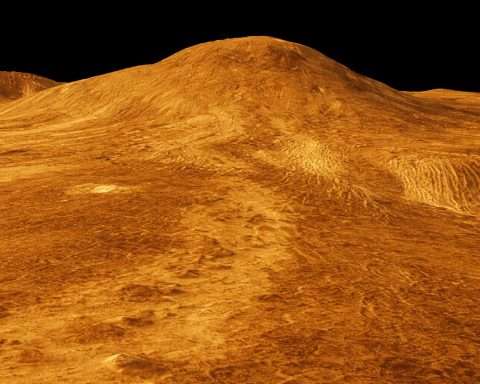
Hidden tunnel on Venus? Old Magellan radar points to a giant lava tube

Hidden tunnel on Venus? Old Magellan radar points to a giant lava tube

Reprocessed Magellan radar data has revealed a vast hollow lava tube beneath Venus’s Nyx Mons volcano, scientists reported Monday. The cavity measures about 1 km across and at least 375 meters high, marking the first subsurface feature detected on the planet. Researchers say future radar missions could confirm the finding and search for more underground structures.
February 10, 2026
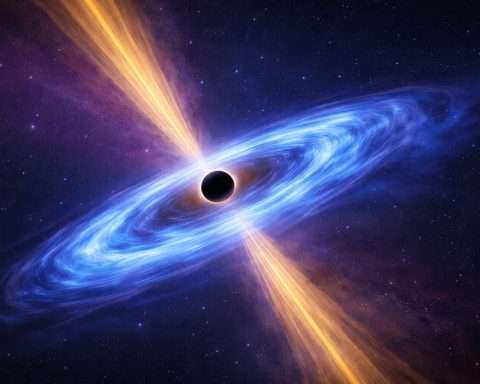
This black hole ate a star — and it’s still belching a brighter jet years later

This black hole ate a star — and it’s still belching a brighter jet years later

A supermassive black hole 665 million light-years away is blasting an unusually persistent, bright radio jet years after shredding a red dwarf star, astronomers reported Thursday. The jet, monitored by telescopes in New Mexico and South Africa, continues to intensify and may peak in late 2026 or 2027. Researchers say the delayed, powerful outburst defies typical patterns seen after such stellar disruptions.
February 5, 2026
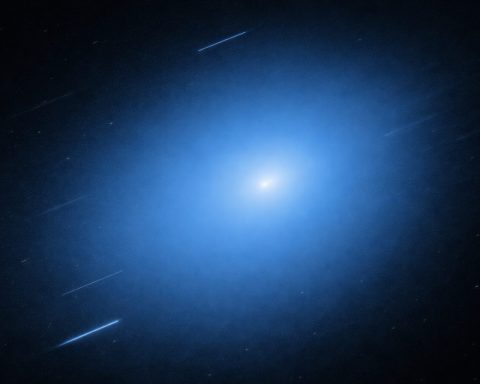
Methane spotted on interstellar comet 3I/ATLAS as new studies pin down its size

Methane spotted on interstellar comet 3I/ATLAS as new studies pin down its size

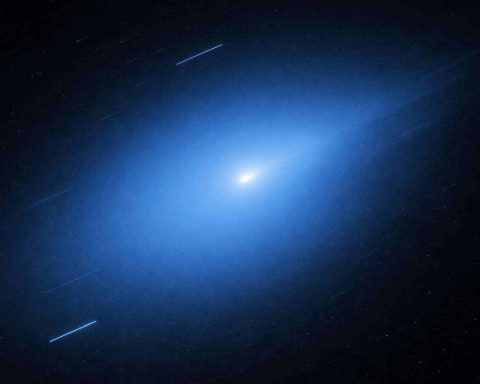
Scientists have directly detected methane in interstellar comet 3I/ATLAS, using data from the James Webb and Hubble telescopes collected in December. The comet’s nucleus is estimated at 2.6 km wide, larger than expected. Both findings are detailed in new arXiv preprints as the comet dims and leaves the inner solar system. Only three interstellar objects have been confirmed in the solar system to date.
February 2, 2026
Erased for centuries, Hipparchus’ star catalog resurfaces after particle accelerator scan

Erased for centuries, Hipparchus’ star catalog resurfaces after particle accelerator scan

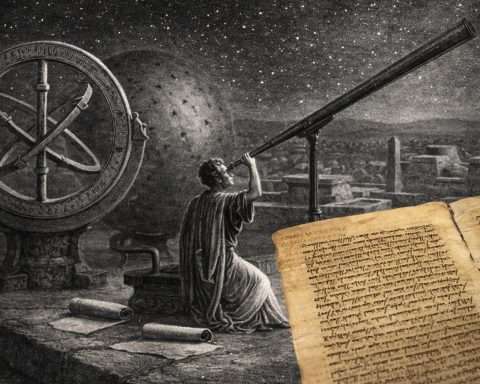
Researchers at SLAC National Accelerator Laboratory used synchrotron X-ray beams to reveal erased star maps in the Codex Climaci Rescriptus, including fragments linked to Hipparchus’s ancient star catalog. The team identified hidden Greek text and star coordinates by detecting chemical traces of old ink on reused parchment. The manuscript was transported from the Museum of the Bible in Washington under strict conditions due to its fragility.
January 30, 2026
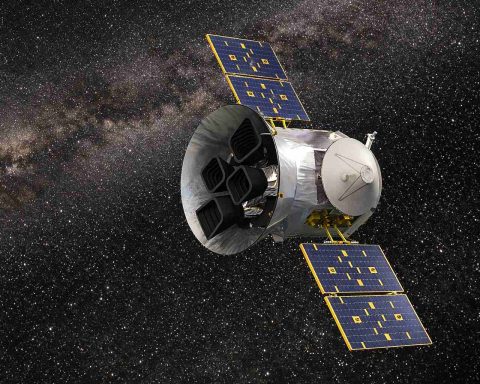
NASA’s TESS Spots Rare Interstellar Comet 3I/ATLAS — New Data Target Its Spin

NASA’s TESS Spots Rare Interstellar Comet 3I/ATLAS — New Data Target Its Spin

NASA’s TESS spacecraft captured new images of interstellar comet 3I/ATLAS between Jan. 15 and 22 as it exits the solar system. The comet, first spotted in July 2025, is only the third known object of its kind. Scientists are analyzing brightness changes to study its rotation and activity. TESS data are now publicly available through the Mikulski Archive for Space Telescopes.
January 30, 2026
Webb Breaks the Cosmic Distance Record With MoM-z14, Seen Just 280 Million Years After the Big Bang

Webb Breaks the Cosmic Distance Record With MoM-z14, Seen Just 280 Million Years After the Big Bang

NASA’s James Webb Space Telescope has identified MoM-z14, the most distant galaxy yet confirmed, seen as it was 280 million years after the Big Bang. The agencies measured a redshift of 14.44, placing the galaxy at the edge of current observational limits. Researchers say MoM-z14 is part of a surprisingly bright group of early galaxies, challenging existing models of the universe’s first billion years.
January 29, 2026
NASA spots an “ice-cold Earth” exoplanet candidate in Kepler data — and it may sit near the habitable zone

NASA spots an “ice-cold Earth” exoplanet candidate in Kepler data — and it may sit near the habitable zone

NASA-backed researchers detected a possible rocky planet, HD 137010 b, orbiting a star 146 light-years away using Kepler K2 data. The planet, slightly larger than Earth, completes an orbit in about a year and receives less than a third of Earth’s sunlight. Only one 10-hour transit was observed; confirmation will require more data. The candidate’s surface may be colder than Mars.
January 28, 2026
AI tool AnomalyMatch combs Hubble archive, flags 1,300 cosmic anomalies — NASA, ESA

AI tool AnomalyMatch combs Hubble archive, flags 1,300 cosmic anomalies — NASA, ESA

NASA said Tuesday that an AI tool scanned nearly 100 million Hubble image cutouts in 2.5 days, flagging over 1,300 unusual objects, with more than 800 never previously documented. Most anomalies were merging galaxies or gravitational lenses, but several dozen objects remain unclassified. NASA and ESA said similar AI tools could help process data from upcoming telescopes. The findings appeared in Astronomy & Astrophysics.
January 27, 2026
New James Webb dark matter map exposes the universe’s hidden “cosmic web” in record detail

New James Webb dark matter map exposes the universe’s hidden “cosmic web” in record detail

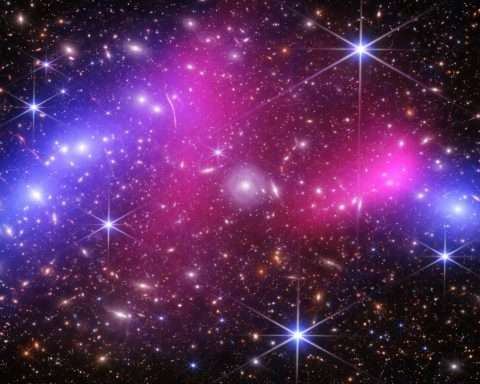
Scientists using NASA’s James Webb Space Telescope have produced the most detailed dark matter map of the COSMOS field, covering an area 2.5 times the size of the full Moon. The map, created through weak gravitational lensing, reveals the distribution of unseen mass by analyzing shape distortions in nearly 800,000 galaxies. Researchers say the data is twice as sharp as previous maps.
January 26, 2026
Webb catches a baby Sun-like star making crystals — and blasting them toward comet territory

Webb catches a baby Sun-like star making crystals — and blasting them toward comet territory

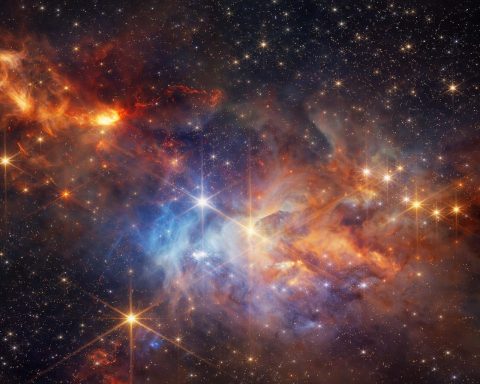
NASA’s James Webb Space Telescope detected crystalline silicates forming near the young protostar EC 53 during its regular accretion bursts, according to a study in Nature. The crystals appear during rapid heating events and are likely pushed outward by stellar winds, but researchers have not directly observed them reaching the comet-forming outer disk.
January 22, 2026
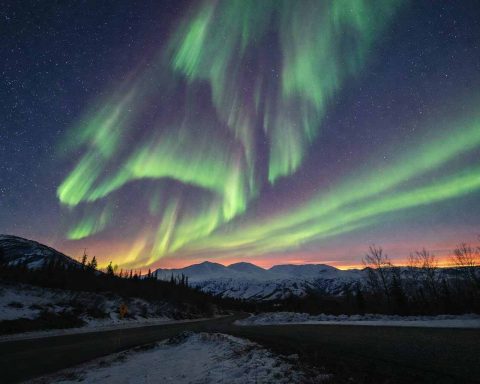
Night sky tonight (Jan. 22, 2026): Northern Lights odds linger as Moon slides past Saturn

Night sky tonight (Jan. 22, 2026): Northern Lights odds linger as Moon slides past Saturn

The Met Office says northern Scotland may see auroras tonight as geomagnetic activity from the Jan. 19 solar storm fades, but cloud cover could obscure the display. NOAA forecasts a minor G1 geomagnetic storm with a Kp index peak of 4.67. Australia’s space weather bureau expects mostly quiet conditions, though solar wind remains strong. High-frequency radio signals are running 10–15% below normal.
January 22, 2026
NASA’s TESS pauses planet hunt to track interstellar comet 3I/ATLAS as a rare alignment hits

NASA’s TESS pauses planet hunt to track interstellar comet 3I/ATLAS as a rare alignment hits

NASA has paused TESS’s exoplanet search to observe interstellar comet 3I/ATLAS from Jan. 15-22, aiming to capture data during a rare near-opposition alignment. The satellite is collecting images and target pixel files, with all data released immediately to the public. 3I/ATLAS is only the third known interstellar comet. NASA confirms it poses no threat to Earth.
January 22, 2026
Northern Lights Tonight? NOAA says aurora could reach New York as solar storm lingers

Northern Lights Tonight? NOAA says aurora could reach New York as solar storm lingers

NOAA extended geomagnetic storm warnings Wednesday after a rapid coronal mass ejection triggered by an X-class solar flare caused severe conditions. Auroras may be visible as far south as Alabama and northern California, with rare sightings in northern Italy and the UK. The storm reached G4 and S4 levels, threatening satellites, navigation, and polar flights. Forecasters say such intensity hasn’t been seen in over 20 years.
January 21, 2026
NASA interrupts TESS survey to track interstellar comet 3I/ATLAS as SPHEREx spots stronger gases

NASA interrupts TESS survey to track interstellar comet 3I/ATLAS as SPHEREx spots stronger gases

NASA redirected its TESS satellite to observe interstellar comet 3I/ATLAS from Jan. 15–22, interrupting its regular schedule. SPHEREx data show the comet’s activity surged after its October perihelion, with emissions of carbon monoxide, water vapor, cyanide, and organics increasing sharply. 3I/ATLAS, discovered in July 2025, is only the third known interstellar object. Data from the TESS campaign will be publicly released.
January 21, 2026