Space Exploration 28 January 2026 - 26 May 2026

PodcastOne Stock Nears 52-Week High After Insider Buy — What’s Moving PODC Now

PodcastOne Stock Nears 52-Week High After Insider Buy — What’s Moving PODC Now

PodcastOne Inc shares were quoted just above Tuesday’s close in early pre-market trading on Wednesday, holding near a 52-week high — the stock’s highest price in the past year — after a director disclosed a share purchase. The Nasdaq-listed podcast network closed Tuesday at $4.76, up 6.25%, and was quoted at $4.78 in pre-market trade, which is trading before the regular exchange session. The shares touched $5.07 on Tuesday, also listed as the 52-week high. Google Finance put the company’s stock market value at about $129 million.

May 27, 2026
CURRENC Stock Pops After Holiday With Eyes on Animoca Deal Cutoff

CURRENC Stock Pops After Holiday With Eyes on Animoca Deal Cutoff

CURRENC Group Inc shares gained in late trading Tuesday. The stock picked up in its first U.S. session after the Memorial Day break, with traders watching for updates on the proposed reverse merger with Animoca Brands. Shares last traded at $3.27, up 23 cents, and volume was about 146,000 shares. CURRENC and Animoca’s exclusivity window ends June 30, so timing is tight. The Nasdaq holiday for Memorial Day on May 25 kept the market shut, with trading picking back up Tuesday. Now there’s under five weeks left for the deal.
May 26, 2026
3I/ATLAS Just Gave Scientists a Rare Look Inside an Interstellar Comet

3I/ATLAS Just Gave Scientists a Rare Look Inside an Interstellar Comet

MAUNAKEA, Hawaii, May 6, 2026, 12:04 HST A group led by Yoshiharu Shinnaka at Kyoto Sangyo University spotted fresh evidence of chemical changes in 3I/ATLAS, the interstellar comet, after it swung close to the Sun—suggesting what’s under the surface doesn’t necessarily match what’s on top. The observations came from the Subaru Telescope on Maunakea, according to a Wednesday piece in Big Island Now.
May 7, 2026
Space Tech Today: Blue Origin Lands Reused New Glenn, But AST SpaceMobile Satellite Is Lost

Space Tech Today: Blue Origin Lands Reused New Glenn, But AST SpaceMobile Satellite Is Lost

CAPE CANAVERAL, Fla., April 20, 2026, 04:47 EDT Blue Origin managed to recover its reused New Glenn booster on Sunday, marking progress for Jeff Bezos’ heavyweight rocket and its prospects for repeat missions. Not everything went smoothly, though: AST SpaceMobile’s BlueBird 7 satellite got stuck in low orbit and is now set to de-orbit. The booster lifted off from Cape Canaveral shortly after 7:25 a.m. ET and landed about 10 minutes later, Reuters reported.
April 20, 2026
ESA releases new JUICE photo of interstellar comet 3I/ATLAS as fresh data reaches Earth

ESA releases new JUICE photo of interstellar comet 3I/ATLAS as fresh data reaches Earth

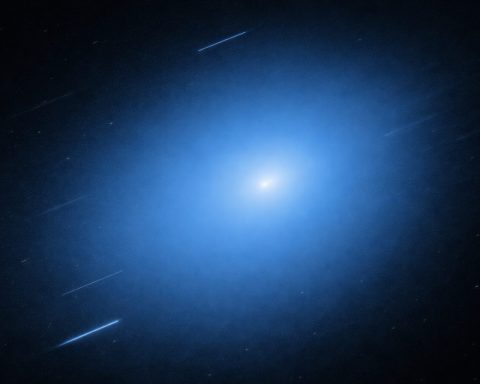
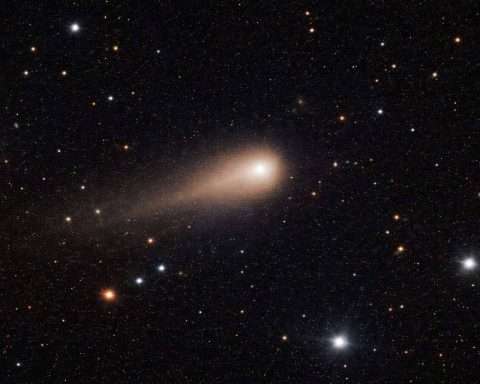
The European Space Agency has published a fresh shot of interstellar comet 3I/ATLAS, picked up by its Jupiter Icy Moons Explorer, which is heading for Jupiter. The image, snapped by Juice’s JANUS science camera on Nov. 6, 2025, from a distance of roughly 66 million km, shows a luminous gas halo trailing a distinctive tail. According to ESA, JANUS logged over 120 images during the session. 3I/ATLAS has become just the third confirmed interstellar visitor to sweep through our solar system, following 1I/‘Oumuamua’s 2017 flyby and 2I/Borisov in 2019. The ATLAS survey telescope in Río Hurtado, Chile, picked it up on July 1, 2025. According to ESA, the comet barreled past the Sun at speeds topping 250,000 km/h. Earth was
March 5, 2026
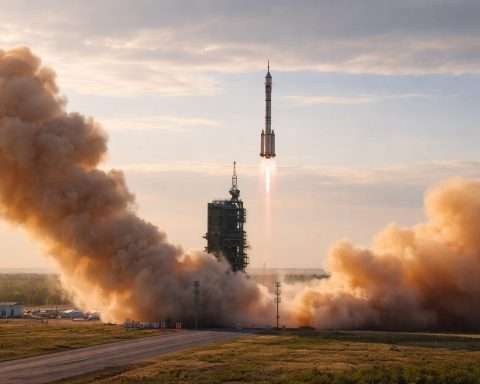
SpaceX Crew-12 launch speeds to ISS, refilling station after NASA medical evacuation

SpaceX Crew-12 launch speeds to ISS, refilling station after NASA medical evacuation

Cape Canaveral, Florida, Feb 13, 2026, 09:25 Early Friday, SpaceX’s Falcon 9 lifted off from Florida, taking four astronauts—NASA’s Crew-12—on their way to the International Space Station for an eight-month stint focused on science. “Thank you team, that was quite a ride,” commander Jessica Meir said over the radio after the Crew Dragon capsule “Freedom” broke away in orbit.
February 13, 2026
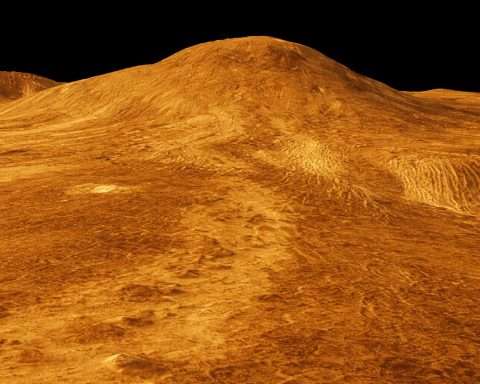
Hidden tunnel on Venus? Old Magellan radar points to a giant lava tube

Hidden tunnel on Venus? Old Magellan radar points to a giant lava tube

Scientists reexamining radar data from NASA’s Magellan mission have uncovered what appears to be a massive underground lava tube on Venus. This marks the first time a subsurface formation has been identified on the planet. https://www.reuters.com/science/radar-data-reveals-cavernous-underground-lava-tube-venus-2026-02-09/?utm_source=chatgpt.com Timing is critical since Venus remains mostly a radar-mapped planet. Its dense clouds prevent regular cameras from seeing through, pushing space agencies to gear up for a fresh wave of Venus missions that will rely on advanced radar to chart the planet’s battered surface and surroundings.
February 10, 2026
SpaceX delays Starship Mars push, targets March 2027 moon landing first, WSJ says

SpaceX delays Starship Mars push, targets March 2027 moon landing first, WSJ says

According to sources cited by the Wall Street Journal on Friday, Elon Musk’s SpaceX has shifted its focus to the moon first, pushing Mars plans further down the line. The company aims for an uncrewed moon landing in March 2027, the report stated. https://www.reuters.com/science/spacex-delays-mars-plans-focus-moon-wsj-reports-2026-02-06/ Timing is crucial since NASA is relying on SpaceX’s Starship to serve as the lunar lander for Artemis III, the moon-landing mission set for 2028. SpaceX’s development speed is now a vital factor in the U.S. push to return to the moon, a goal that’s taken on added urgency as China advances its own lunar plans. https://www.reuters.com/science/nasas-artemis-ii-moon-mission-slips-march-2026-02-03/
February 7, 2026
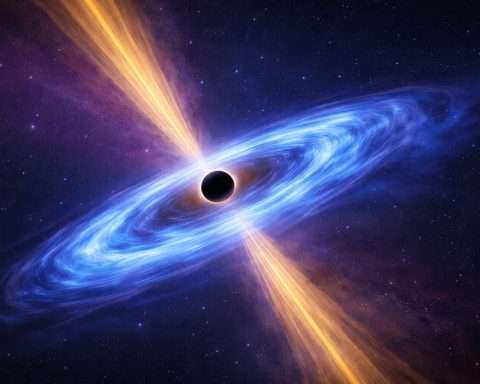
This black hole ate a star — and it’s still belching a brighter jet years later

This black hole ate a star — and it’s still belching a brighter jet years later

A supermassive black hole located about 665 million light-years away is still blasting an increasingly bright jet into space years after it tore apart a star, astronomers revealed Thursday. This persistent outflow ranks among the most powerful single radio wave events ever recorded, they said. https://www.reuters.com/science/black-hole-continues-belch-years-after-chewing-up-star-2026-02-05/ The timing is key here. The radio jet didn’t appear immediately after the star died; instead, it grew stronger over several years. This defies the usual expectations for such events and suggests that other jets that ignite late might have slipped under the radar.
February 5, 2026
NASA spots ammonia on Europa in old Galileo data, sharpening hunt beneath the ice

NASA spots ammonia on Europa in old Galileo data, sharpening hunt beneath the ice

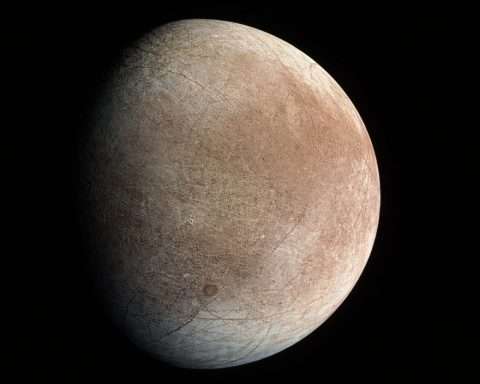
On Thursday, NASA announced that scientists have identified ammonia-bearing compounds on Europa’s surface by reevaluating data collected during the Galileo mission decades ago. The agency emphasized the importance of detecting ammonia because it contains nitrogen, a key element for life as we know it on Earth. Additionally, ammonia can function like antifreeze, reducing the freezing point of water. NASA pointed out that ammonia breaks down quickly in space, suggesting it may have arrived on the surface fairly recently.
January 30, 2026
James Webb and Chandra spot a massive early-universe galaxy cluster — and it formed too fast

James Webb and Chandra spot a massive early-universe galaxy cluster — and it formed too fast

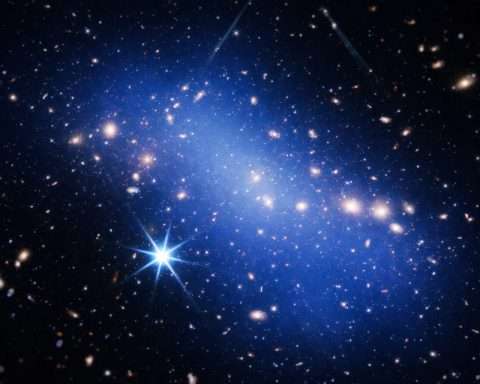
WASHINGTON, Jan. 30, 2026, 12:16 p.m. EST NASA’s James Webb Space Telescope and the Chandra X-ray Observatory have detected a forming galaxy cluster dating back to about a billion years after the Big Bang, researchers announced on Friday. Dubbed JADES-ID1, the system includes at least 66 candidate galaxies and an estimated mass around 20 trillion times that of the Sun, from a time when the universe was still very young.
January 30, 2026
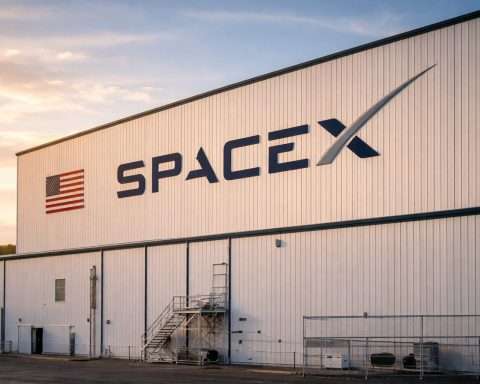
Musk’s next mega-merger? SpaceX talks with xAI ahead of IPO plans

Musk’s next mega-merger? SpaceX talks with xAI ahead of IPO plans

Elon Musk’s SpaceX is reportedly negotiating a merger with his AI startup xAI ahead of a planned IPO later this year, according to a source familiar with the discussions. The deal would unite SpaceX’s rockets, Starlink satellites, the X social media platform, and xAI’s Grok chatbot under a single entity. https://www.reuters.com/world/musks-spacex-merger-talks-with-xai-ahead-planned-ipo-source-says-2026-01-29/?utm_source=chatgpt.com Investors are gearing up for what could be one of the largest IPOs in years, as Musk attempts to weave a single narrative connecting launch capacity, satellites, data, and AI. This aligns with his vision of shifting computing to orbit—turning rockets into the backbone of “data centers,” the server farms powering AI systems. https://finance.yahoo.com/news/exclusive-musks-spacex-merger-talks-184045612.html?utm_source=chatgpt.com
January 29, 2026
Webb Breaks the Cosmic Distance Record With MoM-z14, Seen Just 280 Million Years After the Big Bang

Webb Breaks the Cosmic Distance Record With MoM-z14, Seen Just 280 Million Years After the Big Bang

NASA’s James Webb Space Telescope has confirmed the most distant galaxy yet seen, catching MoM-z14 as it looked just 280 million years after the Big Bang, NASA and the European Space Agency said on Wednesday. The agencies measured a redshift of 14.44 — how much the universe’s expansion has stretched the galaxy’s light — putting it at the current edge of what telescopes can observe. https://science.nasa.gov/missions/webb/nasa-webb-pushes-boundaries-of-observable-universe-closer-to-big-bang/?utm_source=chatgpt.com The detection pushes Webb deeper into “cosmic dawn,” the universe’s first few hundred million years, when the earliest galaxies were switching on. Astronomers chase these targets because they offer direct checks on how fast stars and galaxies could assemble after the universe began.
January 29, 2026
NASA spots an “ice-cold Earth” exoplanet candidate in Kepler data — and it may sit near the habitable zone

NASA spots an “ice-cold Earth” exoplanet candidate in Kepler data — and it may sit near the habitable zone

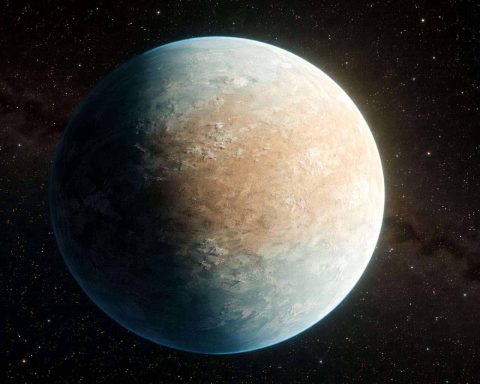
NASA scientists, together with an international team, have uncovered an Earth-sized exoplanet candidate while combing through data from the now-retired Kepler Space Telescope. This discovery might provide a rare opportunity to examine a long-period, near-Earth-size planet orbiting a relatively bright star nearby. Called HD 137010 b, the planet orbits near the outer edge of its star’s habitable zone — that’s the area where liquid water could potentially exist with the right atmosphere — though it’s likely colder than Mars. Timing is crucial since planets with orbits close to Earth’s year are tough to spot using Kepler’s main method: tracking repeated dips in starlight. Missing just one transit could force a wait of a year or longer for the next chance.
January 28, 2026
EU taps Ariane 6 for new Galileo launches as bloc pushes to cut SpaceX reliance

EU taps Ariane 6 for new Galileo launches as bloc pushes to cut SpaceX reliance

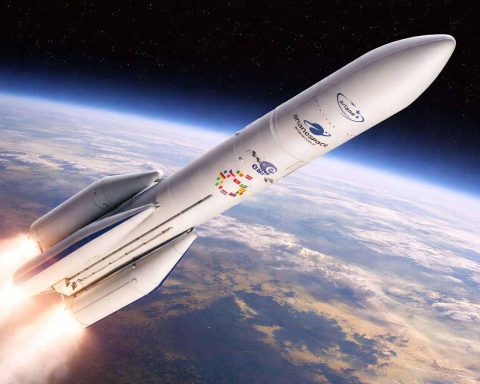
Brussels, 28 January 2026, 14:17 CET The European Union’s space agency has inked a new deal to send two second-generation Galileo navigation satellites into orbit aboard Europe’s Ariane 6 rocket, reinforcing its push to handle critical launches within the bloc. Recently, the EU has relied on Elon Musk’s SpaceX for several Galileo missions.
January 28, 2026